For workshops with mixed fleets, access to the manufacturer's own diagnostic portals is a key tool. Depending on the control unit and range of functions, direct manufacturer access is required in addition to the multi-brand diagnostic system. With the EU Regulation 2018/858 the framework for this is clearly regulated. Independent workshops therefore have a statutory right to access the same repair and maintenance information that is available to the authorised network. The RMI provisions of the regulation ensure access to manufacturer-specific repair information. SERMI certification is also required for safety-related systems. Today, OEM interfaces provide diagnostic data almost without exception in the format of the ISO 22901 (ODX - Open Diagnostic Data Exchange), which standardises the machine-readable description of control units.
This article explains what rights you have as an independent workshop. It also shows you how to gain access to the OEM portals of the major commercial vehicle manufacturers and what technical requirements you need to fulfil. It is aimed at workshop owners and workshop managers - independent commercial vehicle workshops as well as OE workshops that open up their range of services to mixed fleets. The aim is to systematically establish their diagnostic capability across all 14 commercial vehicle manufacturers in the Alltrucks portfolio. Accredited testing organisations also document the framework conditions in their current industry reports.
OEM system access for independent workshops is the controlled access of independent companies to manufacturer diagnostic portals, repair data and coding functions. EU Regulation 2018/858 regulates this access under appropriate and proportionate conditions. It thus creates a reliable basis for multi-brand service expertise.
What does EU Regulation 2018/858 say about OEM access?
EU Regulation 2018/858 on the approval and market surveillance of motor vehicles has regulated access to vehicle repair and maintenance information (RMI) on a mandatory basis since September 2020. It obliges all vehicle manufacturers to grant independent market participants access to the same information that is available to their authorised networks. This includes independent workshops, parts dealers and diagnostic manufacturers.
What the regulation actually covers
- Technical information: Circuit diagrams, troubleshooting instructions, operating values, setting data, test programmes and calibration instructions
- Diagnostic access: Access to all control units via standardised interfaces, including error code readout, actuator tests and parameterisation
- Software updates: Access to control unit software and firmware updates required for repair and maintenance
- Safety-relevant systems: Access to anti-theft device, immobiliser and other safety-related systems - in compliance with defined safety requirements (SERMI)
- Training documents: Access to the same technical training materials that are also authorised dealers are available
Legal note: The regulation applies to vehicles with new EU type approval. The exact date of application may differ slightly depending on the EU regulation text and vehicle class. Workshops should therefore verify the current status before taking any relevant steps. For older vehicles, the previous regulation (EU 595/2009 for heavy commercial vehicles) continues to apply. In practice, however, most manufacturers have also opened their portals for older model series, as the administrative burden of differentiating by year of manufacture would be disproportionate.
What OEM portals are there and how are they structured?
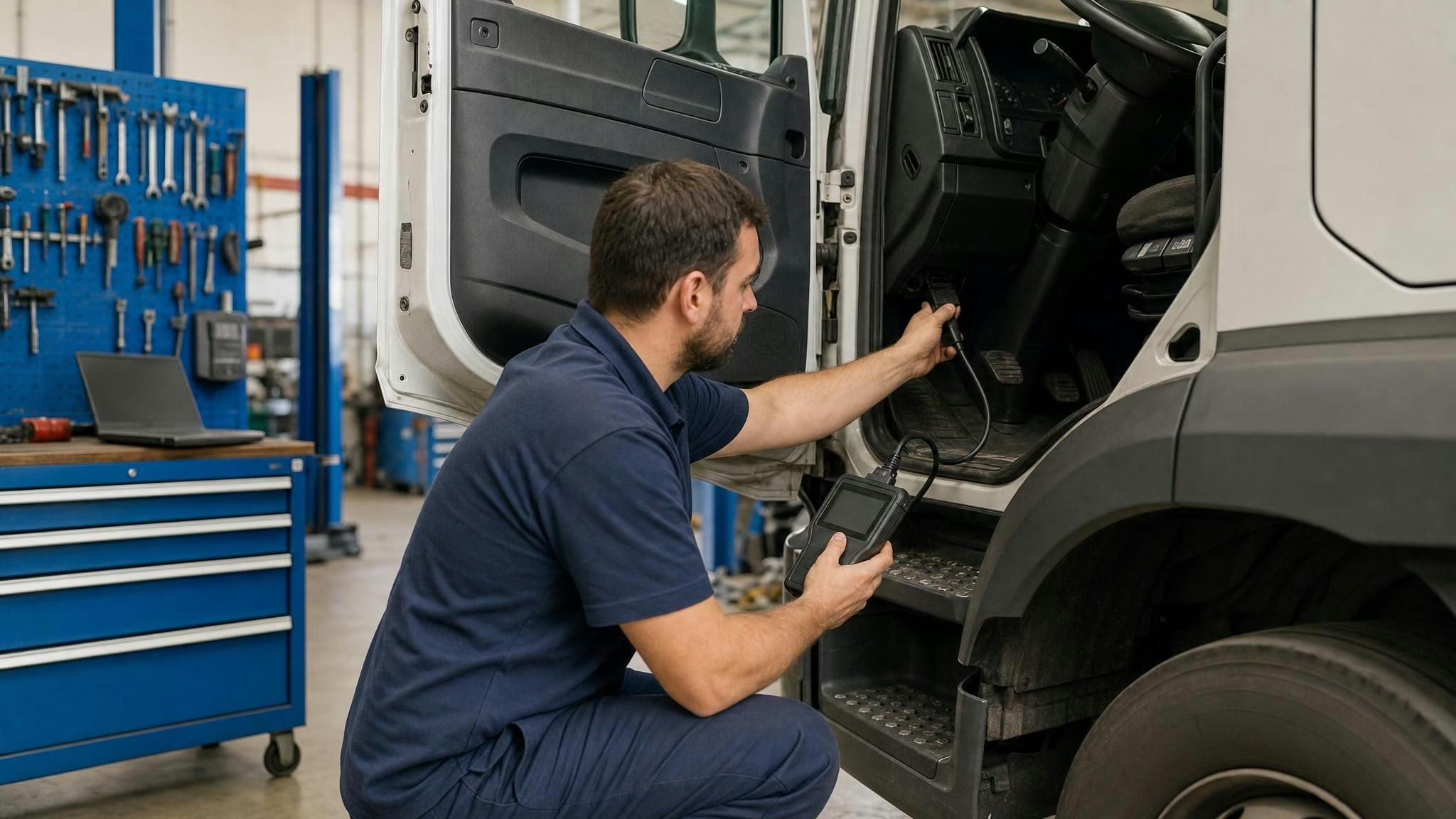
Every major commercial vehicle manufacturer provides its own RMI portal. Independent workshops use these to access repair and maintenance information as well as diagnostic functions. The portals differ in terms of scope, user guidance and licence model. For workshops with mixed fleets, they are part of the standard repertoire alongside a powerful multi-brand diagnostic system.
The most common portals on the European commercial vehicle market include XENTRY (Mercedes-Benz), MAN Service Information System, DAF CONNECT and TOPEC, Scania Multi / SDP3, Volvo Tech Tool and IVECO Easy (E.A.Sy). Typical licence models range from hourly, daily or session licences for occasional access to annual licences for permanently supported brands. The manufacturers also publish specific tariffs and variants in their RMI portals. The current status and conditions are always available there.
The choice of the appropriate licence model depends on the order volume per brand. An annual licence is usually suitable for manufacturers who are regularly supported, whereas a time-based or session-based model is suitable for occasional access. Additionally opens Gateway Pass Thru certain OEM functions via the existing diagnostic system.
What are the technical requirements for OEM access?
To gain OEM access, you essentially need four things: to register on the manufacturer’s portal with proof of business status, a manufacturer-compatible Vehicle Communication Interface (VCI) with a laptop, SERMI certification for safety-critical systems such as the immobiliser, and a stable internet connection. The details vary by manufacturer, but generally follow a similar pattern.
Registration and legitimisation
First register on the respective OEM portal with your business details. Most manufacturers require an extract from the commercial register, a business registration and proof that you are a master workshop (commercial vehicle technology). In practice, the processing time is typically between a few days and several weeks - depending on the manufacturer and the completeness of the documents. You should therefore plan for this lead time before you need access in an acute case.
Hardware: VCI and laptop
To use the diagnostic access, you need a manufacturer-compatible Vehicle Communication Interface (VCI). Some manufacturers accept third-party VCIs (e.g. Bosch KTS series), while others require their own interface. You will also need a Windows laptop with the minimum requirements defined by the manufacturer (usually Windows 10/11, 8 GB RAM, SSD). A multi-brand diagnostic system can also serve as a hardware basis.
SERMI certification for safety-relevant systems
Since 2023, SERMI (Security-Related Repair and Maintenance Information) certification has been required to gain access to security-relevant control units (immobiliser, anti-theft device, key programming). This includes an identity check, a reliability check and compliance with defined security standards. The certification is carried out by accredited testing organisations and is valid for three years.
Stable internet connection
All OEM portals are cloud-based. Therefore, you need a stable internet connection for real-time diagnostics and especially for software downloads - control unit updates can comprise several hundred megabytes. In practice, a download rate in the double-digit Mbit/s range (e.g. from approx. 50 Mbit/s) has proven to be a good guideline. In addition, an uninterrupted connection during a software update is critical to safety, as an interruption can render the control unit unusable.
Practical classification: OEM access is initially an expense - registration, SERMI, hardware. However, when set up correctly, it becomes the standard tool for working on mixed fleets.
What works and what doesn't work with OEM system access in practice?
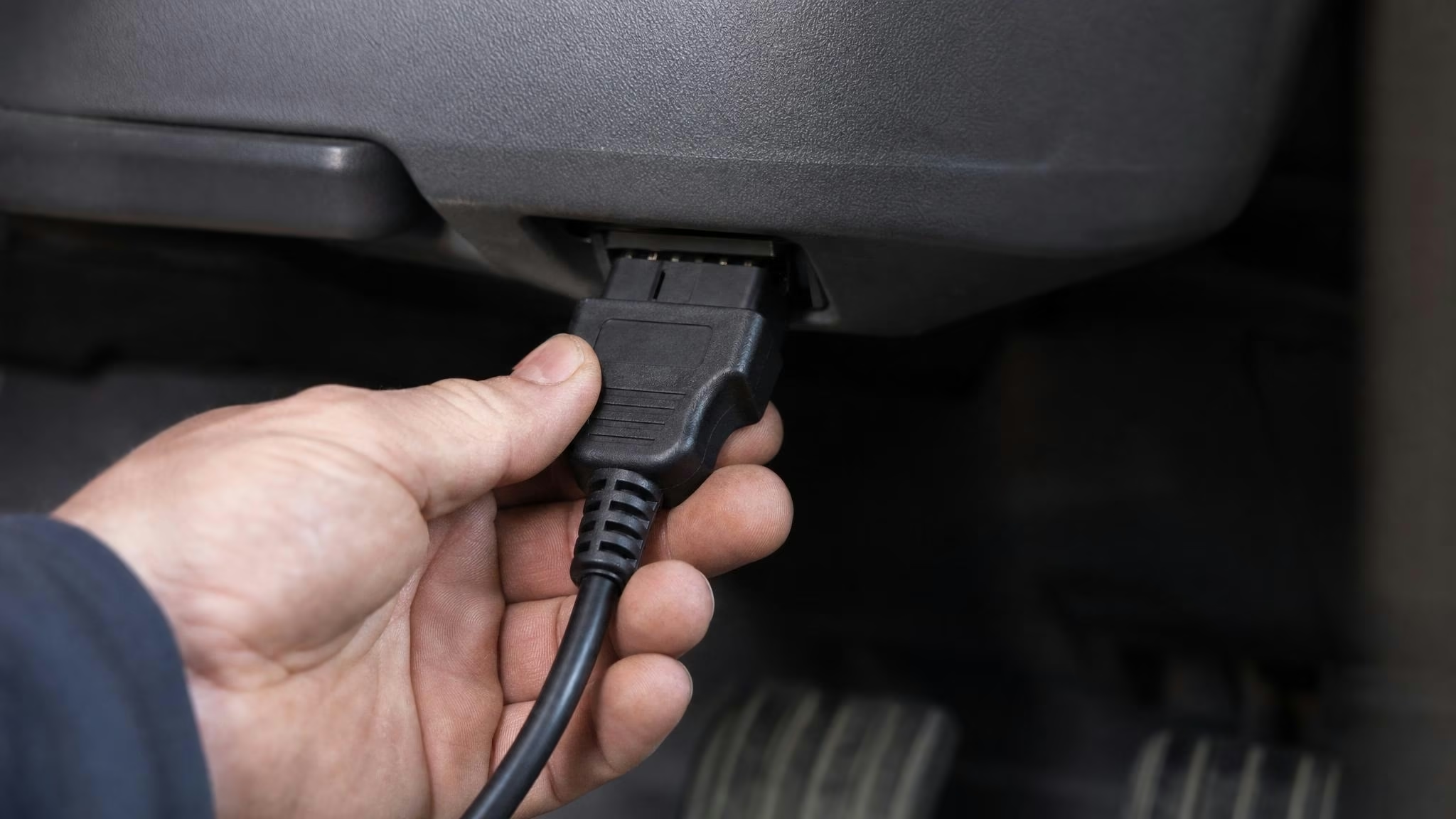
The legal framework is in place. The decisive factor is therefore the operational implementation in everyday workshop life. The combination of a multi-brand diagnostic system and OEM portal access can be used to map common diagnostic and repair tasks: Fault code readout, actuator tests, calibrations, service releases and most software updates. Everyday workshop experience shows that the friction lies more in the registration, SERMI process and training than in the technology itself.
However, individual tasks must be considered in a differentiated manner. Certain online flash processes require a real-time connection to the OEM backend, and not all security-relevant functions are already fully accessible via SERMI. Manufacturers are therefore continuously working on the further development of their portals as part of their RMI obligations.
Typical application scenarios
- Software recall: An open recall for an engine control unit update is processed via the respective manufacturer portal: Download software, connect VCI, flash control unit.
- Key programming: Ignition keys and immobiliser components can be programmed via the manufacturer's diagnostic environment and with SERMI certification.
- Parameterisation: Adjustments to the control unit parameters (e.g. axle ratio) are made via the corresponding OEM portal - provided a licence and qualification are available.
Integration into multi-brand practice: OEM system access for independent workshops works best in conjunction with a robust multi-brand diagnostics basis. This is how the Alltrucks multi-brand diagnostics (Alltrucks KTS Truck V3, Bosch + Knorr-Bremse integration) to cover a wide range of brands. OEM access, on the other hand, supplements brand-specific in-depth functions. We will be happy to discuss which combination of portals, licence models and diagnostic stack makes sense for a company. In addition to this: Gateway Pass Thru.
Which access strategy suits which workshop?
Not every workshop needs annual licences for all OEM portals. The most sensible set-up depends more on the vehicle range and order volume. An analysis of orders from the last twelve months by manufacturer therefore shows which brands require OEM access particularly often and where the Multi-brand diagnosis covers the standard case.
In practice, a three-stage model often proves its worth. Stage 1 is a powerful multi-brand diagnostic system as a basis. Level 2 is annual licences for manufacturers with a high proportion of the order volume. Finally, level 3 is Pass Thru or single licence access for occasional OEM functions for other brands. We will be happy to discuss which level is right for you - including the question of which Alltrucks training courses (levels 1/2/3, certification as a multi-brand system technician) match the desired diagnostic depth.
The EU regulation sets the framework. The decisive factor is therefore how workshops structure registration, the licence model and qualification - ideally in combination with multi-brand diagnostics and OEM access.
- EU Regulation 2018/858: Access rights as an independent workshop are enshrined in law
- Identify brand focal points: Which manufacturers are serviced most frequently? Set up the appropriate OEM portal there first
- Register via OEM portals: Via the manufacturer-specific registration portals - allow for lead time
- Check SERMI certification: Increasingly required for safety-relevant systems
- Select licence model: Time/session licence or annual licence depending on order volume
- Clarify hardware: Check VCI compatibility and laptop requirements per manufacturer
- Classification in the overall picture: Clarify interaction with multi-brand diagnosis and qualification in dialogue with us