High-voltage systems in commercial vehicles operate with voltages of up to 800 volts. Contact with live parts can be fatal, as there is a danger to life from 50 volts AC or 120 volts DC. Safe work on HV systems therefore requires more than just good will: It requires qualifications, defined safety procedures and the right equipment. The decisive factor here is EU Directive 2009/104 (work equipment) in the respective national implementation. It defines the framework for qualification requirements for work on vehicles with high-voltage systems. Anyone working on electric lorries must also comply with IEC 60900 (insulated tool) and the relevant IEC/EN standards for HV tools.
This article is aimed at workshop managers and mechanics who carry out high-voltage work on commercial vehicles or want to create the conditions for this. It also describes the qualification levels, the five safety rules of electrical engineering, the specific disconnection procedure and the emergency measures - in a practical and binding manner. HV-qualified Find a mechatronics engineer is a challenge in its own right, however, so every available specialist is valuable. Market data and funding scenarios for commercial vehicle electromobility are provided by the relevant national funding bodies, depending on the country.
Our information on inspection obligations and occupational safety is based on EU Directive 2009 104 on minimum health and safety requirements for the use of work equipment and the respective nationally implemented regulations, such as the German Ordinance on Industrial Safety and Health. The specific risk assessment, the definition of inspection intervals and compliance with national legislation remain the responsibility of the respective workshop operator.
High-voltage work is work on electrical systems with voltages above 60 volts DC or 30 volts AC in commercial vehicles. They are therefore subject to the national regulations for work on electrically powered vehicles (implemented from EU 2009/104). In addition, only qualified persons are authorised to carry out this work, and only after strict safety instruction and with special personal protective equipment.
What are the HV qualification levels in detail?
| Building block | Scope | Normative basis |
|---|---|---|
| HV Qualification Team | Training level 2S, 3 to 5 days per head | Qualified person for work on electrically powered vehicles (nationally regulated, EU 2009/104) |
| Insulated HV tools | Complete set of insulated tools | IEC 60900 / EN 60900 |
| HV safety area | Cordoned-off work area, labelling, access control | National regulations (EU 2009/104), IEC 60364 |
| HV battery test bench | Insulation test, cell diagnosis, capacity test | Manufacturer specifications / national HV regulations |
| Multi-brand diagnostics with HV module access (manufacturer-dependent) | Alltrucks multi-brand diagnostics KTS Truck V3; functional scope within the OEM portal functions | Alltrucks partner conditions - talk to us |
| Charging infrastructure workshop | AC wallbox (entry) to DC fast charger | IEC 60364 / IEC 61851, manufacturer's specifications |
The national qualification regulations for work on vehicles with high-voltage systems (in implementation of EU 2009/104) define three qualification levels in most European countries. Each level authorises certain activities and also clearly defines what is not permitted. Compliance with these levels is not optional: anyone working on HV systems without sufficient qualification is therefore committing an offence against health and safety regulations with criminal consequences.
Level S: Sensitised person
Level S is the basic qualification for all employees who work on or near HV vehicles. It provides basic knowledge about electrical hazards, the recognition of HV components (orange cables, warning signs), the correct behaviour in an emergency and the limits of one's own authority. Training duration: one day.
Level S permits conventional work on HV vehicles that does not require any intervention in the HV system (tyre change, brake service, oil change, body work). However, any intervention in HV components is not permitted, nor is the opening of HV covers or the disconnection of HV plug connections.
Level 1S: Qualified instructed person
Qualified persons may carry out general work on the vehicle that does not directly affect the HV system.
This includes, for example, body work, oil and wheel changes, work on the conventional brake system in the vicinity of wheel hub motors, work next to the HV lines on the steering, combustion engine, axles, etc. as well as work on the conventional vehicle electrical system (up to 30 V AC and 60 V DC).
More extensive mechanical work, such as welding, drilling and grinding work, may also be carried out in the vicinity of HV components. This requires knowledge of the exact location of the HV components and instruction by a specialist.
Level 2S: Qualified person (FHV) for work on high-voltage systems in a de-energised state
Level 2S is the central qualification for mechanics who work on HV systems. The „S“ stands for „Service Technology“ and characterises the specific focus on vehicle workshops. In the Alltrucks network, the HV qualification also part of the Alltrucks training and leads to the Alltrucks certification as a multi-brand system technician. We will be happy to discuss which combination of levels makes sense for which employees. The training includes the following content:
- Design and function of HV systems in commercial vehicles (battery, inverter, electric motor, charger)
- Potential hazards and protective measures
- The five safety rules of electrical engineering (practically applied to commercial vehicles)
- Disconnection procedure: Preparation, disconnection, checking that there is no voltage, earthing and short-circuiting, covering and shutting off
- Use of PPE (personal protective equipment): Insulating gloves, face protection, flame-retardant clothing
- Measurement technology: insulation measurement, absence of voltage test
- Emergency measures: First aid for electrical accidents, fire behaviour of HV batteries
Training duration: three to five days (incl. practical examination). The qualification must also be confirmed annually through refresher training.
Level 3S: Qualified person with extended authorisations
Level 3S authorises work on live HV components. This activity is rare in workshop practice, but is required in certain diagnostic situations. Level 3S also qualifies the holder to be responsible for the HV area of the workshop. The training builds on level 2S and takes an additional two to three days. Recommended for: Workshop managers, diagnostic specialists, HV area managers.
Orientation for the workshop: A practical qualification structure for a commercial vehicle workshop with four to six mechanics looks like this: All mechanics at least level 1, two to three mechanics level 2S, one workshop manager or specialist level 3S. This means that HV work can be carried out by qualified personnel even in the event of illness or holidays. In the Alltrucks network, the HV qualification is also part of the Alltrucks training programme and leads to certification as a multi-brand system technician. The right combination for your company - please contact us. You can also find detailed information on preparing your workshop for e-trucks in the corresponding article.
Which 5 safety rules apply in electrical engineering?
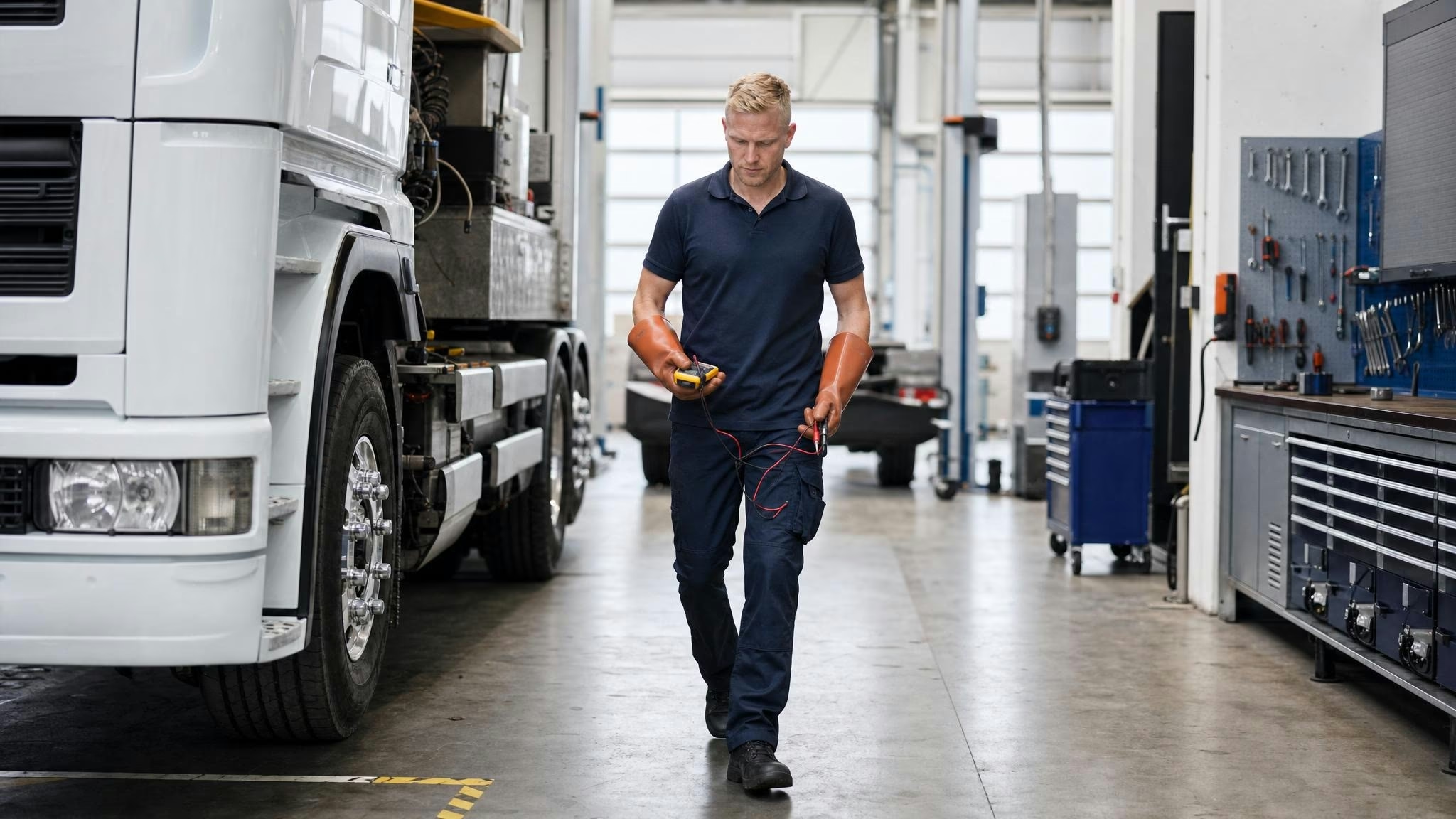
When carrying out work on high-voltage systems, the five safety rules of electrical engineering apply without exception and in the following order: disconnect the circuit, secure it against re-energisation, verify that it is de-energised, earth and short-circuit the circuit, and cover or isolate adjacent live parts. In commercial vehicles, the fourth rule is subject to restrictions. Instead, you should measure the insulation resistance and fit insulating covers.
No rule must be skipped, shortened or ignored „on the basis of experience“.
Unlock
Firstly, the HV system is de-energised by pulling the service disconnect (manual HV disconnector). The disconnector is then removed and stored personally by the person carrying out the work. On vehicles without a physical disconnector, however, the disconnection is carried out via the diagnostic software. In this case, the absence of voltage must be verified by measurement.
Secure against being switched on again
Firstly, the service disconnect is secured with a personal lock (lockout/tagout procedure). A „Do not switch on - work is in progress“ warning sign is then attached. In the case of software-based activation, the following also applies: remove the ignition key, disconnect the 12 V battery and secure. Each employee involved attaches their own lock. Consequently, the system may not be switched on again until all locks have been removed.
Determine absence of voltage
A two-pole voltage tester (tested in accordance with national operational safety regulations, EU 2009/104) is used to measure the absence of voltage on the components to be disconnected. Important: The voltage tester is first tested for function on a known voltage source, then measured on the vehicle and then tested again on the known source (test sequence: live - dead - live). Caution: After switching off, capacitors in the HV system can still carry residual voltage for 5 to 10 minutes. The manufacturer-specific waiting time must therefore be observed.
Earthing and short-circuiting
Earthing and short-circuiting devices are fitted to conventional high-voltage systems after disconnection. However, this rule is limited for HV systems in vehicles: Due to the battery architecture, earthing and short-circuiting is not possible as with stationary systems. Instead, the following applies: carry out insulation measurements, fit insulating covers, check measuring points.
Cover or block off neighbouring live parts
All HV components that are not being worked on but are within reach must be covered with insulating covers or cordoned off. In addition, orange-coloured HV cables that have not been disconnected must be treated as potentially live and protected. The safety area is then marked with barrier tape or mobile barriers.
„The five safety rules are the basis for all work on electrical systems - without exception, in a fixed order and without shortcuts.“- Recognised state of the art (nationally regulated, EU 2009/104)
How does the HV disconnection procedure work in practice?
The high-voltage de-energisation procedure is carried out in three phases in accordance with the manufacturer’s instructions. Beforehand, you must identify the high-voltage system, put on your PPE and check the measuring equipment and rescue gear. You then pull the service disconnect, secure it with your personal padlock, wait for the discharge time to elapse and verify that both poles are de-energised. Finally, carry out dismantling, a functional test and documentation.
Deviations from this procedure are not permitted – not even under time pressure.
Before activation
- Identify vehicle type and HV system (consult manufacturer's documentation)
- Localise the position of the service disconnect and all HV components
- Put on PPE: Insulating gloves, face protection, flame-retardant clothing, insulating footwear
- Provide measurement technology and check function
- Check rescue equipment: CO2 fire extinguisher accessible, rescue hooks available, emergency numbers posted
- Inform a second person (buddy principle recommended for HV work)
During activation
First switch off the ignition and remove the key. Pull out the service disconnect and store it personally. Then fit a personal lock (lockout). Attach „Do not switch on“ warning sign. Wait for the manufacturer-specific discharge time (typically: 5-10 minutes). Then check that there is no voltage with a two-pole tester (live-dead-live sequence). Measure the insulation resistance. Finally, document the result.
After completion of the work
First remove all tools and materials from the HV area. Remove the insulating covers. Then carry out a visual inspection: Are all plug connections correctly plugged in, are all covers fitted? Insert the service disconnect. Function test of the HV system via diagnostic software. Test run. Finally, finalise the documentation.
What personal protective equipment is mandatory for HV work?
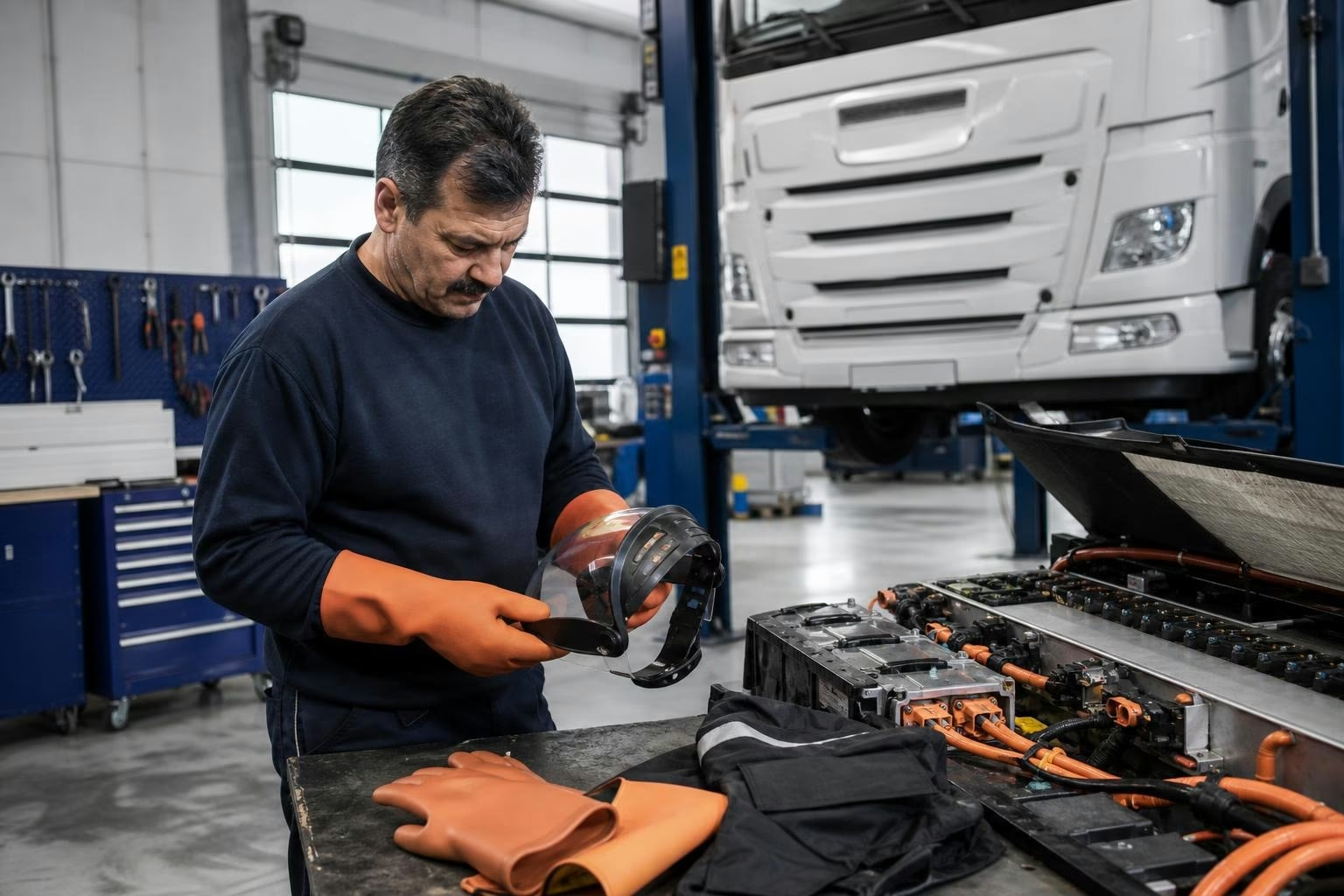
For high-voltage work in the E-truck workshop Five items are essential: Class 0 or 00 insulated gloves, leather overgloves for mechanical protection, face protection, flame-retardant clothing to protect against electric arcs, and insulated footwear. Check the PPE before each use; insulating gloves must also be tested for electrical insulation every six months. Damaged PPE must not be used.
| PPE element | Requirement | Examination | Service life |
|---|---|---|---|
| Insulating gloves | Class 0 (1,000 V) or 00 (500 V) | Compressed air before each use, electrical every six months | max. 12 months from initial inspection |
| Leather overglove | Mechanical protection via insulating glove | Visual inspection for damage | Replacement in case of visible wear |
| Face shield | Safety goggles with side protection or face visor | Visual inspection for cracks and turbidity | Replacement in the event of damage |
| Flame-retardant clothing | Protection against electric arc (Arc Flash) | Visual inspection, follow washing instructions | Approx. 2 to 3 years depending on use |
| Insulating footwear | Safety shoes with insulating sole | Visual inspection for sole wear | Approx. 12 to 24 months |
What emergency measures do HV specialists need to know?
High-voltage specialists must be able to deal with two types of emergency: electrical accidents and battery fires. In the event of an electrical accident, your own safety is the top priority. Disconnect the power source using only insulated tools, call the emergency services on 112 and state that it is a high-voltage accident, administer first aid and use an AED. Extinguish a battery fire with plenty of water.
Emergency procedures must be practised regularly – not just discussed in theory.
Electrical accident
- Self-protection has priority: Never touch the injured person while they are in contact with live parts
- Unlock: Activate emergency stop or disconnect power source - only with insulating aids (rescue hook, insulating mat)
- Emergency call: 112 - Give an indication of a high-voltage accident
- First aid: Check consciousness, check breathing, start resuscitation immediately in the event of cardiac arrest (30:2)
- AED (defibrillator): Use as quickly as possible - every workshop with an HV area should have an AED
Battery fire
- Thermal Runaway: If damaged, HV batteries can experience an uncontrolled rise in temperature (thermal runaway), which can lead to fire and explosion
- Extinguishing agent: Water in large quantities is the recommended extinguishing agent for lithium-ion batteries. CO2 extinguishers cannot extinguish the fire sustainably, but are suitable for initial firefighting
- Evacuation: Clear workshop, alert fire brigade (note: high-voltage battery fire), note toxic gases (hydrofluoric acid exposure)
- Quarantine: Damaged HV batteries must be monitored for at least 48 hours in a quarantine area (outdoors, at least 5 metres away from buildings)
Mandatory: Firstly, draw up an emergency plan for HV accidents and display it clearly in the HV safety area. The plan must include emergency numbers, rescue chain, location of the AED and fire extinguisher as well as evacuation routes. You should also practise the emergency procedures with all employees at least twice a year. Further information on setting up your electric lorry workshop area and investment planning can then be found in the corresponding articles.
„The emergency plan should be clearly visible on the lifting platform in the HV area. Emergency drill including resuscitation on the phantom at least twice a year.“- Recognised state of the art (nationally regulated, EU 2009/104)
What are the national HV regulations (EU 2009/104)?
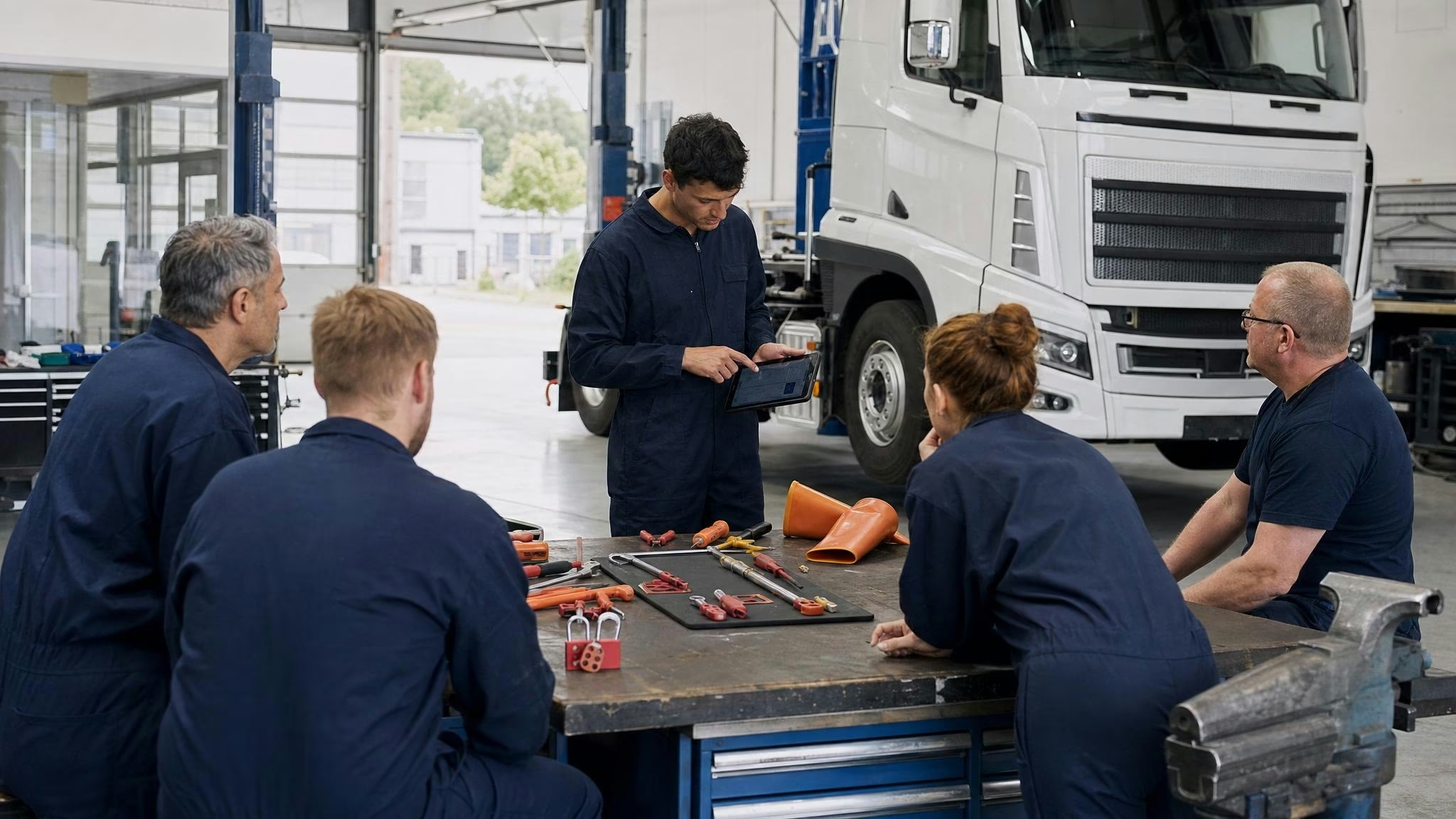
The national regulations for work on vehicles with high-voltage systems - in implementation of the EU Directive 2009/104 - form the central set of rules. They are also not a recommendation, but the recognised state of the art and therefore the basis for risk assessments, operating instructions and briefings. The most important contents: If you would like to delve deeper, you will also find further information in the article on inspection checklists.
- Definition of qualification levels 1 to 3S
- Requirements for the workplace (HV safety area)
- Requirements for tools, PPE and measuring technology
- Unlocking procedure and the five safety rules
- Emergency measures and first aid
- Documentation obligations
- Special requirements for Lifting platforms and lifting equipment for HV vehicles
- Record the qualification level of all employees: Who has which HV level? When is the next refresher course due?
- Procure PPE and define test cycle: Insulating gloves, face protection, flame-retardant clothing
- Create an activation procedure as a binding operating instruction and display it in the HV area
- Create an emergency plan: Emergency numbers, rescue chain, AED location, evacuation routes
- Plan emergency drills: At least twice a year with all employees
- Obtain and read national HV regulations (in implementation of EU 2009/104) and use them as a basis for the risk assessment
- Procure AED (defibrillator) for the HV area
- Check HV qualification path in the Alltrucks network: Alltrucks training (levels 1/2/3), certification as a multi-brand system technician, Alltrucks multi-brand diagnostics / Alltrucks KTS Truck V3 (Bosch + Knorr-Bremse integration) - suitability - please contact us for more information