The Transformation to electromobility presents commercial vehicle workshops with an investment decision that is easy to plan. The necessary investments are manageable, can be built up in stages and are typically amortised in the first to second year of operation if the number of e-trucks remains constant. This article therefore provides you with a concrete investment roadmap for the next three years. The EU Directive 2009/104 (transposed into national regulations) also regulates the requirements for the use of work equipment, including qualifications for working on high-voltage systems. In technical terms, investment decisions for e-mobility in the workshop are based on the IEC 60364-7-722 (charging infrastructure) and relevant national standards for HV workstations.
Contrary to what is often feared, it is not about a complete conversion of your workshop from one day to the next. Instead, we are talking about a gradual expansion that is geared towards your actual volume of e-trucks and refinances itself with each additional service. Incidentally, the new competences also justify a higher hourly rate. Finally, the responsible national funding agencies in the respective EU member state are the central reference for market data and funding scenarios.
With a steady volume of e-trucks, the phase 1 investment typically pays for itself within the first financial year. The decisive factor here is the hourly rate for HV work and the actual order volume.
Investment planning for e-mobility is the strategic multi-year planning of a commercial vehicle workshop's investments in high-voltage expertise, tools, safety areas and charging infrastructure. It combines technical requirements, subsidies and expected market developments to create a viable business case with a clear amortisation path.
What are the 4 pillars of e-mobility investment?
Investment in e-mobility capability can be divided into four pillars. Each pillar makes sense in its own right and contributes to the overall package. We also recommend dividing the investment into three phases - starting with the one that generates the fastest turnover.
| Investment area | Phase 1 (0-6 months) | Phase 2 (6-18 months) | Phase 3 (18-36 months) | Prerequisite / starting point |
|---|---|---|---|---|
| Training courses | Level 1 for all, level 2S for 2 mechanics | Level 3S for 1 workshop manager, refresher 2S | Other 2S forces, battery/ADAS specialisation | Admission requirement: Use Alltrucks training courses |
| Tools & PPE | HV tool kit (VDE/IEC 60900) and PPE for 2 persons | Manufacturer-specific supplements, replacement PPE | Extended special tool according to model mix | Authorisation requirement: insulating gloves with service life |
| Infrastructure | HV safety area, AC wallbox 22 kW | Battery quarantine area, battery table | DC fast charging station 50-150 kW or dedicated HV workstation | Central position in the Invest Plan eligible for funding via national funding programmes (conditions dependent on reporting date) |
| Lifting platform & lifting technology | – | Check existing platforms for HV suitability, lowering device for batteries | Dedicated HV lift, battery replacement system | Depending on the volume of e-truck orders |
| Character | Basics - becoming capable of acting | Expansion - scaling capacity | Future security - competence centre | Multi-stage investment over around three years |
What is the basis for phase 1 of the e-mobility investment (months 0-6)?
| Component | Typical priority | Prerequisite | Timeline of the introduction |
|---|---|---|---|
| HV Qualification Team | High - entry requirement for any HV work | EU 2009/104 + national regulations, training level 1/2S/3S | Month 0-6 (Phase 1) |
| Insulated HV tools | High - no approval without VDE/IEC 60900 tool | Qualified personnel, HV safety area | Month 0-6 (Phase 1) |
| HV safety area | High - admission requirement | Ground markings, signage, rescue equipment | Month 3-6 (Phase 1) |
| HV battery test bench | Medium - worthwhile from a regular battery volume | Completed phase 1, qualified 2S team | Month 18-36 (Phase 3) |
| ADAS calibration system | Means - synergetic with conventional ADAS work | Sufficient hall space (around 60 m²), calibration training | Month 18-30 (Phase 3) |
| Charging infrastructure workshop | Central position in the investment plan - funding can be utilised | Grid connection, transformer upgrade if necessary, national subsidy application | Month 3-36 (gradual AC → DC) |
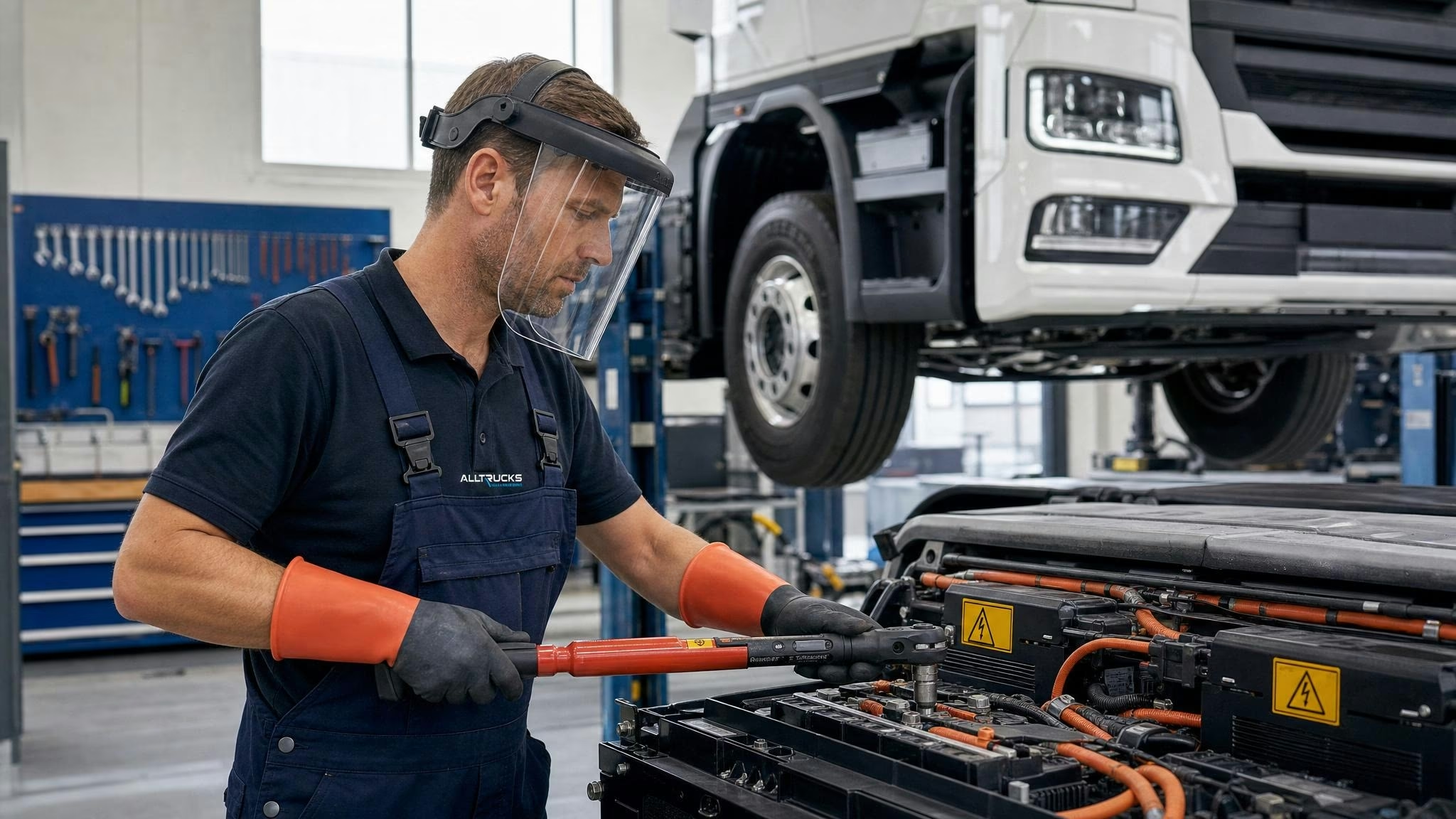
Phase 1 focuses on the minimum requirements to be able to take e-trucks into the workshop and carry out basic service work. The goal is clear: to be able to act before the first fleet customer asks.
Training courses in Phase 1
- 2 mechanics at level 2S qualify - so that two employees can work on HV systems
- All other employees at level S training - so that they can work safely on electric lorries in the vicinity of HV components
- HV modules can be integrated into the Alltrucks training programme and certification as a multi-brand system technician - please contact us for individual conditions
Tools & PPE in Phase 1
- HV tool set in accordance with VDE and IEC 60900 - insulated screwdriving and plug-in tools as a prerequisite for approval
- PPE for 2 employeesInsulating gloves, face protection, flame-retardant clothing - limited service life, observe testing requirements
- Measurement technologyInsulation measuring device and voltage tester for the disconnection test
Infrastructure in Phase 1
- HV safety area Set up (floor markings, signage, barriers, rescue equipment) - mandatory prerequisite for HV work
- AC wallbox 22 kW install (incl. electrical installation) - creates basic charging supply for customer vehicles
Quick Win: With Phase 1, you can already offer HV maintenance work. This includes checking the condition of the traction battery, cooling system maintenance, insulation testing and software updates. Just a few HV orders per week also generate relevant additional hourly revenue - at a higher hourly rate than in conventional service. Detailed information on the specific requirements for e-trucks in the workshop can therefore be found in the basic article.
Which competences does phase 2 of the e-mobility investment develop (month 6-18)?
In phase 2, you expand your range of services and your capacity. The investments in this phase are based on your actual volume of e-trucks - so they are scalable.
Training courses in Phase 2
- 1 workshop manager at level 3S qualify - for the function of plant manager in accordance with EU 2009/104 and relevant national regulations
- Refresher training for existing Level 2S employees (typically every 12 to 24 months)
- Manufacturer-specific training courses for new e-truck models (as required)
Tool in Phase 2
- Supplementing the tool set with manufacturer-specific special tools
- Procurement of replacement PPE (insulating gloves have a limited service life and must be inspected)
Infrastructure in Phase 2
- Battery quarantine area Set up in the outdoor area (fire protection distance, cover, rescue plan)
- Battery table for the safe removal and transport of traction batteries
Lifting technology in Phase 2
- Existing Lifting platforms Check for HV suitability and retrofit: insulated mounts, ESD protection
- Procure lowering device for battery removal - crucial for ergonomic and safe module replacement
Practical report from the Alltrucks network: garages that implement phases 1 and 2 gradually and do not procure everything at once typically refinance the investments in the first to second year of operation - the decisive factor is the orientation towards the actual volume of e-trucks instead of a fixed expansion target.- Experience from the Alltrucks partner network
How does phase 3 of the e-mobility investment ensure future viability (month 18-36)?
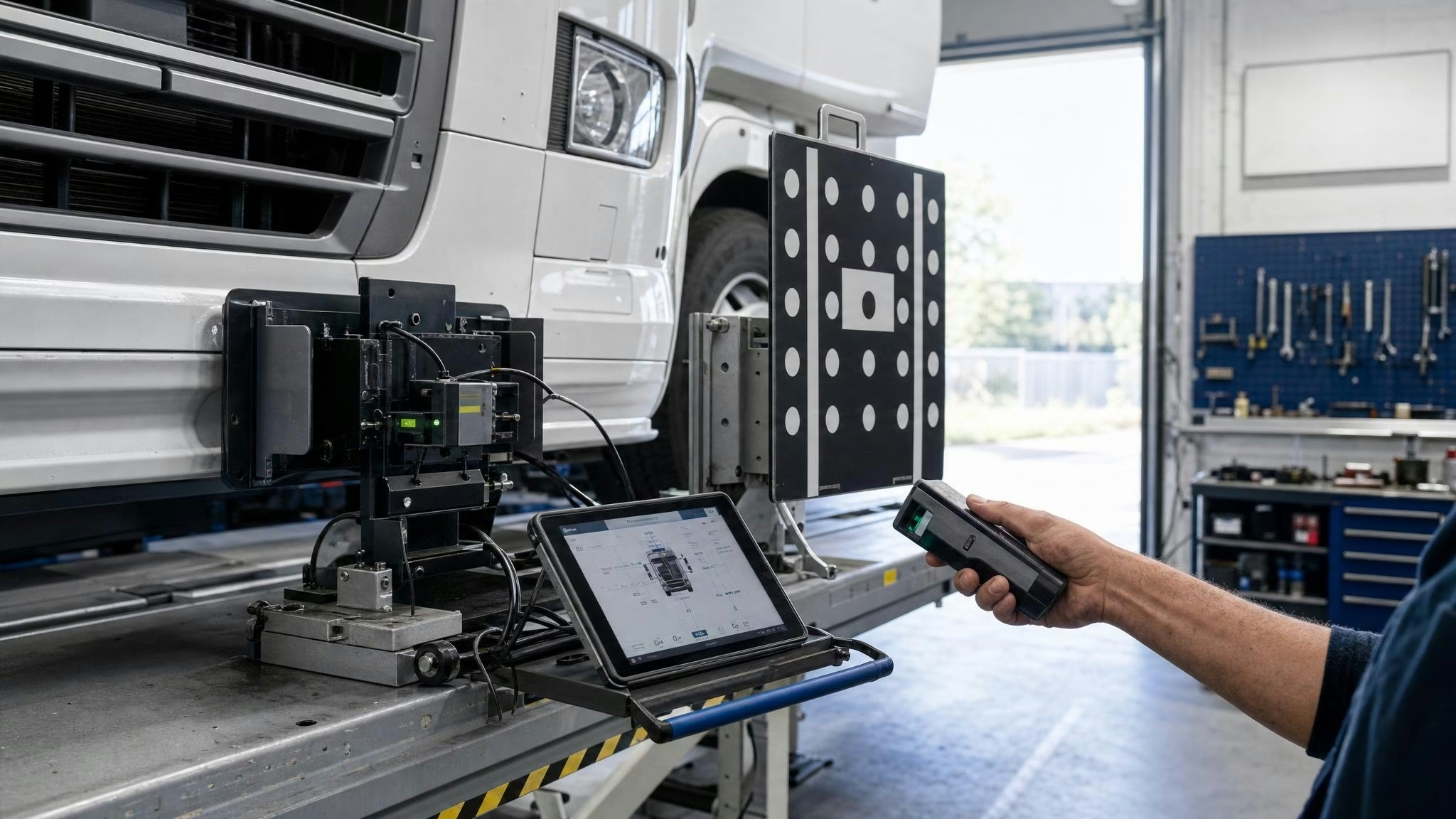
Phase 3 is aimed at workshops that want to expand their e-truck service as a strategic business area - not just as an additional service, but as a core competence. The investments in this phase are optional and depend on your strategic orientation.
Training courses in Phase 3
- Qualify further mechanics to level 2S (capacity building)
- Specialisation in battery diagnostics and repair
- ADAS calibration for e-truck-specific systems
Infrastructure in Phase 3
- DC fast charging station 50-150 kW (optional if high volume of e-trucks or charging service planned) - charging infrastructure funding available in EU member states; check current funding rates with the responsible national funding body
- Alternative: Second AC wallbox or upgrade to 44 kW
- Dedicated e-truck workstation with full HV equipment and storage space (approx. 60 m²)
Lifting technology in Phase 3
- Acquisition of a dedicated HV lift (with corresponding order volume)
- Battery lifting platform or battery replacement system for more efficient module replacement
What subsidies and grants are available for e-mobility?
The investment costs can be significantly reduced by making clever use of subsidy programmes. The most important sources can be found below. If you would also like to delve deeper, you can find more information in the article on Set up e-truck workshop Further information.
Alltrucks partner conditions
For partner workshops there are conditions for HV training courses as well as framework agreements with OE manufacturers. We will be happy to clarify the individual conditions together - please contact us.
National charging infrastructure funding
Most EU member states have national funding programmes for the development of charging infrastructure for commercial vehicles. However, the specific funding quotas for DC and AC charging points change depending on the programme and cut-off date. You should therefore check the current conditions and application deadlines with the relevant national funding agency.
Regional funding programmes
Many regions within the EU Member States offer their own funding programmes for skilled trades and SMEs that subsidise investments in workshop equipment and digitalisation. The funding rates and conditions vary. Alltrucks also proactively informs partner workshops about relevant programmes in their region.
Promotional loans and tax benefits
In many EU member states, state development banks offer low-interest loans for investments in environmental protection and energy efficiency. You should therefore check the current programme portfolio and conditions with the relevant national development bank. In addition, investments in e-mobility infrastructure can be claimed for tax purposes in accordance with national tax and depreciation rules. However, the specific structure depends on the applicable version of national tax law and should be agreed with your tax advisor.
ROI calculation: When does the investment pay off?

The amortisation depends on the number of e-trucks you use. However, the return on investment is attractive even with conservative calculations. If you would like to delve deeper, you can find more information in the article on Increase contribution margin Further information.
Conservative scenario
Assumptions: 3 e-truck orders per week, average of 2 hours of HV work per order, 48 working weeks per year.
- Additional productive HV hours per year: 3 × 2 × 48 = 288 hours
- The Phase 1 investment is primarily funded by these additional HV hours - depending on the hourly rate for HV work
- Amortisation phase 1: typically within the first financial year
Realistic scenario
Assumptions: 5 e-truck orders per week, average of 3 hours of HV work per order, 48 working weeks per year.
- Additional productive HV hours per year: 5 × 3 × 48 = 720 hours
- Total expenditure for phases 1+2 is significantly reduced by Alltrucks partner conditions and national and regional funding programmes
- Amortisation phase 1+2: typically in the first to second year of operation
Important: This calculation only takes into account direct HV sales. It does not include indirect effects: conventional servicing of e-trucks (brakes, tyres, chassis), customer loyalty through full-service expertise and the acquisition of new customers as one of the few e-truck-capable workshops in the region. You can also read our article on workshop profitability for an overall view.
A lean Phase 1 entry with two HV-qualified mechanics and a complete HV tool kit is enough to acquire the first permanent e-truck fleet customers. Phase 2 planning then follows from the actual order volume - not the other way round.- Experience from the Alltrucks partner network
What timetable makes sense for the e-mobility transition?
The following schedule is based on the experience of successful Alltrucks partner workshops. It also takes into account realistic lead times for training, procurement and set-up.
- Month 1-2: Stocktaking, market analysis (volume of e-trucks in the catchment area), discussions with fleet customers, joint discussion with Alltrucks on the investment sequence
- Month 2-3: Book training courses (level 1 for all, level 2S for 2 mechanics), order HV tools
- Month 3-4: Set up HV safety area, install AC wallbox
- Month 4-6: Carry out first e-truck orders, optimise processes, gain experience
- Month 6-12: Evaluation of phase 1, capacity planning for phase 2, lifting platform test
- Month 12-18: Realise phase 2 investments, qualify additional mechanics
- Month 18-36: Phase 3 as required, strategic positioning as an e-truck competence centre
- Determine e-truck potential in your catchment area: How many fleet customers are planning electrification?
- Release phase 1 budget: Basic equipment (stage 1/2S, HV tooling, safety area, AC wallbox) - before grants and funding
- Let us develop a customised investment plan for your workshop together - contact us
- Arrange training dates for HV level 1 and 2S (use Alltrucks partner conditions)
- Check funding: national charging infrastructure funding, regional funding programme, development loan from the national development bank
- Safety requirements Study and implement for HV work
Our information on inspection obligations and occupational safety is based on EU Directive 2009 104 on minimum health and safety requirements for the use of work equipment and the respective nationally implemented regulations, such as the German Ordinance on Industrial Safety and Health. The specific risk assessment, the definition of inspection intervals and compliance with national legislation remain the responsibility of the respective workshop operator.