The lift is the centrepiece of every commercial vehicle workshop. Without it, brake servicing, chassis diagnostics and underbody inspections come to a standstill. At the same time, the purchase of a truck lift is one of the most capital-intensive decisions a workshop operator makes - often in the six-figure range. Those who plan incorrectly here tie up capital in unsuitable technology and risk downtimes. This then slows down the entire operation. Planning becomes particularly relevant when entering the E-truck workshop, because electric commercial vehicles have different load distributions and pick-up points. This article therefore gives you a practical overview of lift types, investment planning, legal regulations and how to calculate your return on investment. In addition, lifting platforms are subject to the DIN EN 1493 (Safety requirements for vehicle lifts), which standardises construction, stability and testing.
A lorry lift is a stationary or mobile device for the safe lifting of commercial vehicles for maintenance and repair work. It is also subject to the EU Directive 2009/104 for the use of work equipment. Therefore, a competent person must inspect them annually in order to demonstrably ensure road safety in operation.
Which type of lift suits which workshop?
The type of lifting platform that’s right for you depends on your range of vehicles, the space available and your budget. You can choose between column lifts, scissor lifts and the classic in-ground pit. Each system has its own specific strengths and clear limitations. Post lifts are the standard in lorry workshops because they provide full access to the underbody.
EU Directive 2009/104 on the use of work equipment provides the binding framework for health and safety at work. This is supplemented by the harmonised standard EN 1493 for vehicle lifts.
Stamp lift (column lift)
Ram lifts are the standard in lorry workshops. Four or six mobile or stationary lifting columns lift the vehicle at the designated pick-up points. Modern systems also achieve load capacities of 6.5 tonnes to 30 tonnes per ram and enable lifting heights of up to 1,850 mm. The big advantage: The underbody is completely clear and all components are freely accessible. This makes ram lifts ideal for brake, axle and exhaust work. Mobile versions also offer flexibility in terms of hall utilisation. Disadvantage: The hall floor must be able to absorb the point loads. A floor inspection by a structural engineer is therefore essential before installation.
Scissor lift (platform lift)
Scissor lifts raise the vehicle via a platform using a scissor mechanism. They offer a stable, large contact surface and are particularly suitable for vehicles with a low centre of gravity or unusual pick-up points. The load capacity is also typically between 10 t and 40 t. In-floor scissor lifts are also space-saving, as they close at ground level when lowered and can be driven over. The investment is higher than for ram systems, but the problem of point loading is eliminated. However, depending on the design, access to the underbody is more restricted than with ram lifts.
Underfloor pit (working pit)
The working pit is the oldest and still widely used solution for commercial vehicles. It requires no moving equipment and has practically unlimited load-bearing capacity. The investment is also limited to the construction itself - including ventilation, lighting and fall protection. Pits are therefore ideal for quick inspections and oil changes. Disadvantage: The working height is fixed, ergonomic adjustments are hardly possible. In addition, strict regulations apply for ventilation (explosion protection) and fall protection in accordance with harmonised workplace requirements.
| Criterion | Stamp lifting platform | Scissor lift | Underfloor pit |
|---|---|---|---|
| Load capacity | 6.5-30 t / stamp | 10-40 tonnes total | Practically unlimited |
| Space requirement | Medium (flexible for mobile systems) | Low (can be driven over underfloor) | Fixed, structural measure |
| Typical use case | Standard NFZ operation, flexible hall utilisation | Heavy commercial vehicles, buses, special vehicles | Inspection and quick service |
| Load capacity class | 6.5-30 tonnes per punch | 10-40 tonnes total | Practically unlimited |
| Test interval (EU 2009/104) | Annually by authorised person; quarterly visual inspection internally | Annually by authorised person; quarterly visual inspection internally | Annually; additionally harmonised workplace regulations (ventilation, fall protection) |
| Space requirement | Around 40-55 m² working area incl. manoeuvring zone | Around 45-60 m²; can be driven over underfloor | Fixed pit, typically 8-12 m × 1.0 m |
| Underbody access | Very good (360°) | Restricted | Good (from below) |
| Suitability | Brakes, axles, exhaust, ADAS calib. | Heavy commercial vehicles, buses, special vehicles | Inspections, oil changes, quick service |
| Suitable for electric lorries | Yes (isolated stamps required) | Yes (with HV release) | Conditional (battery access restricted) |
For workshop equipment, the Alltrucks network relies on certified equipment partners. HYMER access technology is also the ideal partner for Alltrucks workshops when working overhead and on the top of vehicles. Simply speak to your Alltrucks system consultant about this.
When does a new lift pay for itself?
| KPI | What to look out for |
|---|---|
| Processing time per standard order | Make waiting times for a free stage visible |
| Lifting platform utilisation | Record occupancy times and idle phases |
| Parts availability on arrival | Secure the parts supply before lifting |
| Overdraft rate per month | Check planning quality and realistic time frames |
| Complaint rate | Document error images after stage work |
| Employee productivity | Minimise set-up times on the platform |
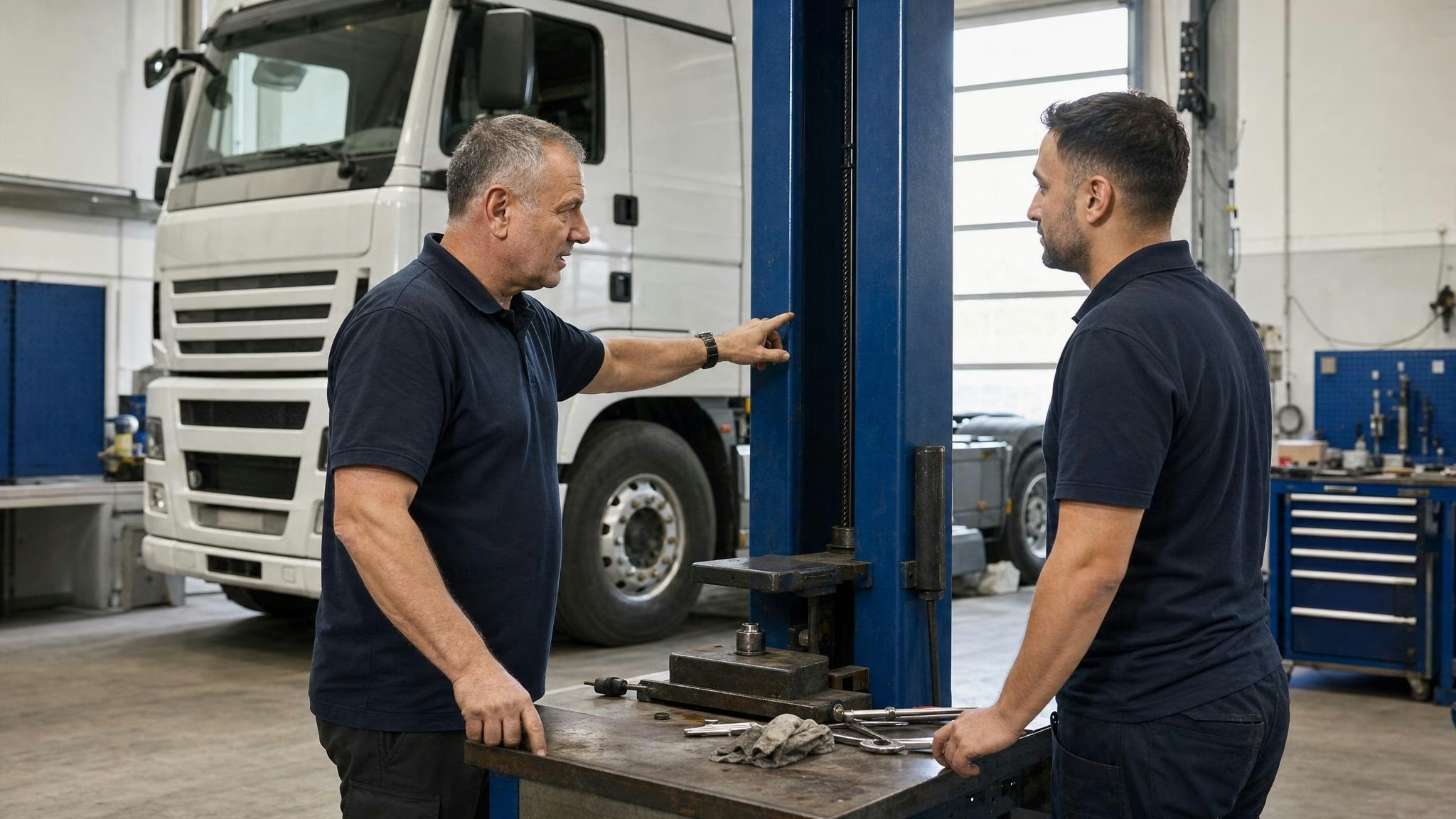
A new lorry lift typically pays for itself within the first one to two years of operation. This is due to the additional capacity it provides, as jobs can be carried out simultaneously rather than one after the other. On the cost side, the total cost of ownership over a service life of 15 to 20 years is a key factor: purchase price, foundations, electrical installation, annual maintenance and the inspections required by law.
The foundations must include a structurally tested hall floor, with floor slab reinforcement where necessary. The electrical installation requires a three-phase connection of 400 V and 32 A or more.
On the revenue side, on the other hand, you calculate with the additional capacity: a second lift makes it possible to process orders in parallel instead of sequentially. The extent to which this is reflected in additional billable hours also depends on the order situation, workshop organisation and employee qualifications. Amortisation is therefore typically achieved in the first to second year of operation.
When planning, also consider the Effect on your workshop utilisation: An additional lifting platform reduces waiting times and thus improves the Throughput times considerably. These indirect effects - more satisfied fleet customers, fewer order rejections - are often more valuable than the additional turnover alone.
What legal inspection obligations apply to lifting platforms?
Four sets of regulations apply to lifting platforms in particular. EU Directive 2009/104 stipulates that an annual inspection must be carried out by a competent person. The Machinery Directive 2006/42 governs CE marking and safety requirements, whilst the EN 1493 standard covers design and testing. National health and safety regulations also require a risk assessment. Breaches result in severe penalties and liability risks.
An overview of the regulations:
- EU Directive 2009/104 (Use of work equipment): Regulates the safe use of work equipment throughout Europe. Prescribes, among other things, an annual inspection by a competent person, which is incorporated into national operational safety regulations.
- EU Directive 2006/42 (Machinery Directive): Defines the conformity and safety requirements for lifting platforms from the time they are placed on the market - CE labelling, load capacity, stability, operation.
- EN 1493 (vehicle lifts): Harmonised European safety standard for the design, stability and testing of vehicle lifts.
- National operating safety regulations: Obliges the employer to carry out a risk assessment and regular inspections by authorised persons. Includes mechanical, hydraulic and electrical inspection of all safety-relevant components.
- Harmonised workplace regulations (work pits): Rules for ventilation, lighting, fall protection and explosion protection especially for underfloor workstations.
Important for e-trucks: The introduction of electric commercial vehicles brings additional requirements. Lifting platforms for high-voltage vehicles must therefore have insulated mounts and ESD protection. In addition, national HV safety regulations and manufacturer HV approvals provide information on safe working on HV vehicles - also with regard to lifting technology.
Inspection intervals and documentation
The legal minimum requirement is an annual inspection. In practice, however, shorter intervals are recommended: a quarterly visual inspection by trained in-house personnel and a functional test every six months. The annual work equipment inspection by an external expert also typically takes 2 to 4 hours per lifting platform - depending on the type and complexity of the system. According to EU 2009/104, the operator is responsible; the inspection is carried out by a competent person in accordance with national operational safety regulations. Complete documentation of all inspections is therefore not only required by law, but also protects you in the event of liability.
- Annual work equipment inspection documented by a competent person (EU 2009/104)
- Risk assessment prepared and updated in accordance with national operational safety regulations
- Quarterly visual inspection (cracks, leaks, wear and tear) by our own personnel
- Semi-annual functional test of all safety devices (emergency lowering, limit switch)
- Test logbook or digital test documentation complete and accessible
- Load capacity labelling on the lifting platform visible and correct
- Operating personnel demonstrably instructed (at least annually, in writing)
- For working pits: ventilation system tested, fall protection in place
- For electric lorry approval: insulated mounts and HV safety equipment tested
How does the procurement of a new lift work in 5 steps?
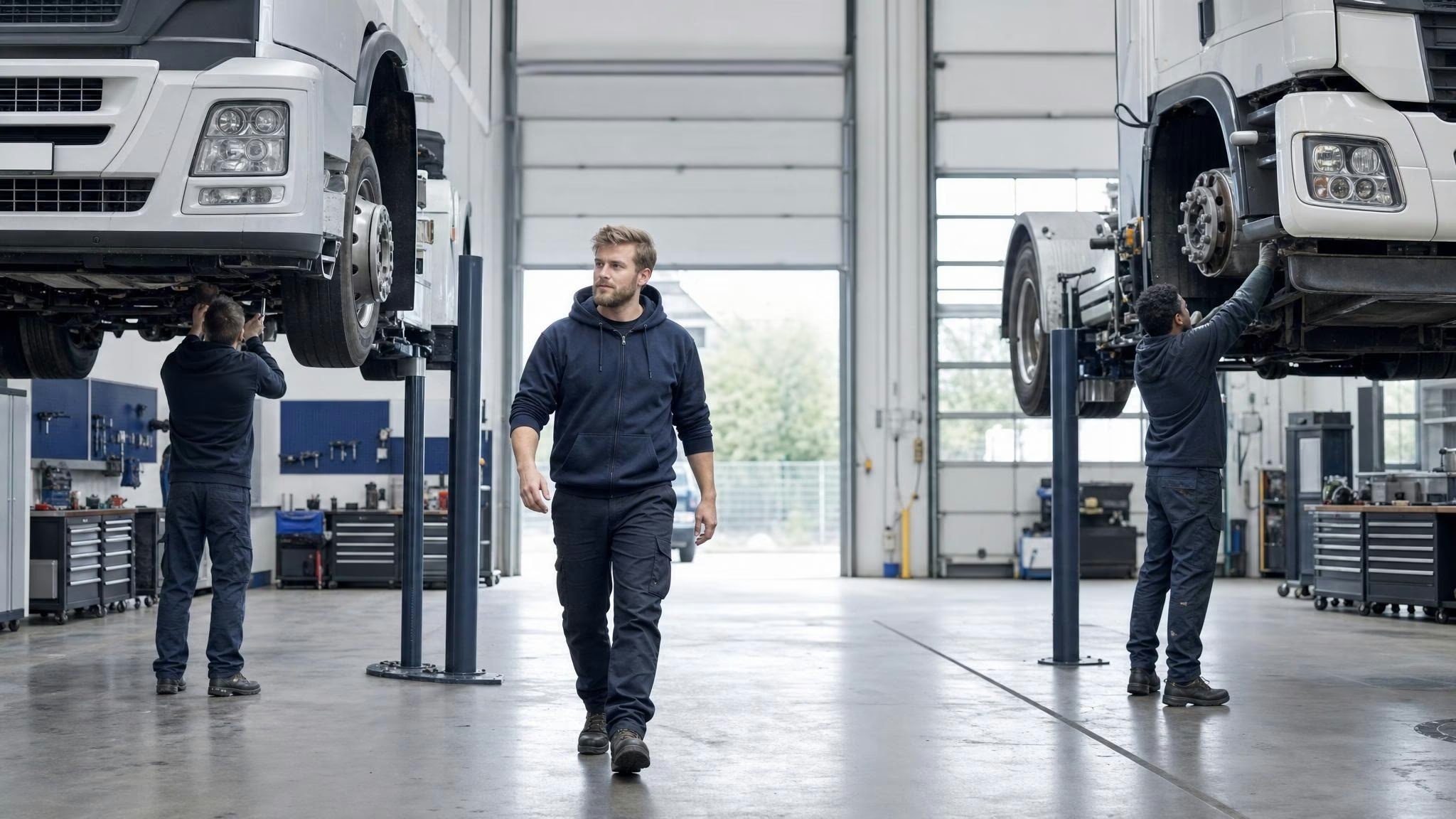
The process of procuring a commercial vehicle lift involves five steps: analysing requirements, checking the location and foundations, comparing at least three quotations, accepting the installation following the initial inspection in accordance with EU Directive 2009/104, and training staff. Clarify the load-bearing capacity of the workshop floor at an early stage, as pillar-type lifts generate point loads of up to 15 tonnes per pillar.
Carry out a needs analysis
First define your range of vehicles (lorries up to 7.5 t, heavy tractor units, buses, etc.), the required load capacity, the desired lifting height and the available hall space. Also consider future requirements: Will you be servicing e-trucks? Then you will need HV-compatible technology. Also plan for growth, because a lift that is sufficient today may become a bottleneck in three years' time.
Check location and foundation
First have the load-bearing capacity of the hall floor assessed by a structural engineer. Punch lifts generate point loads of up to 15 tonnes per punch, and not every existing floor is designed for this. You should also clarify the power supply: Many systems require a three-phase connection (400 V, 32 A or more). Underfloor systems also require shaft work. You should therefore obtain permits at an early stage.
Obtain and compare offers
Firstly, compare at least three providers. Pay attention not only to the price of the appliance, but also to the overall package: delivery, installation, commissioning, initial instruction and warranty conditions. Also ask about maintenance contracts and the availability of spare parts. Alltrucks partner workshops also have access to certified equipment partners from the Alltrucks network; we will be happy to discuss the specific conditions that suit your business.
Installation and acceptance
Installation should only be carried out by the manufacturer or a certified specialist company. After installation, an initial inspection in accordance with EU 2009/104 by a competent person is mandatory before you are allowed to put the lift into operation. You should therefore document the acceptance test carefully, as it forms the basis for all further tests.
Instruct personnel and start operation
Every employee who operates the lifting platform must be demonstrably instructed. The instruction includes correct operation, behaviour in the event of faults and the daily visual inspection before starting work. You should also draw up operating instructions and display them prominently on the lifting platform. Repeat the instruction at least once a year.
Which lift is future-proof for the e-truck?
The Transition to electromobility also directly affects the workshop equipment. High-voltage batteries in electric trucks weigh several tonnes and are usually located in the underbody. Working on these components therefore places new demands on lifting platforms: insulated pick-up points, ESD protection (electrostatic discharge), sufficient load-bearing capacity for battery removal and, if necessary, a special lowering device for battery packs.
If you are investing today, you should take these requirements into account from the outset. Although HV-compatible systems are noticeably more expensive than conventional models, this manageable surcharge secures your investment in the long term. You can also find further tips on preparing your workshop for electric commercial vehicles in our article Electric lorry in the workshop.
Network components: For lifting technology and workshop equipment, the Alltrucks network relies on certified equipment partners; HYMER Steigtechnik is also your ideal partner for work platforms. You can also address technical questions from your day-to-day work in the Alltrucks Technology Forum according to the „partner helps partner“ principle. We will be happy to discuss together which modules are suitable for your company.
How can the profitability of a lifting platform be strategically secured?
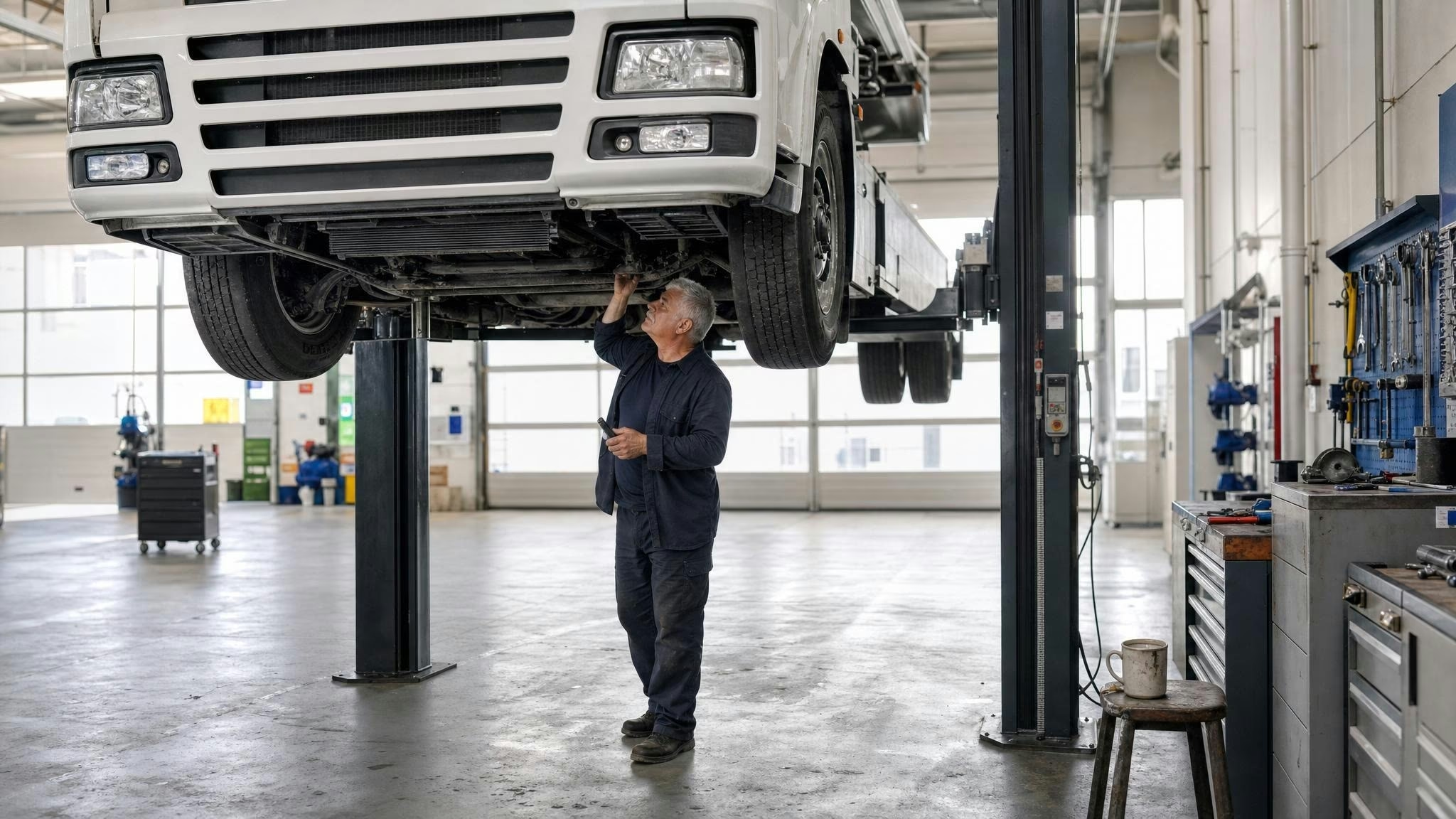
You can ensure profitability by integrating the lifting platform into an overall strategy. It has an impact on the Lead time, the Utilisation and the Overall profitability of your business. You should therefore clarify which vehicle segments you serve, which service packages you offer and how your fleet customer base is developing.
You should therefore plan ahead. A lift installed today should be in service for at least 15 years. During this period, the commercial vehicle market will change fundamentally - and your workshop equipment must be able to keep pace. That's why investing in quality and future-proofing always pays off in the long term.