Throughput times are the lifeline of every commercial vehicle workshop. Every hour that a vehicle sits in the workshop unnecessarily costs the fleet owner money - and, in case of doubt, a satisfied customer. In an industry where customer loyalty depends on speed of response, systematic process optimisation is a basic requirement. Industry statistics from national trade associations also consistently confirm this trend for the commercial vehicle industry. The relevant DIN EN 13306 (European maintenance terminology) provides the methodological framework for any structured process optimisation in the workshop.
The lead time is the time between vehicle acceptance and delivery after repairs or maintenance have been completed. It includes all productive and non-productive phases of an order. It is therefore the most important control parameter for profitability and customer satisfaction in commercial vehicle workshops.
Why are throughput times in the commercial vehicle workshop so critical?
A relevant proportion of throughput times in the truck workshop is due to unproductive waiting times - missing parts, unplanned diagnoses, unprepared orders. However, many of these losses can be addressed with structured processes, without additional investment in personnel or equipment. Every productive hour gained also has a direct impact on the calculated hourly rate and thus on the margin. For parallel occupational safety, on the other hand, the EU Directive 2009/104 (Minimum requirements for the use of work equipment, transposed into national regulations) provide the binding framework. If you would like to delve deeper, you can also read the article on Targeted employee retention Further information.
The consequences of long turnaround times go beyond the individual order. This is because fleet managers who regularly experience long downtimes consider changing their service partner. "Excessive downtime" is one of the most frequently cited reasons for switching partners across the industry.
„An order is only started when the vehicle, parts and technology are ready at the same time. This is the principle of structured order preparation."- Guiding principle from the Alltrucks partner network
Which 5 levers reduce throughput times the most?
| KPI | Without structured processes | With structured order preparation |
|---|---|---|
| Processing time per standard order | fluctuating | more predictable |
| Lifting platform utilisation | inconsistent | more predictable |
| Parts availability on arrival | inconsistent | systematically clarified |
| Overdraft rate per month | frequently | rarer |
| Complaint rate | scattering | more stable |
| Productive time per mechanic | varying | Better plannable |
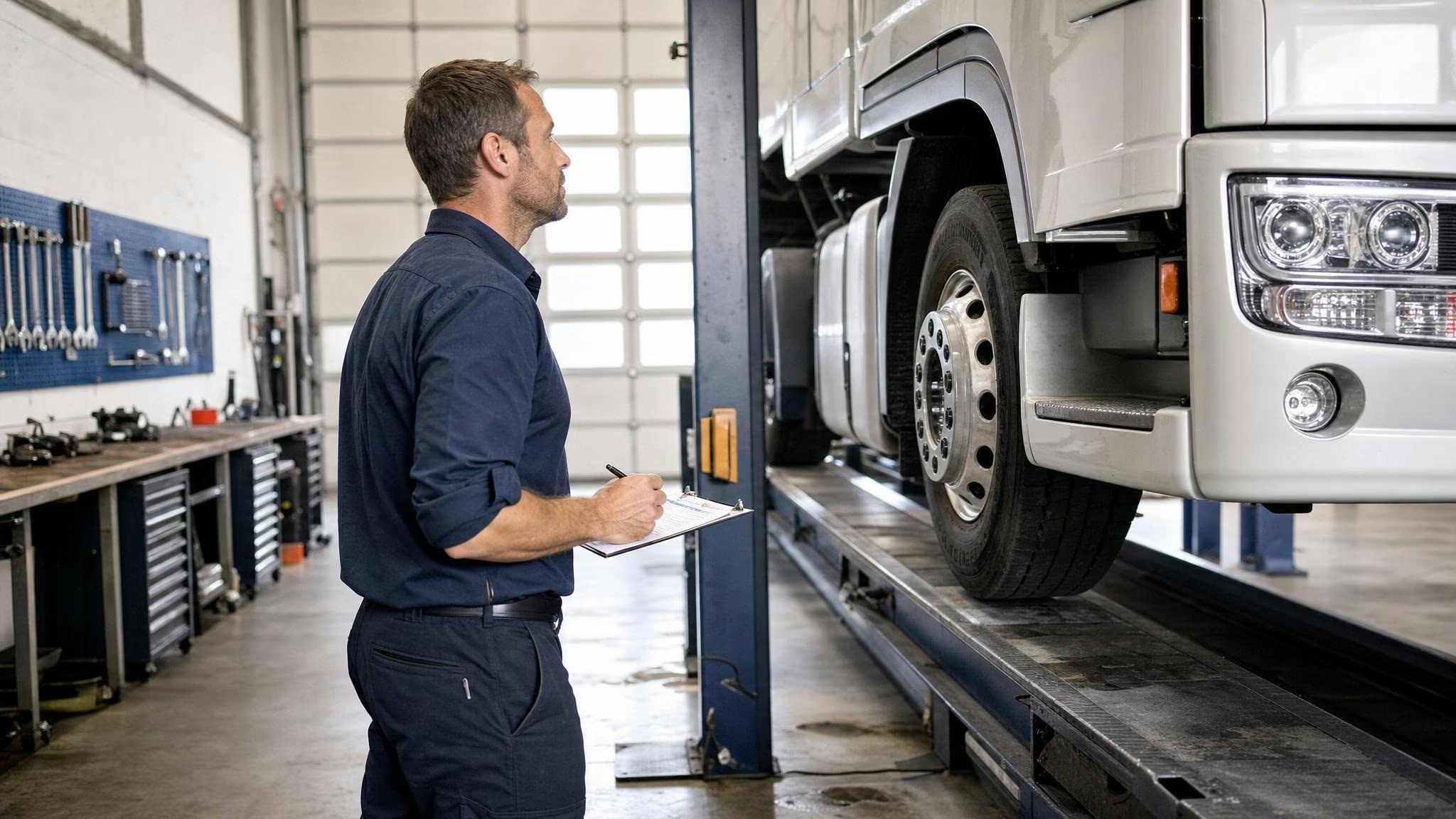
Five measures have established themselves as drivers for structured throughput times in the truck workshop. They are interlinked - from acceptance to order structuring to release - and together form the common thread of a reliably plannable workshop day:
Initial diagnosis on the day of acceptance
A quick check directly at the vehicle reception lays the foundation for a reliably plannable order. This typically takes 20-30 minutes per vehicle. In the Alltrucks partner network, this step is carried out by the Alltrucks multi-brand diagnostics based on the KTS Truck V3 with Knorr-Bremse integration. The Alltrucks technical hotline and the technical forum at forum-alltrucks.com also help to clarify any unexplained faults.
Pre-order parts
The availability of spare parts belongs before the workshop entrance, not after. Alltrucks partners therefore use the Alltrucks VINcat spare parts catalogue as a tool for structured parts research based on the VIN. The Knorr-Bremse OCT (Online Communication Tool) is also available for trailer configuration.
Complete order preparation
All documents, work instructions and special tools must be provided before the vehicle drives into the box. A clearly defined acceptance routine provides the common thread - from the checklist to order structuring and approval. In the Alltrucks partner network, these routines are also customised for your company together with your Alltrucks system consultant.
Realistic capacity planning
Realistically plan capacity utilisation means factoring in a buffer for overtime. In industry practice, a target corridor of 85-90 % instead of 100 % has proven itself. Planning above 95 %, on the other hand, often leads to overruns and quality problems in the late shift.
Digital order control
Today, a DMS with real-time order status is a prerequisite for structured throughput times, transparent communication with fleet customers, visible escalation in the event of delays and data-based improvement over time. Werbas (DMS, service partnership) and PleaseFix (for the workshop-fleet connection, service partnership) are therefore available from the service partnerships of the Alltrucks network. In addition, the Alltrucks VINcat spare parts catalogue supplements the parts search via the VIN.
How does the 2-hour rule work in practice?
Define an internal SLA: Every order that is more than 2 hours over the planned time is automatically escalated. The rule can also be introduced without new software or process training. However, its effectiveness depends on consistent implementation within the team.
Escalation can be simple: you inform the line manager, proactively contact the fleet customer and activate an alternative plan. The crucial step is to formalise this process and put it into practice.
Display the SLA times for each active order visibly in the workshop - on a digital board, for example. This is because visual transparency creates a natural sense of urgency and involves the entire team.
„The 2-hour rule is one of the process improvements that requires little effort to introduce. Its effect depends on the consistency of its implementation."- Editorial guiding principle
How does the Alltrucks network support process optimisation?
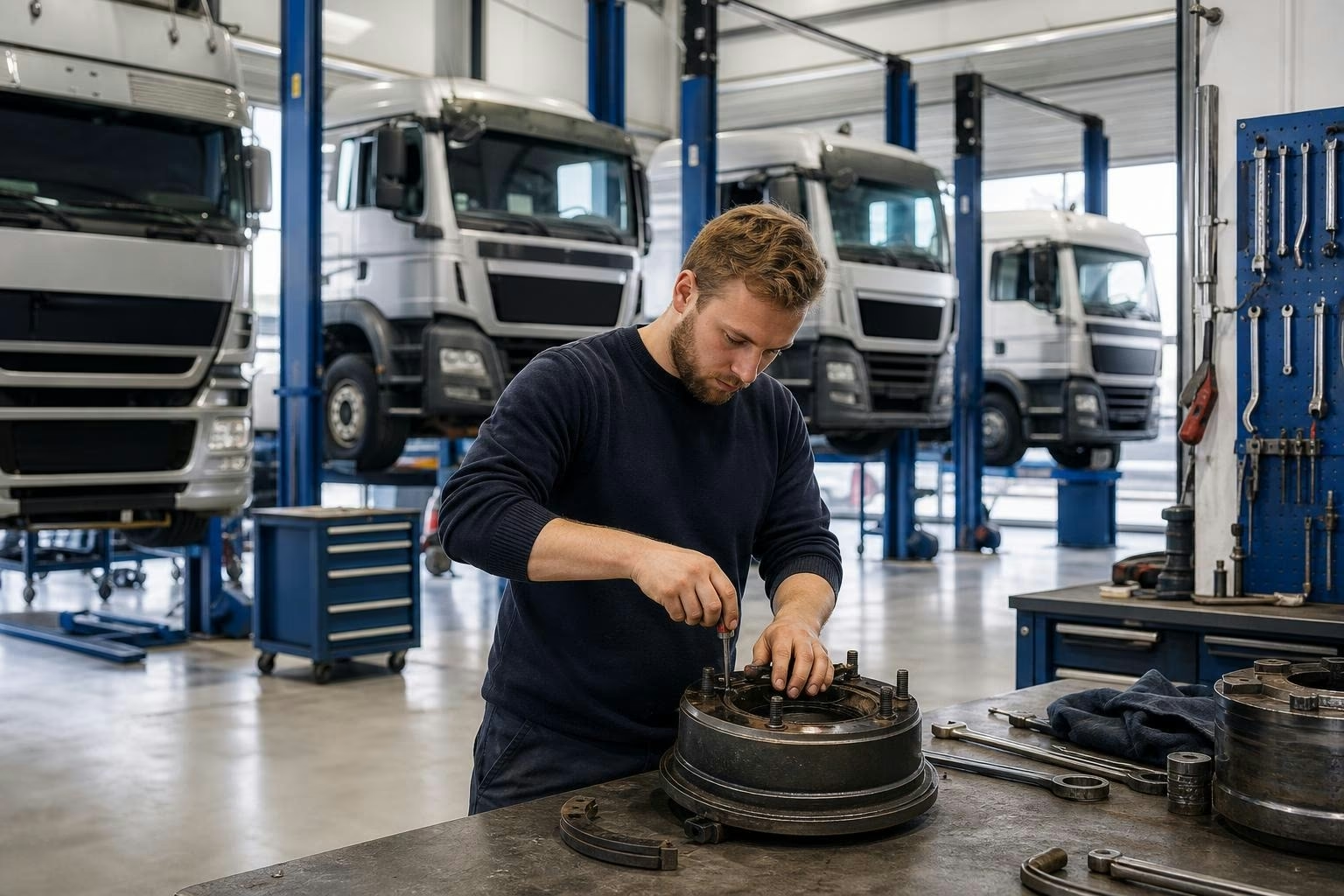
The technical framework is provided by the Alltrucks Technical Support with its six building blocks - Technology hotline, Help Desk, Tips and tricks, On-site support, Remote Support and Technology Forum (live at forum-alltrucks.com). This is also the foundation on which the Alltrucks multi-brand diagnostics based on KTS Truck V3 for all common commercial vehicle manufacturers - as a joint solution from the founders Bosch and Knorr-Bremse, without system discontinuities. If you want to delve deeper, you can also find out more in the article on recalculate the hourly rate Further information.
For the exchange between workshops, on the other hand, the Technology Forum (forum-alltrucks.com) is the central channel in the Alltrucks partner network - according to the "partner helps partner" principle. Finally, our practical report from the Alltrucks network shows how structured process customisation can work in practice.
We will be happy to look together at which process modules are prioritised in your own company. Talk to your Alltrucks system consultant about this: Alltrucks thinks in terms of your workshop processes, not products.
This article is part of our Cornerstone Guide Workshop control. There you will find all in-depth articles on the topic cluster, an interactive self-assessment and the complete practical framework.
Read the guide: Perfecting workshop managementProcess modules in the Alltrucks network: The Alltrucks network bundles several modules for structured throughput times. These include the Alltrucks multi-brand diagnosis for pre-diagnosis and the Alltrucks VINcat (spare parts catalogue for research via the VIN) for pre-ordering parts. In addition, the service partnerships Werbas (DMS, service partnership) and PleaseFix (for the workshop-fleet connection, service partnership) are used for digital order management. Technical support is also provided by Alltrucks Technical Support with a technical hotline, help desk, tips and tricks, on-site support, remote support and technical forum (forum-alltrucks.com). We will be happy to look together at which modules work in which order in your company - please contact us. For work equipment safety, on the other hand, EU Directive 2009/104 (transposed into national regulations) remains the binding basis for every company. Lifting platform test.