For transport companies and fleet operators, the downtime of a commercial vehicle is one of the most costly indicators of all. If a lorry is at a standstill, every hour incurs direct costs due to loss of revenue, rental vehicles or contractual penalties. There are also indirect costs due to disrupted supply chains and dissatisfied customers. The workshop is at the centre of this, as it plays a key role in determining how long a vehicle is out of action. Methodologically, the EN 13306 (terms of maintenance) provide the framework on which downtime reduction programmes are based throughout Europe.
Practical experience shows that unscheduled downtime usually takes significantly longer than planned maintenance. It is precisely this difference that has the greatest effect, which workshops and fleet operators can address together. This article therefore shows you how you, as a commercial vehicle workshop, can systematically reduce unplanned downtimes. In this way, you can also position yourself as a strategic partner to your customers. For parallel occupational safety, the EU Directive 2009/104/EC The European framework for the use of work equipment, which is concretised in the national occupational safety regulations.
„The majority of unplanned downtimes are avoidable. The workshop that recognises this and takes action becomes an availability partner instead of a repair service provider."- Experience from the Alltrucks partner network
The downtime of commercial vehicles refers to the time during which a vehicle is not in productive use. Instead, it waits for repairs, maintenance, parts or disposition. In fleets, this is a critical cost factor. This is because every day of downtime causes direct loss of revenue and indirect costs due to replacement logistics.
What do downtimes really cost a commercial vehicle workshop?
The true costs of a service life are often underestimated because only the obvious items are considered. However, a complete calculation includes far more than just the repair bill. If you want to delve deeper, you will find further information in the article on preventive maintenance.
Direct and indirect downtime costs
Direct costs include repair costs (parts and labour), towing costs in the event of breakdowns, rental or replacement vehicles and, if necessary, overnight stays for drivers. Downtimes also have an indirect impact in the form of lost sales, contractual penalties for late delivery, reputational damage and additional scheduling costs.
The actual amount depends heavily on the vehicle type, usage profile and contract structure. The workshop and fleet calculate it individually. It is usually higher than the repair bill alone. As a result, the avoidance of unplanned breakdowns becomes a relevant factor in fleet operations.
The workshop as a cost factor - and as a solution
For many fleet operators, the workshop is initially a cost factor. However, this changes as soon as the workshop becomes an active partner in reducing downtime. Commercial vehicle workshops that proactively monitor maintenance intervals, keep parts in stock and guarantee short lead times become a strategic competitive advantage for their customers. The result: greater customer loyalty, longer contract periods and predictable capacity utilisation. You can also find out how to shorten your lead times in the article Improve throughput times in the lorry workshop.
What are the most common causes of unplanned downtimes?
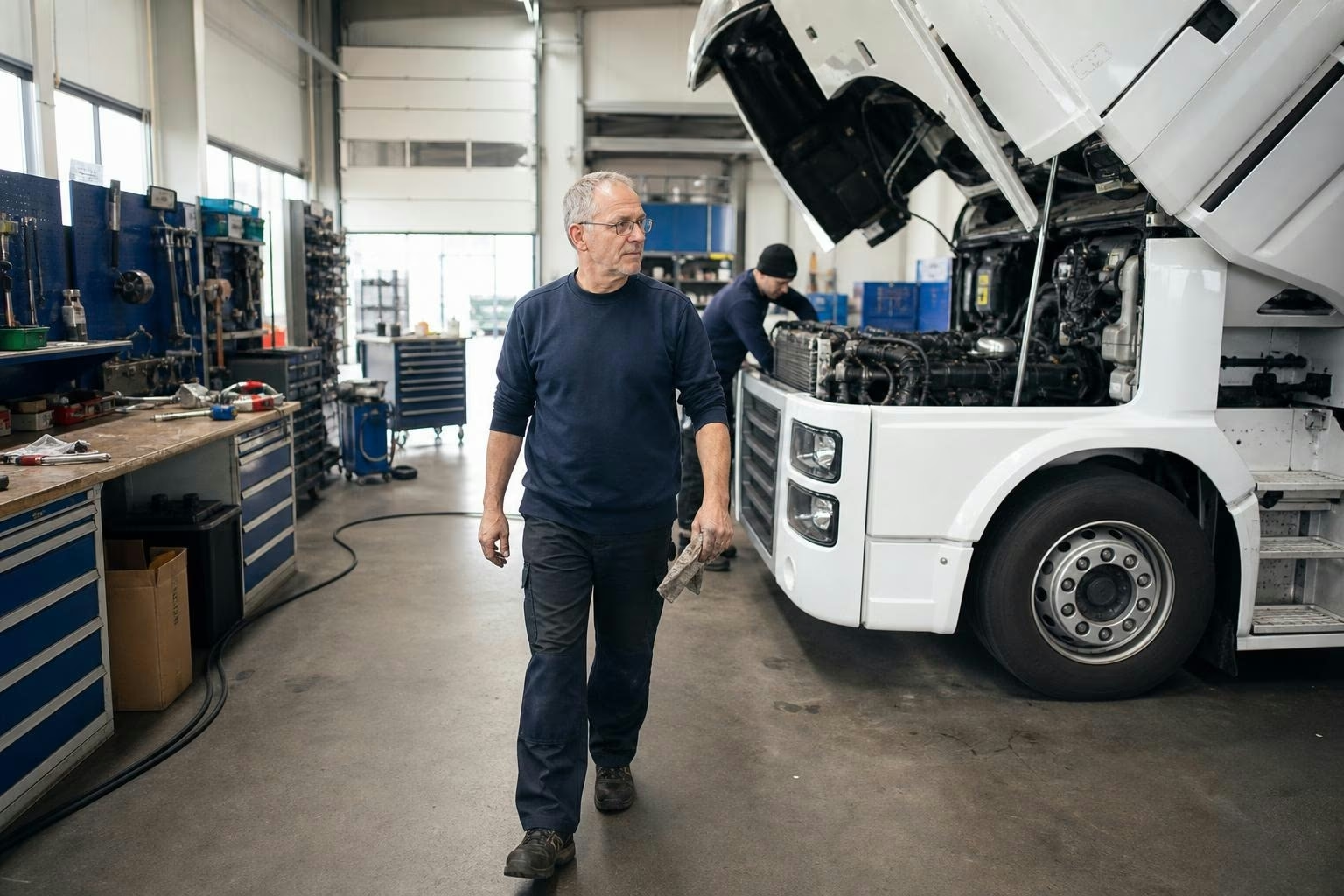
To reduce downtimes, you first need to know their causes. Experience from the Alltrucks network shows a consistent pattern in the causes of breakdowns.
The most common reasons for unplanned workshop visits
Brake problems are in first place. This is followed by engine faults and exhaust aftertreatment, electrical faults and sensor failures, tyre damage, cooling and air conditioning problems and other mechanical faults. The decisive factor here is that the majority of these failures could have been recognised through timely inspection and avoided through preventive maintenance.
The role of the workshop in prevention
As a commercial vehicle workshop, you can actively contribute to avoiding unplanned downtimes of commercial vehicles. The key lies in three areas. Firstly, systematic wear monitoring is required for every vehicle entry - even for orders that have nothing to do with wear. Alltrucks partners work with structured acceptance and checklists from the network. Secondly, proactive communication of recognised risks to the customer is important. Thirdly, the ability to handle urgent repairs quickly and at short notice is important.
Digital vehicle files document every visit to the workshop. This creates a complete picture of the vehicle's condition over time, and wear parts can be planned in advance. For in-depth diagnostics, Alltrucks partners also use the Alltrucks multi-brand diagnostics / Alltrucks KTS Truck V3 (Bosch + Knorr-Bremse integration). A comprehensive overview of systematic maintenance strategies can also be found in our complete service guide for truck maintenance.
Which 5 strategies reduce downtimes sustainably?
| KPI | Typical industry average | Network top workshops |
|---|---|---|
| Processing time per standard order | average | Significantly shorter |
| Lifting platform utilisation | expandable | high |
| Parts availability on arrival | medium | Very high |
| Overdraft rate per month | increased | low |
| Complaint rate | noticeable | low |
| Employee productivity | average | above average |
The following strategies are aimed at commercial vehicle workshops that want to offer their customers measurably shorter downtimes. Each strategy is described with specific implementation steps and expected results. If you would like to delve deeper into operational implementation, you will also find more information in the article on Order planning Further information.
Actively offer preventive maintenance programmes
Offer your fleet customers customised maintenance contracts. Define inspection intervals according to vehicle type, usage profile and mileage. A structured maintenance contract shifts work from reactive to plannable utilisation. It also makes it possible to plan wear parts in advance.
Maintain express capacity for emergencies
Reserve a defined express slot every day and the appropriate mechanic capacity for urgent, unplanned repairs. Record clear response and turnaround times in writing in the customer contract. This allows you to classify emergency handling as a standard process instead of improvising it every time. You can also find out more about capacity planning in the article Optimise workshop capacity utilisation.
Stockpile critical spare parts
Analyse your order data from the last 12 months and identify the 50 most common spare parts for unplanned repairs. These parts must be in stock at all times. Alltrucks partners can also use the Alltrucks VINcat parts catalogue (search by chassis number) to identify rarely required parts in advance.
Use telematics data for proactive ordering
Co-operate with the telematics systems of your fleet customers. If a vehicle reports critical error codes or reaches defined wear limits, you receive a notification and can contact the customer proactively. This shifts the repair job from the unplanned breakdown to the planned workshop visit.
Transparent communication during the repair
Inform the customer proactively about the progress of the repair. A short status report by e-mail or text message - at the start of work, when additional damage is found and when the vehicle is ready for collection - structures communication. This also reduces spontaneous enquiries in day-to-day business.
Can downtime management be set up as a separate business model?
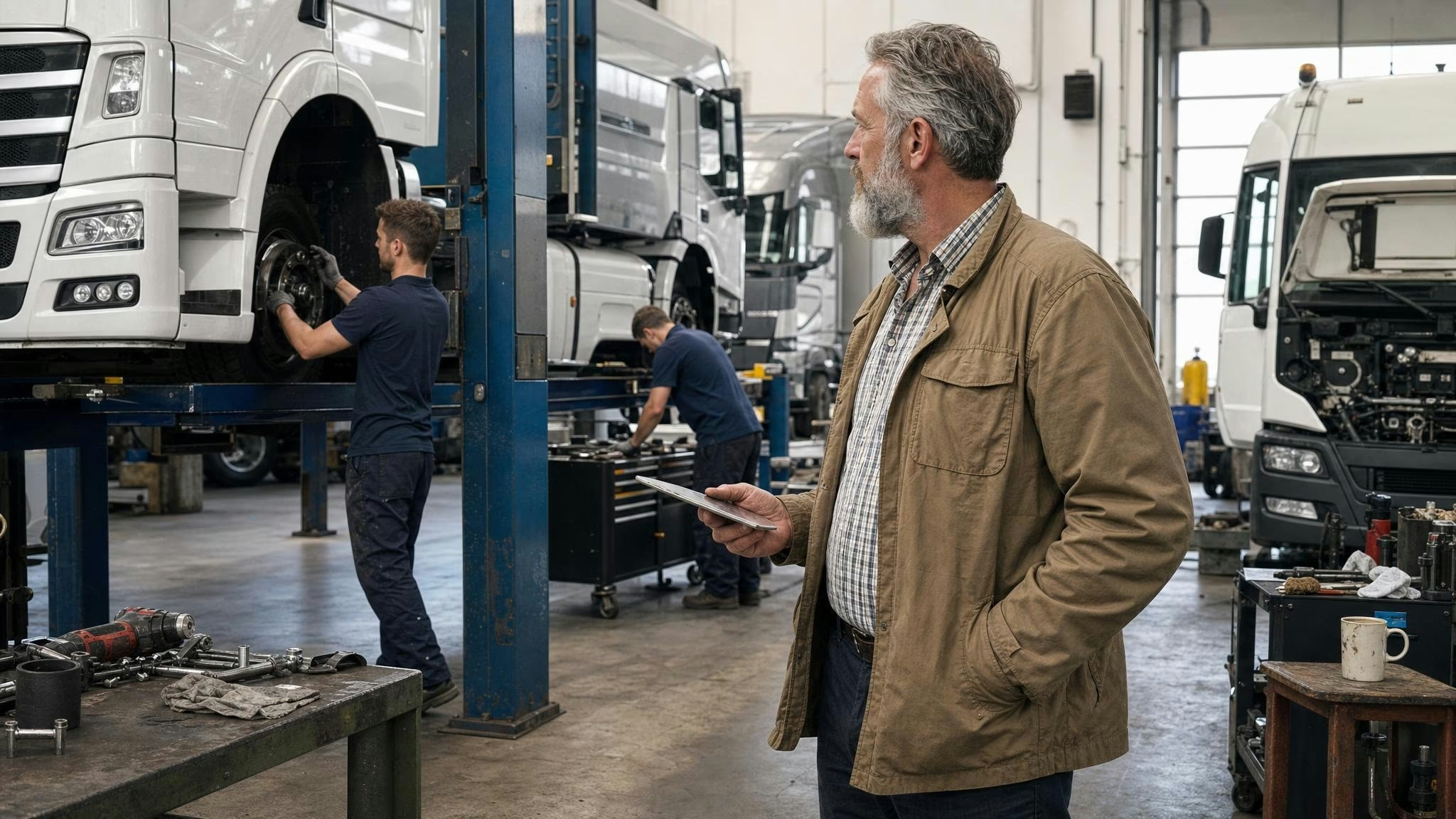
The consistent reduction of downtimes is not just a service for your customers. It can also become a business model in its own right. Garages that position themselves as availability partners open up new sources of revenue and thus differentiate themselves from the price competition.
From repair service provider to availability partner
The traditional workshop business is based on a simple principle: vehicle breaks down, customer comes, workshop repairs. However, this model is reactive and susceptible to fluctuations. The availability model, on the other hand, reverses the logic, as the workshop assumes responsibility for the operational readiness of the vehicles. This can be done via maintenance contracts with guaranteed downtimes. Fleet management services with regular condition monitoring, night and weekend shifts for downtime-critical repairs or replacement components for faster repairs are also suitable.
Availability contracts are an established business model in the industry. However, whether and in what form this suits your own business is a strategic question. Concrete network components such as the 1 Premium Standard and the Alltrucks Fleet programme into the logic of your offer - please contact us. You can also find strategies for economic optimisation in the article Running a profitable commercial vehicle workshop.
Service life guarantees: risk or opportunity?
Some garages go one step further and offer service life guarantees: a maximum repair time for defined order types, with a price reduction if this is exceeded. This sounds risky at first, but is calculable if the internal processes are right - especially acceptance, diagnosis and parts stocking. Whether such a model suits your own business depends on the order mix, staffing levels and fleet structure of your regular customers.
We will work with you to determine whether downtime guarantees are suitable for your business and how they can be costed - talk to the Alltrucks technical team. This also includes looking at the process requirements: structured acceptance processes, technical security via the Alltrucks Technik Hotline and the Alltrucks Technik Forum (live at forum-alltrucks.com).
Key figures for service life management
To control your downtime management, you need three additional key figures. Firstly, the average response time (how quickly can you pick up an unscheduled vehicle?). Secondly, the downtime rate (proportion of orders that are completed within the agreed time). Thirdly, the repeat rate (proportion of vehicles that return within 30 days due to the same problem). The latter should be as low as possible, as higher values indicate quality problems during the initial diagnosis or repair.
Consistent planning of your order capacities is crucial here. Our article on Order planning for commercial vehicle workshops also offers additional strategies and tools.
„Proactive maintenance contracts and a fixed express lane are changing the character of the workshop: away from reactive fire-fighting mode and towards a predictable operation."- Experience from the Alltrucks partner network
Start with your five largest fleet customers. First analyse their unplanned entries over the last 12 months and use this to develop a customised maintenance offer. We will then work with you to categorise which contract modules are suitable for your own company - just get in touch.
This article is part of our Cornerstone Guide Workshop control. There you will find all in-depth articles on the topic cluster, an interactive self-assessment and the complete practical framework.
Read the guide: Perfecting workshop managementPractical starting points: Administrative waiting times (parts approval, cost estimate coordination, approval by the fleet) are an underestimated part of the total downtime in many companies. Concrete practical parameters are therefore digital MWIP approval via the customer portal, standard parts packages for frequent repairs and escalation SLAs defined in writing. For Alltrucks partners, structured acceptance processes from the network, the Alltrucks technical hotline and the Alltrucks technical forum (partner helps partner, live at forum-alltrucks.com) as well as the Alltrucks VINcat parts catalogue also support implementation. For lifting platform inspections, the respective national work equipment regulations (implementation of EU 2009/104/EC) apply in parallel.