ORGANISATION GUIDE

Organisation - people, structures, success

Guide to commercial vehicle personnel organisation: Recruitment, employee retention, training and employer brand - how workshops can counter the shortage of skilled workers.

5Chapter
4linked articles
25min reading time
UpdatedMay 2026
Experience from 650+ partner workshops
Field-tested in the Alltrucks network
5 specialist articles in the organisation cluster
Start guide
At a glance

The organisation of the commercial vehicle workshop determines how well it can withstand the shortage of skilled workers - the greatest operational threat to commercial vehicle workshops. This is why HR work is becoming a competitive discipline. Four levers interlock: employer branding, structured training, targeted employee retention and continuous qualification. The latter is achieved, for example, through Alltrucks training (levels 1/2/3) and certification as a multi-brand system technician.

  • High unmet demand for commercial vehicle mechatronics technicians in the European markets
  • Qualification paths via Alltrucks training courses (levels 1/2/3) and certification as a multi-brand system technician
  • Structured HR work as an operational driver - we work together to organise it
What you will learn in this guide
Building HR excellence for the truck workshop

The shortage of skilled labour is the biggest operational threat to commercial vehicle workshops in the coming years. The shortage of commercial vehicle mechatronics technicians in the European markets is considerable. In addition, every replacement incurs significant recruiting and vacancy costs. This guide therefore shows how workshops can find, retain and develop staff and thus become visible as an attractive employer - based on experience from the Alltrucks partner network.

  • Which recruitment channels actually supply skilled labour in the commercial vehicle sector
  • How vacancy periods can be shortened in a structured way
  • Which retention measures noticeably reduce staff turnover
  • How to build a talent pipeline from your own training
  • How school partnerships, referral bonuses and social recruiting work in combination
  • Which employer branding components really work for SMEs
  • How international recruitment succeeds pragmatically
01

How do you find skilled labour in the truck segment?

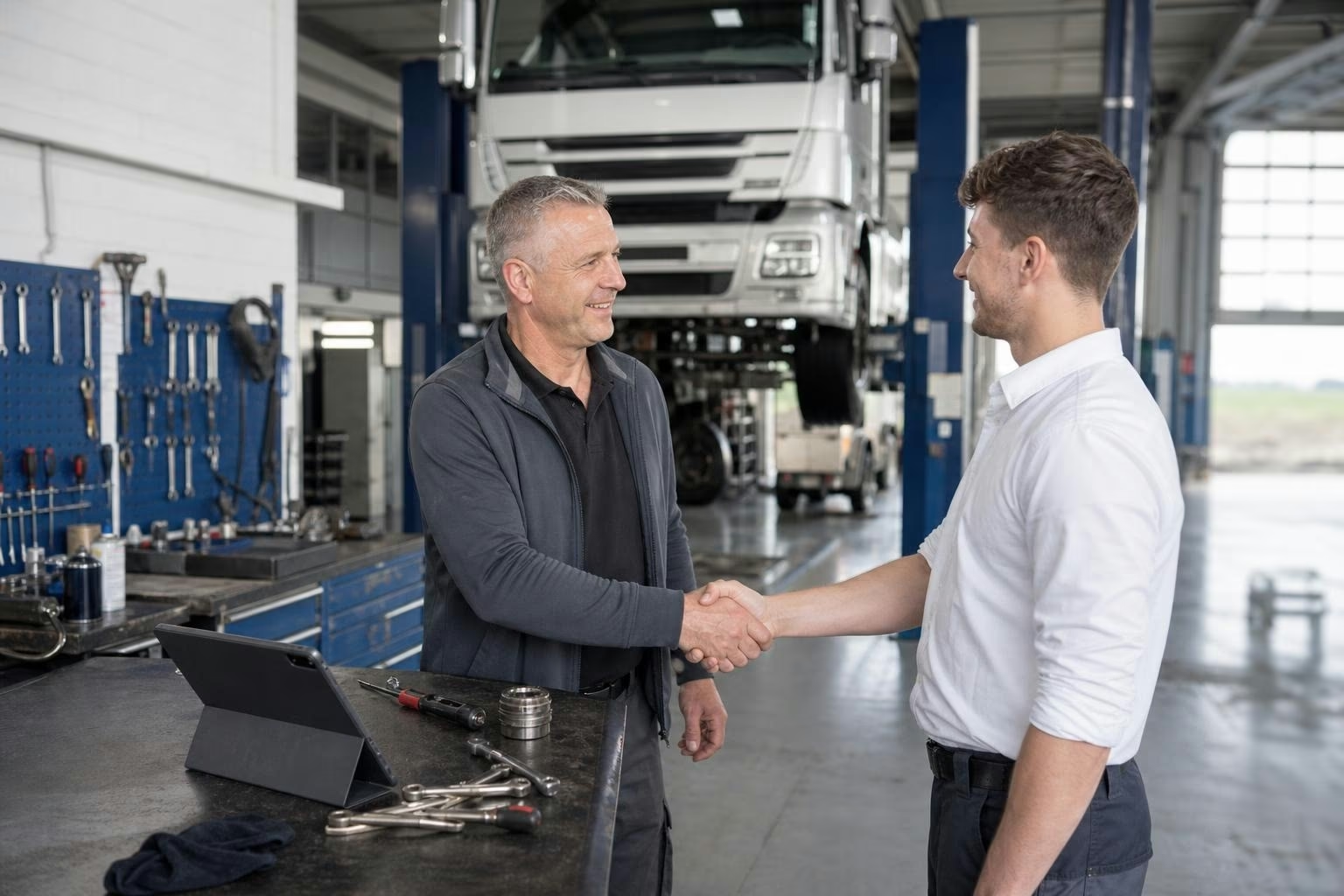
Workshop foreman in half-profile shakes hands with a new mechatronics technician at the reception desk
Handshake at the reception desk: a new mechatronics technician joins the team.

The commercial vehicle sector is struggling with a double burden. On the one hand, the installed base of lorries and trailers is growing. On the other hand, the baby boomer generation of mechatronics engineers is retiring. The annual growth from vocational schools is nowhere near enough to cover demand. Recruiting methods that worked ten years ago are also encountering a different labour market today. Nevertheless, they can be modernised without great effort.

ChannelReachConversion quality
Employee recommendationregionally limitedVery high
Employment agencyregionally largelow
Social media (FB, IG)regionally largelow to medium
Job portalssupraregionallow
Recruitment abroadsupraregionalmedium
Training and takeoverregionally targetedVery high
high
Unmet demand for commercial vehicle mechatronics technicians
3
Levels ofAlltrucks training
Multi
Fire certification as a qualification anchor

Why traditional job adverts are no longer enough

An advert in the local paper used to reliably generate five applications per week. However, those days are definitely over. Top commercial vehicle mechatronics technicians are generally not actively looking. This is because they are employed, often with the company for many years, and only respond to an approach that understands the reality of their lives. Active recruiting today therefore means: garages approach skilled workers, not the other way round.

The five recruiting channels that work in the commercial vehicle segment

  • Employee recommendations with a bonus: Recommendation bonus in the low four-figure range after passing the probationary period. Provides the best quality applicants because pre-selection takes place within the team.
  • Social recruiting on Facebook and Instagram: Short, honest video clips from the workshop - no glossy adverts. Regionally relevant reach can be achieved even with a moderate daily budget.
  • Industry trade fairs and alumni networks: IAA Transportation and comparable regional commercial vehicle trade fairs, as well as graduate meetings at local vocational schools. Personal contact beats any online advert.
  • Specialised job boards: Sector-specific commercial vehicle job portals and platforms available throughout Europe such as Indeed with precise filtering. Important: Response times of less than 24 hours.
  • International recruitment: Poland, Czech Republic, Romania, Spain. With language courses, housing placement and recognition support as a complete package. As an Alltrucks partner, our service partner HR Europe will provide you with competent support.
Practical observation

„Workshops that have noticeably reduced their vacancy times use at least three channels in parallel and respond to every application within 24 hours. Speed beats eloquence.“

- Practical observations from the Alltrucks partner network

Vacancy time is the most important HR KPI

Every day that a position is unfilled causes costs in a commercial vehicle workshop amounting to half a mechanic's daily contribution margin. This value results from lost hourly turnover, overtime bonuses for the remaining team and unaccepted orders. Over a longer vacancy period, this therefore adds up to a substantial proportion of several months' salary for a full-time mechanic position. If you gain significant time here, you refinance an entire HR budget.

Practical observation: Employee recommendations are considered one of the strongest recruiting channels in the commercial vehicle trade. Job adverts on commercial vehicle specialist portals and direct approaches via LinkedIn also have an impact. Structured training and further education can also be DIN ISO 21001 (management systems for educational organisations), ergonomic workplace design, on the other hand DIN 33403 (climate in the workplace). Traditional national job platforms tie up significant monthly platform budgets per position. Employee referral programmes with a low four-figure bonus per successful placement, on the other hand, often pay for themselves within a few weeks compared to the avoided platform costs. For Alltrucks partners, the Alltrucks training courses (levels 1/2/3) and certification as a multi-brand system technician are also added as a qualification argument in recruiting. We will be happy to discuss which combination suits your workshop. Current European vocational training analyses (e.g. from CEDEFOP) also confirm the trend that personal recommendations for commercial vehicle mechatronics technicians are more important than traditional job adverts.

In-depth technical article
How do you find skilled labour in the truck segment?
1 article
02

What really counts in workshop organisation?

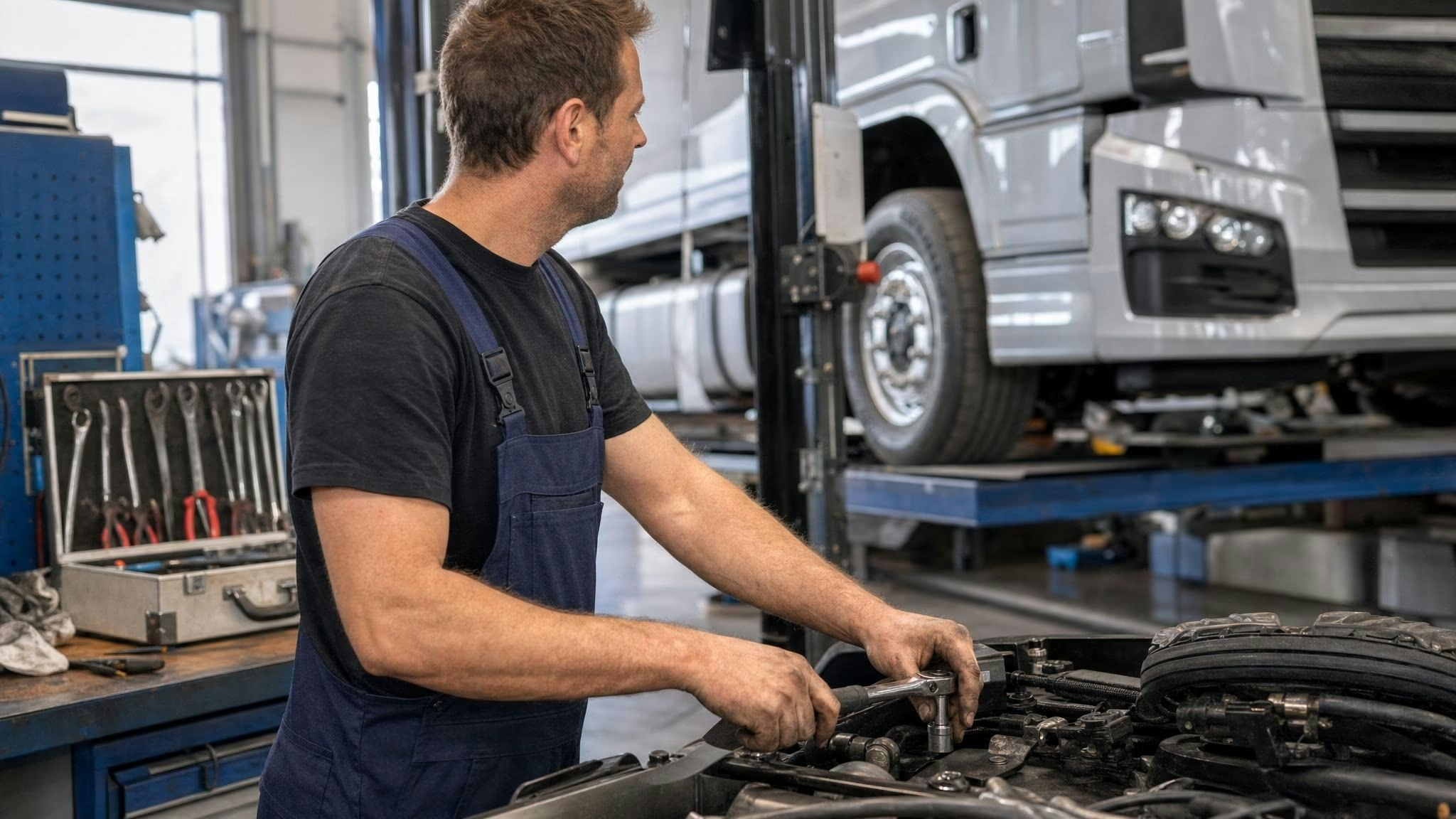
Close-up of hands on a tool, a mechanic in half-profile blurred in the background
Precise handles for optimum performance

Retention is cheaper than recruiting. Nevertheless, it is systematically underestimated. A single replacement in the commercial vehicle sector generates costs in a workshop in the order of several months' salary for a full-time mechanic position. This includes job adverts, personnel consultants, training, loss of productivity and overtime in the remaining team. Those who prevent several redundancies per year through targeted retention measures therefore save a substantial annual block of personnel costs without burdening the recruiting budget.

Why commercial vehicle mechatronics engineers really quit

Exit interviews in partner workshops reveal a pattern - surprising to many owners: money is rarely at the top of the list. The most common reasons for cancellation are therefore listed below in order of frequency:

  • Lack of appreciation by the management: Praise only for mistakes, no feedback for good work, no visible recognition.
  • Poor work organisation: Chaos in the workshop, missing parts, constant interruptions, constant escalations.
  • Outdated equipment: Diagnostic devices from the 2010s, dilapidated lifting platforms, tool that is not suitable for modern lorries.
  • No development prospects: If you start as a journeyman at 28, you don't want to still be turning the same screw at 35.
  • Remuneration: Only mentioned later and usually in combination with the other factors.

The five bonding factors with the highest impact

  • Structured appreciation routines: Weekly brief feedback from the workshop manager, monthly „Well done“ for special achievements, annual development meeting with binding commitments.
  • Making career paths visible: From junior technician to master technician to shift supervisor and workshop foreman - defined in writing, with prerequisites and typical time frames. Even if not everyone will follow it.
  • Training budget with room for manoeuvre: A binding annual budget per person equivalent to a compact technical training course plus travel expenses, freely selectable from a curated catalogue. The investment pays for itself through higher hourly rates and longer retention periods.
  • Alltrucks training (levels 1/2/3) & certification as a multi-brand system technician: For partner workshops, access to theAlltrucks training and to the Certification as a multi-brand system technician a central building block for loyalty and quality. We are committed to keeping our mechanics up to date with the latest training - from the Alltrucks multi-brand diagnostics via high-voltage qualification - strengthens the competitiveness of the commercial vehicle workshop. Customised planning is carried out together with us.
  • Modern equipment as a signal of appreciation: New diagnostic equipment is not purchased „because it is necessary“, but is communicated to the team as an investment. This changes the perception.
  • Retention interviews instead of exit interviews: Once a year, the owner asks each key employee personally: „What keeps you here? What would make you leave?“ - and visibly acts on it.
Practical realisation

„We have noticeably reduced our staff turnover - without a single pay rise. What we have changed: Every Friday, a 10-minute round in which the workshop manager names each technician's weekly success out loud. Sounds banal, but it changed everything.“

- Experience from the Alltrucks partner network

Measuring fluctuation before it hurts

Most workshops don't measure staff turnover at all. They only notice it when someone has given notice. Experienced companies, on the other hand, work with three early indicators: increased sickness absence on Mondays and Fridays, decreasing participation in voluntary training and shorter break times. Those who take these signals seriously typically gain several months to take countermeasures.

Practical observation: An important retention measure in commercial vehicle workshops is often not the salary, but the quality of the tools and workplace. In concrete terms, this means: high-quality tools (Hazet, Stahlwille, Knipex) instead of discount goods, personal tool trolleys for each mechanic, updated diagnostic tablets and professional sorting management. The one-off additional costs compared to standard tools roughly correspond to the gross monthly salary of one full-time mechanic per head. However, this is refinanced by avoiding the recruitment costs of a replacement, which in turn correspond to several months' salary. At the same time, the Alltrucks training courses (levels 1/2/3) and certification as a multi-brand system technician act as qualification anchors. We will be happy to discuss together which training paths suit your company.

In-depth technical article
What really counts in workshop organisation?
1 article
03

How does a workshop become an attractive training organisation?

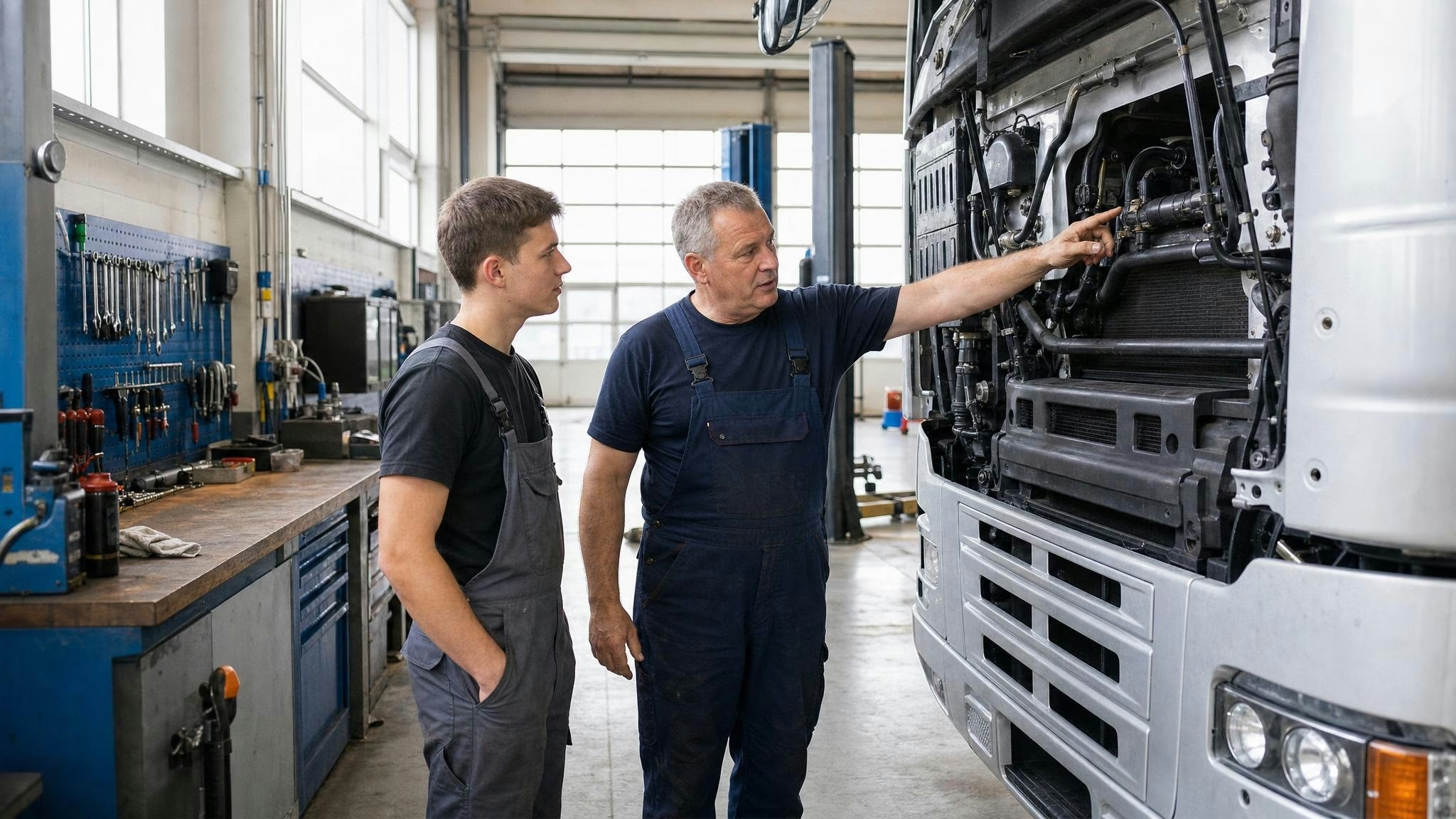
Instructor shows an apprentice a component by hand in the open lorry engine compartment
Experienced mechanics explain maintenance details - practical training for the next generation

Those who only recruit from the external labour market are fighting for a shrinking pool. Those who train in parallel, on the other hand, build their own pipeline. Experience has shown that well-trained apprentices stay with the company for much longer than mechatronics engineers recruited externally. In-house training is therefore not only a way of promoting young talent, but also the most economically rational HR strategy of all.

MeasureBinding effectCosts per capita
Fair basic remunerationhighOngoing
Training budgetVery highseveral training days/year
Modern equipmenthighInvestive
Career path coachinghigh1-2 coaching sessions/year
Flexible working time modelmediumlow
Company pension schemehighModerate employer contribution

The economic reality of commercial vehicle training

Training as a motor vehicle mechatronics technician specialising in commercial vehicle technology takes 3.5 years. After deducting productive hours, subsidies and allowances, the net investment over the entire apprenticeship period is in the region of a few years' journeyman's salary. In contrast, an externally filled position after 3.5 years of vacancies, recruiting and familiarisation costs 3 to 4 times as much - with a significantly higher probability of changing jobs. Apprenticeships are therefore not more expensive, but rather cheaper by a factor of 3 to 4 - with significantly higher retention rates.

The three pillars of the training authorisation

  • Personal suitability: The training company must be in good financial health and the owner must have a clean criminal record.
  • Professional suitability: At least one employee with a national master craftsman/workshop manager qualification or equivalent plus formal instructor qualification in accordance with the requirements of the respective vocational training system.
  • Operational suitability: Fully equipped workshop, sufficient variety of orders for the activities provided for in the framework curriculum, suitable social rooms.

School co-operations as an applicant pipeline

The most effective measure for recruiting trainees is not the training fair, but direct co-operation with schools. To this end, Top-Werkstätten provides regular support to 2 to 4 secondary schools in the area: regular workshop visits, work experience placements for pupils in their final years at school before the start of training, presentations in careers orientation courses and sponsorship of a school project. Those who are visible at school also receive three to five times as many enquiries during the application period as workshops without school contact.

The right trainer is more important than the right trainee

Anyone who trains deserves to be chosen carefully. The ideal trainer is not a „best technician“, but someone with patience, an eagerness to explain and a willingness to question their own routines. This is why top workshops consciously invest in the trainer personality: formal trainer qualification according to the national vocational training system plus annual pedagogy workshops plus coaching by external trainers. The signal to the apprentice is thus: „We take you seriously.“

Funding notice

„Funding opportunities are available for commercial vehicle training companies in most EU countries via the national employment services and vocational training chambers. Many workshops don't use them because they don't know about them. The counselling is usually free of charge.“

- Experiences from the Alltrucks network

Guaranteed employment in the training contract

A simple, often overlooked factor: the written promise of employment is already included in the training contract. The signal to parents, school and trainee is enormous. In practical terms, this means three years of security, a clear career start and no application stress after the journeyman's examination. Experience has shown that workshops with guaranteed employment receive significantly more applications per training year than workshops without this clause.

Practical observation: In-house training is an economically rational HR strategy, even if it costs money in the first year. The gross costs over 3.5 years of training roughly correspond to several annual salaries of a full-time mechanic (remuneration, social security contributions, support for vocational school, tools, training). In return, however, the apprentice performs productive hours from the 2nd year onwards, which offset a substantial part of these costs. Compared to the recruiting costs of an external skilled worker (several months' salary), the apprenticeship is therefore often cost-neutral - with a predictable commitment. Recommendation: Run at least two apprentices in parallel, appoint a training supervisor with a clear time exemption and actively examine the funding offers of the relevant national vocational training and craft organisations. For Alltrucks partners, the transition from apprenticeship to multi-brand practice can also be structured via the Alltrucks training courses and certification as a multi-brand system technician.
In-depth technical article
How does a workshop become an attractive training organisation?
1 article
04

How does the workshop become an employer of choice?

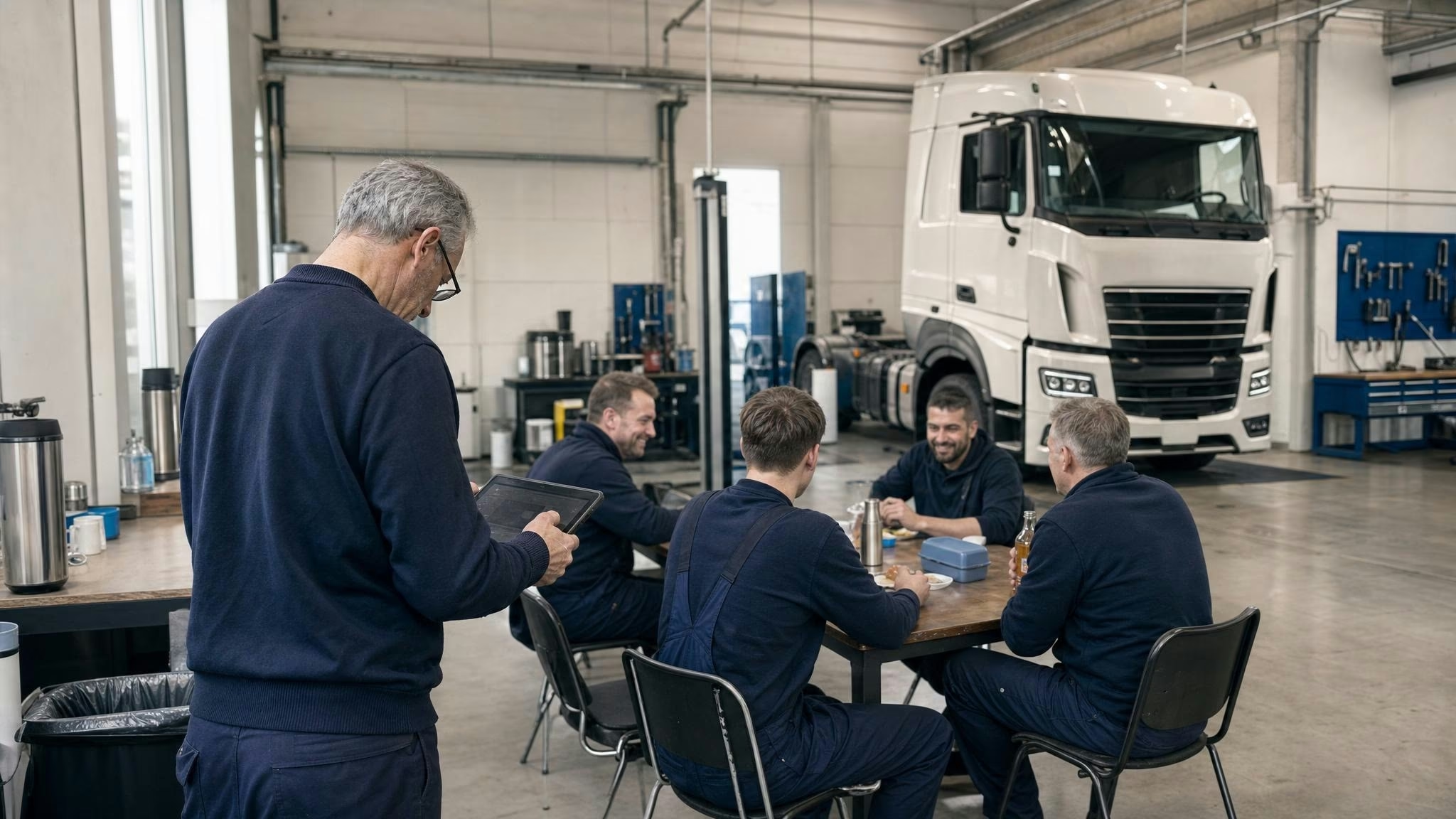
Workshop social room with break area, crew in dark blue coveralls from behind at the table
Team meeting in the workshop

Employer branding sounds like corporate vocabulary, which is precisely why many workshop owners are reluctant to use it. In reality, however, the employer brand of a commercial vehicle workshop is nothing more than the answer to the question: „Why should someone work for us and not for the competitor three streets away?“ Anyone who cannot answer this question clearly will inevitably lose out in the recruitment process. The good news is that medium-sized workshops have a decisive advantage over large corporations - authenticity.

The five building blocks of an attractive employer brand

  • Clear value proposition: What distinguishes this workshop from 50 others in the neighbourhood? One sentence, concise, honest. „With us, you don't just turn screws, you solve problems“ works - „We are a modern family business“ doesn't work.
  • Visible benefits beyond the salary: Capital-forming benefits, company pension scheme, JobRad, petrol voucher, free breakfast, modern work clothes. Every single one counts - communicated in the job advert and in the interview.
  • Career stories from our own team: „This is how our current workshop manager started with us as a trainee“ as a short text on the website, as a video on social media, told in a job interview.
  • Visible modernity: Clean workshop, new diagnostic equipment, digital order system, ergonomic workstations. All of this makes a stronger first impression than any advert.
  • A real team feeling: Joint excursions, summer parties, team breakfasts. Not for the external effect, but because it works. Employees tell their friends about it - that's organic recruiting.

Social media as a recruiting platform

Instagram, Facebook and TikTok are a key channel for commercial vehicle workshops to reach young applicants. What works are short, honest clips from everyday life in the workshop: the junior technician who is working for the first time on a High-voltage repair the foreman testing the new diagnostic laptop or the team at the summer party. What doesn't work, however, are stock photos, advertising language and „We're looking for reinforcements“.

The careers page is the most important page on the website

The majority of applicants in the commercial vehicle sector visit the careers page of the workshop before applying. It takes them around a minute to decide whether an application makes sense. A good careers page therefore shows: current vacancies with a concrete daily routine, team photos (real, not staged), a list of benefits, a brief history of the company and an application form that can be completed in under 3 minutes. Anyone offering a PDF for download, on the other hand, has already lost the applicant.

Practical realisation

„A new careers page with a 30-second application form and honest employee videos can significantly change the number of unsolicited applications within a few weeks - without an additional advertising budget.“

- Experience from the Alltrucks partner network

Application process as a business card

The application process is the first real impression a potential employee gets of the workshop. It must therefore be quick, personal and appreciative. Top workshops respond to every application within 24 hours - by telephone, not by email. They also offer a work trial instead of a series of interviews. They also give a clear acceptance or rejection within a week. Those who master this process therefore have a massive competitive advantage.

Practical observation: Employer branding works according to its own logic in the commercial vehicle sector. Commercial vehicle mechatronics technicians value workshop size and a family feel, tool quality, proximity to home, a predictable shift model and a fair salary. Many therefore favour medium-sized, owner-managed workshops. Authentic communication makes this visible: let workshop owners speak in the recruiting video, tell real mechanic stories (no glossy material), show tidy workshop halls and communicate workshop breakfasts and team traditions. For Alltrucks partners, the qualification modules - Alltrucks training courses, certification as a multi-brand system technician - can also be included in the careers page and job adverts. We will be happy to discuss together which modules suit the company and the employer image.

In-depth technical article
How does the workshop become an employer of choice?
1 article
05

How are HR strategy, leadership and onboarding connected in the workshop?

Two people in half-profile at a meeting table, clipboard with notes in hand
Focus on planning and coordinating orders

Recruiting, retention, training and employer brand are not isolated disciplines, but building blocks of the same organisation of the NFZ workshop. Those who manage them side by side lose impact. Those who interlink them, on the other hand, build an HR machine that reinforces itself: good employees recommend applicants who stay because of the brand, continue their training and in turn become the brand. These cycles are therefore the substance of excellent workshops.

The HR strategy on one page

Top workshops have an HR strategy - and it fits on one A4 page. It answers four questions: How many employees will we need in 3 years? Which qualifications are critical? What measures are we taking to secure them? Which KPIs do we measure on a monthly basis? This one page is therefore the most important management tool for the organisation of the commercial vehicle workshop in the personnel area. Workshops without this page, on the other hand, manage their workforce instead of developing it.

Leadership is the invisible currency of loyalty

  • Keep the management margin realistic: A workshop foreman should not directly manage more than 8 to 10 technicians. If you are responsible for more, you lose the opportunity to provide individual coaching.
  • Train managers: The best technician is not automatically a good workshop master. Leadership workshops, coaching and peer exchange in the Alltrucks network are not a luxury, but a duty.
  • Address conflicts early on: Tensions in the team usually arise around shift distribution, tool ownership or perceived injustice. Top workshop managers address these issues before they escalate.
  • Appreciation as a daily routine: Not just on birthdays or at Christmas parties, but every day, in small gestures and honest words.

Onboarding standards: The first 90 days are decisive

The likelihood that a new commercial vehicle mechatronics technician will resign within the first 12 months depends largely on the first 90 days. Top workshops have a clear onboarding plan for this. Day 1: Welcome by the entire team and personal handover of work clothing. Week 1: Structured tour of all workshop areas, presentation of processes, mentoring by an experienced colleague. Month 1: followed by the first independent assignments with a safety net. Month 3: finally, a structured feedback meeting with specific development goals. If you stick to this plan, you will significantly reduce early staff turnover.

Sponsorship instead of familiarisation

The difference between familiarisation and sponsorship determines the bond. Induction means that the new employee works with the foreman. Sponsorship, on the other hand, means that an experienced colleague takes responsibility for the newcomer's first 90 days - not only professionally, but also socially. He shows him around the workshop, takes him to lunch and answers any unspoken questions. Workshops with a mentoring system therefore achieve significantly lower early fluctuation rates.

HR KPIs: What top workshops regularly measure

  • Vacancy period: How long is a vacancy unfilled? Goal: keep it as short as possible.
  • Fluctuation rate (rolling 12 months): Percentage of employees who have left in the last 12 months. Target: well below the industry average.
  • Early fluctuation (first 12 months): How many new hires will we lose in the first year? Target: keep it in single digits.
  • Applications per vacancy: Indicator for employer brand and channel quality.
  • Response time to applications: How quickly does the workshop respond? Target: within 24 hours.
  • Further training rate: Percentage of employees who have attended at least one training course per year. Target: as complete as possible.
  • Willingness to recommend employees: Would our employees recommend the workshop as an employer?
Strategic note

„HR in workshops is not a hobby for the owner, but an investment with a noticeable effect. Anyone who installs clear personnel responsibility in the company - even if it is only part-time - will see a recognisable reduction in staff turnover and a higher quality of applications in the medium term.“

- Experiences from the Alltrucks network

Culture is what the workshop does without the owner

The toughest culture test of a workshop: What happens when the owner is on holiday for a fortnight? Does the team function in a self-directed manner or does everything collapse? Workshops with a real culture, on the other hand, have routines, values and decision-making processes that work without the boss. This culture is not created by mission statements on the wall, but by thousands of small decisions over the years. It is therefore the most important retention and recruiting factor of all.

Practical observation: Structured onboarding is an underestimated HR set screw in the commercial vehicle workshop market. Without a formal process, new employees are „handed over“ to the workshop manager on their first day and find their own way around. Many early terminations in the first 90 days can therefore be explained in this way. A 30-60-90 day onboarding plan addresses this specifically: Firstly, there is a fixed mentor in the first week, followed by a technical in-depth training session per day in the second week, initial customer contacts with support in the third week and independent orders with backup in the fourth week. This is followed by a structured feedback meeting after 30 days, a team integration event after 60 days and finally the first development meeting after 90 days. For Alltrucks partners, onboarding can also be combined with the Alltrucks training courses (levels 1/2/3); we will be happy to discuss the specific staggering together. Every early termination avoided saves recruiting costs amounting to several months' salary plus several months of vacancy time.

Frequently asked questions

Which recruiting channel delivers the best commercial vehicle mechatronics engineers?

Experience from the Alltrucks network shows a clear pattern. Employee referrals with bonuses often deliver the highest quality applications. The bonus is in the low four-digit range after the probationary period. Social recruiting campaigns on Facebook and Instagram also prove to be effective in terms of reach. School co-operations for trainees also help. Job adverts on traditional job boards work particularly well if the response time is less than 24 hours. This is why a combination of several channels in parallel has proven successful in practice.

How do I reduce staff turnover in my workshop?

Structured appreciation routines are the most effective lever. These include weekly feedback from the workshop manager, annual retention interviews with key employees and visible career prospects on paper. In addition, the Alltrucks training courses (levels 1/2/3) and certification as a multi-brand system technician act as a strong retention factor. This keeps mechanics permanently up to date with the latest qualifications. We are happy to discuss the specific organisation together. Each prevented cancellation also saves replacement costs amounting to several months' salary for a full-time mechanic position.

Is an in-house training programme really worthwhile?

Yes, in-house training over 3.5 years costs only a fraction of the net cost of filling a position externally over the same period. This includes recruiting, vacancy and familiarisation costs. What's more, experience shows that well-trained apprentices stay with the company longer than externally recruited mechatronics engineers. This is why training is a rational HR strategy and at the same time a plannable talent pipeline. Co-operation with schools, guaranteed employment in the contract and the Alltrucks training courses (stages 1/2/3) further enhance the effect.

What makes a strong employer brand for a commercial vehicle workshop?

Authenticity beats high gloss. Five building blocks support the employer brand: a clear value proposition in one sentence, visible benefits beyond the salary, real career stories from the team, visible modernity (clean workshop, modern diagnostic equipment) and a lived team feeling. Short, honest workshop clips also work much better on social media than professional image films. Therefore, the career page must be convincing in 60 seconds. It should also offer an application form that can be completed in under 3 minutes.