The most sustainable response to the shortage of skilled labour in the commercial vehicle sector is to have our own Education. Anyone who takes on an apprentice today has a skilled worker after completing their vocational training who knows the company and is used to the team. With good support, they are also very likely to stay. Despite this, many commercial vehicle workshops do not or no longer train apprentices. The most common reasons are too little time, unclear requirements and bad experiences with dropouts. This article shows how a workshop can become an attractive training organisation. It also explains why the effort pays off several times over. Industry vocational training statistics show this development particularly clearly in the commercial vehicle sector. Vocational training as a commercial vehicle mechatronics technician follows the national training framework plans. With reference to the professional driver qualification, the EU Directive 2003/59.
Dual and comparable vocational training systems are standardised nationally in each European country. The responsible national chamber for vocational training therefore supports training companies with recognition, examinations and framework plans. In addition to basic training, the Alltrucks network certifies mechatronics technicians as multi-brand system technicians via the Alltrucks training programmes. We are also happy to discuss which levels and modules suit the company.
The commercial vehicle apprenticeship is a structured multi-year vocational training programme for commercial vehicle mechatronics technicians in accordance with national vocational training legislation. It combines in-company practice, vocational school and inter-company training courses into a chamber-certified qualification. This makes it the most important source of qualified young talent in the commercial vehicle service sector.
What are the formal requirements for training authorisation?
Three formal requirements must be met before a workshop is even authorised to offer training. The good news is that all three are feasible. What's more, most commercial vehicle workshops already fulfil them without even knowing it. If you want to delve deeper, you can find more information in the article on Find a mechatronics engineer Further information.
The three pillars of the training authorisation
- Personal suitability: The owner or person responsible must not have committed any serious violations of labour law, occupational health and safety or national vocational training law. This is standard for any reputable company.
- Professional suitability: At least one person in the company must be a master craftsman, state-certified technician or similarly qualified. In addition, a pedagogical trainer qualification (AEVO or national equivalent) is required - a one-week course with manageable effort.
- Suitable training company: The workshop must be able to cover all the contents of the training framework plan in terms of space, technology and personnel. What it does not offer itself (e.g. high-voltage service), however, it supplements in co-operation with partner companies or via inter-company training courses.
Recognition takes place via the responsible national chamber for vocational training. The application is also processed within a few weeks. An inspection of the company is part of the procedure.
The biggest hurdle often lies in the mind: once you have submitted the application for recognition, you will experience a straightforward procedure with clearly defined requirements.- Editorial categorisation
How do you structure the training plan and teaching content?
| Channel | Reach | Hit quality |
|---|---|---|
| Employee recommendation | regionally limited | high |
| National Labour Administration | regionally large | low to medium |
| Social media (Facebook, Instagram) | regionally large | low |
| Job portals (Stepstone, Indeed) | supraregional | low |
| Recruitment abroad | supraregional large | medium |
| Training and takeover | regionally targeted | Very high |
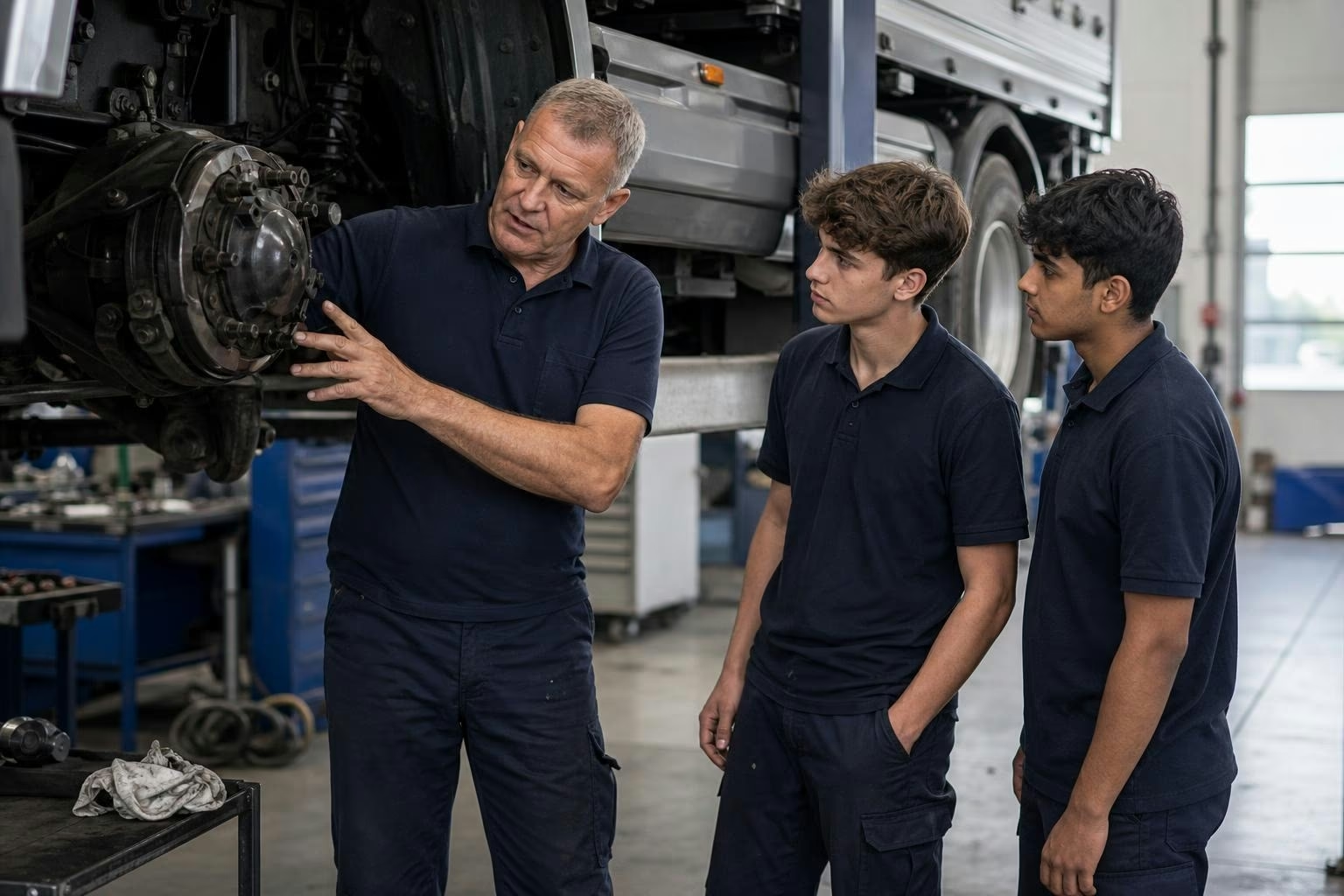
The training framework for commercial vehicle mechatronics technicians covers a wide range of training content over several years. They cover the chassis, drivetrain, hydraulics, braking systems, electrics and electronics, diagnostics, bodies, trailers and much more. Those who simply work at random risk gaps - and the trainee will fail. Those who plan in a structured way, on the other hand, ensure a sound training programme with a predictable outcome. They should also familiarise themselves with future fields such as E-truck workshop right from the start, because high-voltage expertise will be mandatory for the next generation of mechatronics engineers.
From the framework plan to the company curriculum
Firstly, translate the official framework plan into a company training plan that suits your workshop. Three components are essential here:
- Quarterly learning objectives: What should the trainee master in the first three months? What content will follow in the second quarter? This creates a common thread that guides the trainer, trainee and vocational school.
- Station rotation: To ensure that the trainee gets to know all areas - from the repair reception office to mechanics and electrics - they should rotate through the stations as planned. Three to six months per department is a tried and tested rhythm.
- Report booklet as a learning control: The report booklet is not bureaucracy, but a tool. If you take it seriously, it gives you a weekly insight into where the trainee stands, what they have learnt and where there are gaps.
Create a visible learning map together with the trainee at the start of the training programme - for example a whiteboard with all the learning fields. Then mark together each week what has been ticked off and what is due next. This visibility motivates trainees enormously. It also gives the trainer an overview at all times.
How do you choose the right trainer in the company?
The quality of a training programme stands and falls with the trainer. Not with the owner, not with the workshop manager - but with the person who has direct contact with the trainee every day. This person must combine two qualities: technical depth and teaching skills. However, both are rarer than many people think.
Who should train - and who shouldn't
- Suitable: Experienced mechatronics engineers or master craftsmen who can explain patiently, enjoy communicating and are prepared to answer questions repeatedly - without getting annoyed.
- Unsuitable: Top mechanics who are too fast themselves to explain learning steps in a comprehensible way. This also includes colleagues who see every mistake made by the trainee as a personal burden.
- Optimal: A „training tandem“ consisting of a mentor with a strong technical background and a person who is responsible for the report booklet and vocational school communication.
Train the trainer himself
Even an experienced trainer needs support. Pedagogical refresher courses, method training and professional dialogue with other trainers are therefore valuable. For NFZ multi-brand expertise in the company, the Alltrucks training The programme also includes a structured curriculum leading up to certification as a multi-brand system technician. In the Alltrucks Technology Forum On the other hand, the „partner helps partner“ principle applies to technical queries.
How do school co-operations become an applicant pipeline?
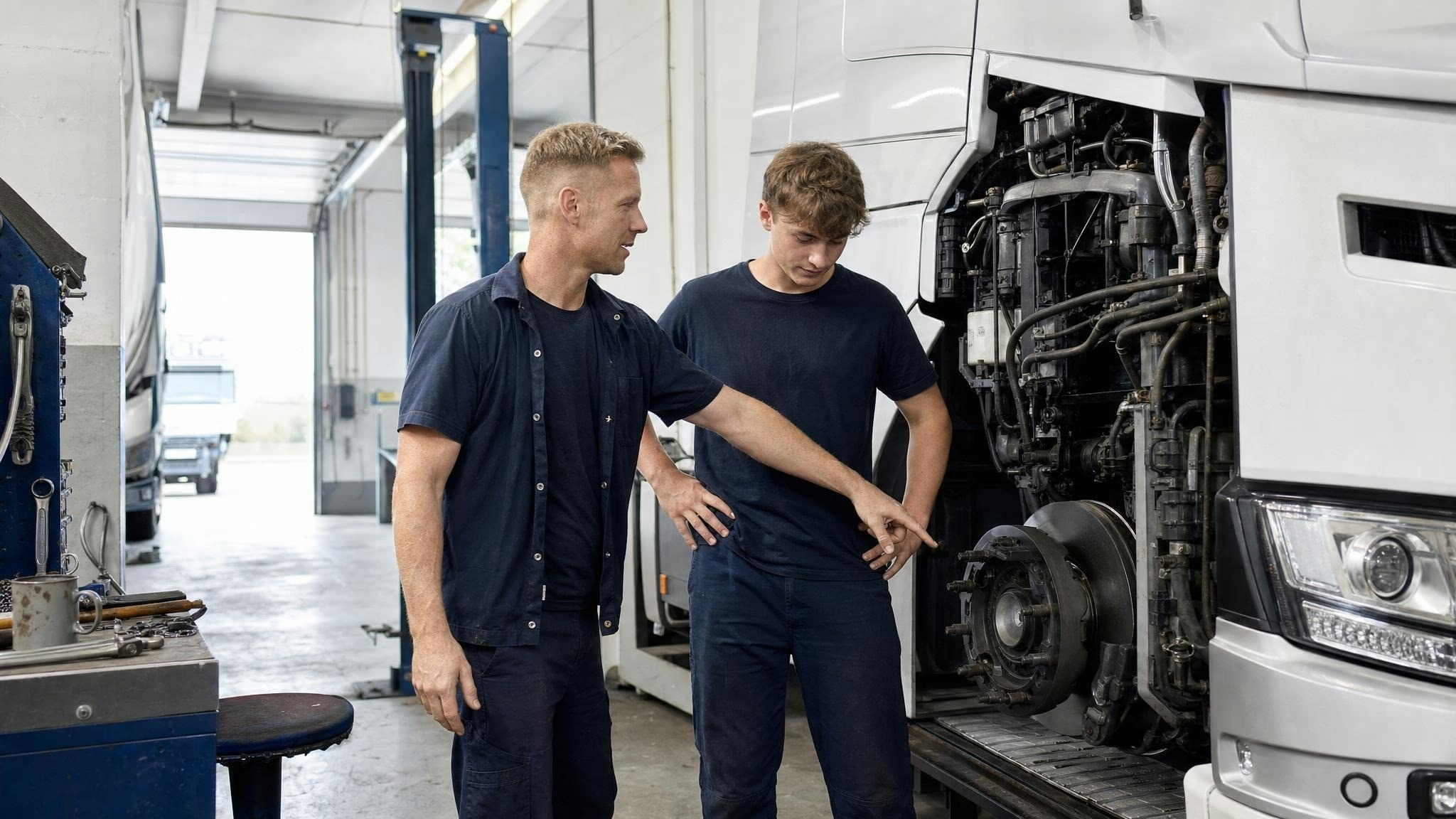
The biggest challenge when starting an apprenticeship is not the organisation. Rather, it is about finding suitable applicants in the first place. Good school leavers are in high demand. What's more, many young people simply don't know what a commercial vehicle mechatronics technician does all day. Those who change this will have a decisive advantage.
Actively approaching schools
Don't wait until applications come in. Instead, actively approach schools in your catchment area - and do so regularly, not just once:
- Career orientation days: Offer to give school classes a tour of your workshop. Let the pupils inflate a real truck tyre, operate a diagnostic device and dismantle a brake cylinder. Practice beats any lecture.
- Co-operation agreements: Enter into official co-operations with selected schools - this opens doors for internships, presentations and factory visits.
- Career fairs on site: Be visible at local training fairs - with real mechatronics engineers at your stand, not just with flyers.
- Taster days: Offer regular appointments where interested parties can join you for a day. Anyone who has ever stood next to a 40-tonne truck will never forget it.
Take internships seriously
Student internships are a direct applicant pipeline. Therefore, do not treat interns as a burden, but as potential trainees. Also give them a permanent contact person, small real tasks and an internship certificate. At the end, you should also have a discussion about possible next steps.
A structured internship makes the commercial vehicle profession tangible: everyday workshop life, tools, team atmosphere. We will also be happy to discuss which internship and training modules make sense for your company and how Alltrucks training courses can be organised for employees and future journeymen.
How does a takeover guarantee affect trainee retention?
The investment in an apprentice only pays off if the transition to a journeyman's job is successful. The phase between passing the exam and permanent employment is a sensitive one. Therefore, clear prospects, further training path and role determine how attractive the company remains as an employer.
Takeover guarantee from the moment the contract is signed
Offer your trainees a takeover guarantee when they sign their training contract - in a written addendum. Combine this with specific conditions: Starting salary after successful examination, planned area of responsibility, first steps in further training. Those who know from day one that they are wanted and have concrete prospects are more likely to stay.
Shaping the transition
The leap from apprentice to journeyman is a sensitive phase. Three measures can help:
- A joint interview six months before the exam, in which you discuss expectations, tasks and salary.
- An official „takeover act“ after passing the test - with a small celebration in the team, personal congratulations from the owner and a concrete welcome to the new role.
- A clearly defined first area of responsibility - not the generalist who can do everything, but an area in which the newly qualified journeyman can prove himself and grow.
A clear promise of employment at the start of training creates prospects - for both the trainee and the company.- Editorial categorisation
Which subsidies provide financial support for training?
Training costs money - but it is wanted by the state and subsidised accordingly. Those who are aware of the available funding programmes and make use of them can significantly reduce the net costs of a training place. However, many workshops leave money lying around every year because they are not familiar with the programmes or shy away from the application process. If you want to delve deeper, you can find out more in the article on Reduce workshop costs Further information.
The most important funding instruments at a glance
- Training bonuses from the national labour administration: In many countries for companies that create additional training places or take on trainees from insolvent companies. For current rates, please contact the relevant national office.
- Supportive training counselling: If trainees need professional or academic support, national programmes arrange external coaches and tutors. This significantly reduces the risk of dropping out.
- Entry qualification: For young people without an apprenticeship - as a paid pre-study internship lasting several months, which can lead to a regular apprenticeship. In many countries, the company also receives a monthly subsidy.
- Programmes of the national chambers: They vary from region to region, but are often very lucrative. Ask your chamber for advice - the consultation is free of charge.
- EU funding Erasmus+: Grants are available for trainee stays abroad. This is also an attractive argument for setting yourself apart from other training companies.
Why having your own young talent is a sustainable investment
Those who train today have a skilled worker after completing several years of vocational training who fits in with the company, knows the team and masters the day-to-day running of the workshop. Compared to external recruitment - with vacancy costs, familiarisation time and uncertain retention behaviour - in-house training is therefore a sustainable path. For Alltrucks partners, training with certification as a multi-brand system technician also supplements the basic training with multi-brand expertise. Please do not hesitate to contact us about your individual qualification path. If you want to close the loop on the attractive employer brand, continue reading the article Increase employer attractiveness. If, on the other hand, you would like to find out more about binding the existing team, you will find everything you need to know at Employee retention in the lorry workshop.
Firstly, make an appointment with your local chamber for vocational training. A single consultation will clarify the majority of unanswered questions about training authorisation - in many countries free of charge and without obligation. Once you have had this consultation, you will know exactly what to do.
This article is part of our Cornerstone Guide Organisation - HR for workshops. There you will find all in-depth articles on the topic cluster, an interactive self-assessment and a practical guide.
Read the guide: Organisation — People, Structures, Success