Shaping the future
E-mobility has arrived in the commercial vehicle industry. What workshops need to implement now to be able to service e-trucks safely and economically.
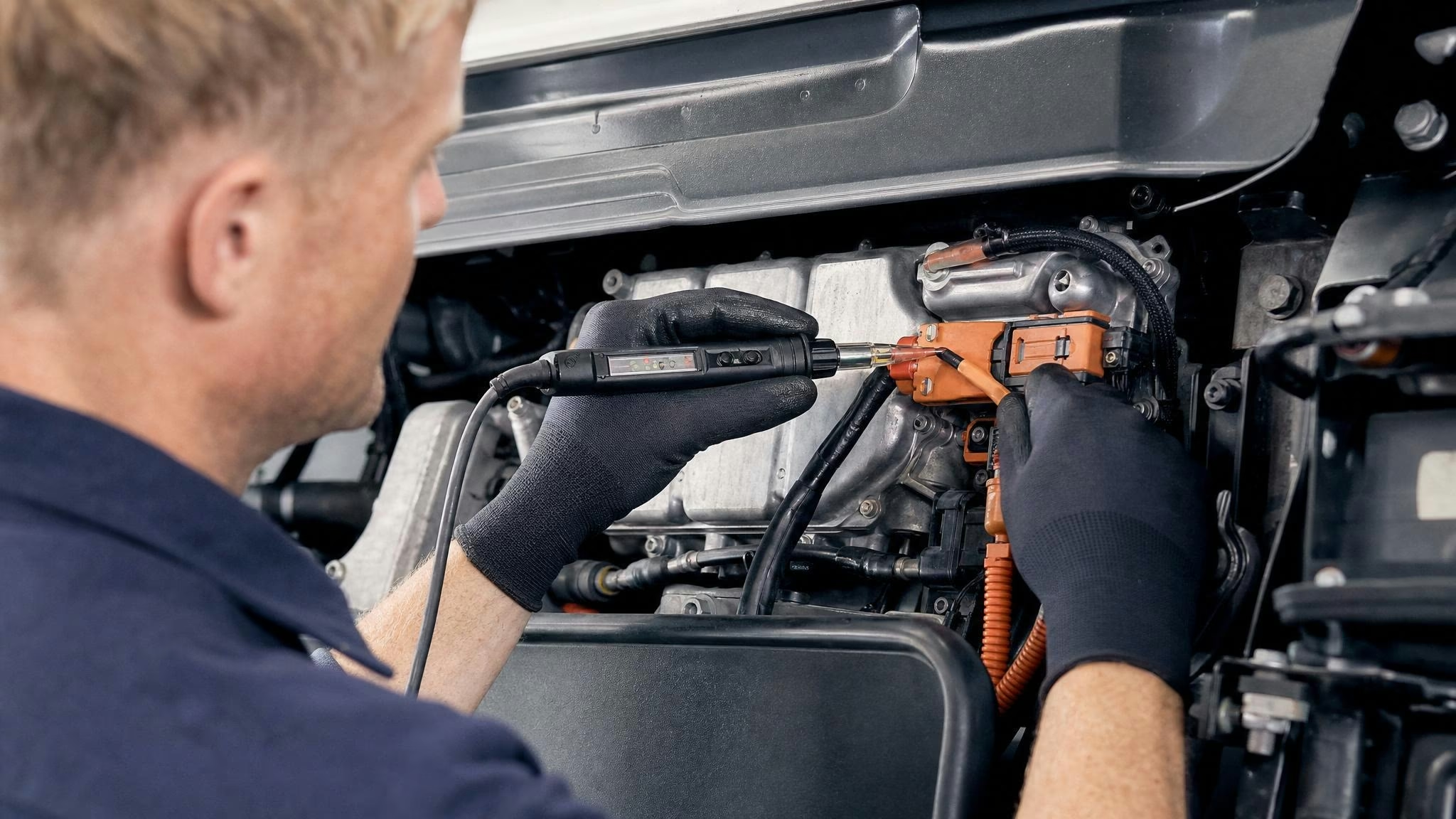
The electrification of the commercial vehicle sector is no longer a vision for the future — it is already a reality. Mercedes-Benz, MAN, Volvo, DAF and Scania are already delivering electric lorries as standard. For independent garages, this means that fleet operators increasingly expect their service partners to maintain these electric vehicles competently and safely. Anyone who therefore incorporates electric lorries into their commercial vehicle workshop’s schedule in a structured manner will position themselves early on as a sought-after service partner. The following shows how service for new powertrains is being developed within the network: IAA Transportation 2026 and the Test drives with the SuperPanther eTopas 600.
| Component | Investment category | Time under construction |
|---|---|---|
| HV Qualification Team | Training module per head | Prerequisite before first e-truck acceptance |
| Insulated HV tools | Basic equipment according to IEC 60900 | Safety requirement, not a negotiation issue |
| HV safety area | Infrastructure module | Mandatory according to national occupational health and safety regulations (EU 2009/104), before HV work |
| Battery table & lifting technology | Central expansion investment | from a stable volume of e-trucks |
| Charging infrastructure workshop | Infrastructure investment AC / DC | with planned charging service for customer vehicles |
If you want to service an e-truck professionally, you need five modules - and you need them all before the first vehicle enters the workshop:
Our information on inspection obligations and occupational safety is based on EU Directive 2009 104 on minimum health and safety requirements for the use of work equipment and the respective nationally implemented regulations, such as the German Ordinance on Industrial Safety and Health. The specific risk assessment, the definition of inspection intervals and compliance with national legislation remain the responsibility of the respective workshop operator.
The traction battery is the most valuable component of an electric truck. It also offers workshops a completely new field of business: condition testing (state of health), cooling system maintenance, module replacement and insulation testing. The hourly rate for HV work is usually significantly higher than the rate for conventional mechanical work. Those who build up expertise early on therefore position themselves as the preferred partner for fleet operators who are switching to electromobility.
„Getting into the e-truck service is not a question of if, but when. Garages that invest today will secure orders for the next ten years - and a measurable competitive advantage in a shrinking market of independent providers.“
- Practical observation from the Alltrucks network
Practical Insight: When planning investments for the e-truck workshop, most companies underestimate one point: fire protection. Lithium-ion battery fires in electric trucks are extremely high-energy (fire temperatures over 1,000 °C, spontaneous combustion possible) and cannot be controlled with standard workshop extinguishing systems. In terms of standardisation, the requirements from IEC 60900 (insulated hand tools up to 1,000 V AC), supplemented by DIN VDE 0683 for live working. In addition, the national occupational health and safety regulations (in implementation of EU Directive 2009/104) require a separate fire area with F90 walls for HV workplaces as well as an outdoor quarantine area for damaged vehicles (at least 10 metres away from other buildings). Requirements for the provision of extinguishing water, on the other hand, are regulated by the relevant property insurer guidelines for lithium-ion batteries; they must therefore be agreed with the local property insurer. This fire protection component is a key infrastructure investment for each workshop. Grants and low-interest loans can also be obtained via national funding programmes for SMEs and the skilled trades. Those who skimp here, on the other hand, risk not only insurance exclusions, but also liability claims that threaten their existence in the event of a fire. It is therefore essential to consult the relevant national health and safety authority and the local fire brigade at an early stage.
For alternative drive technology, Alltrucks is bundling three partner programmes that workshops can use as points of contact: firstly, cooperation with SANY and SuperPanther for battery electric commercial vehicles and - since 01.04.2026 - also REFIRE for hydrogen-powered fuel cell lorries. We will be happy to clarify the specific conditions and access to the specialist training programme together. So please get in touch with us.
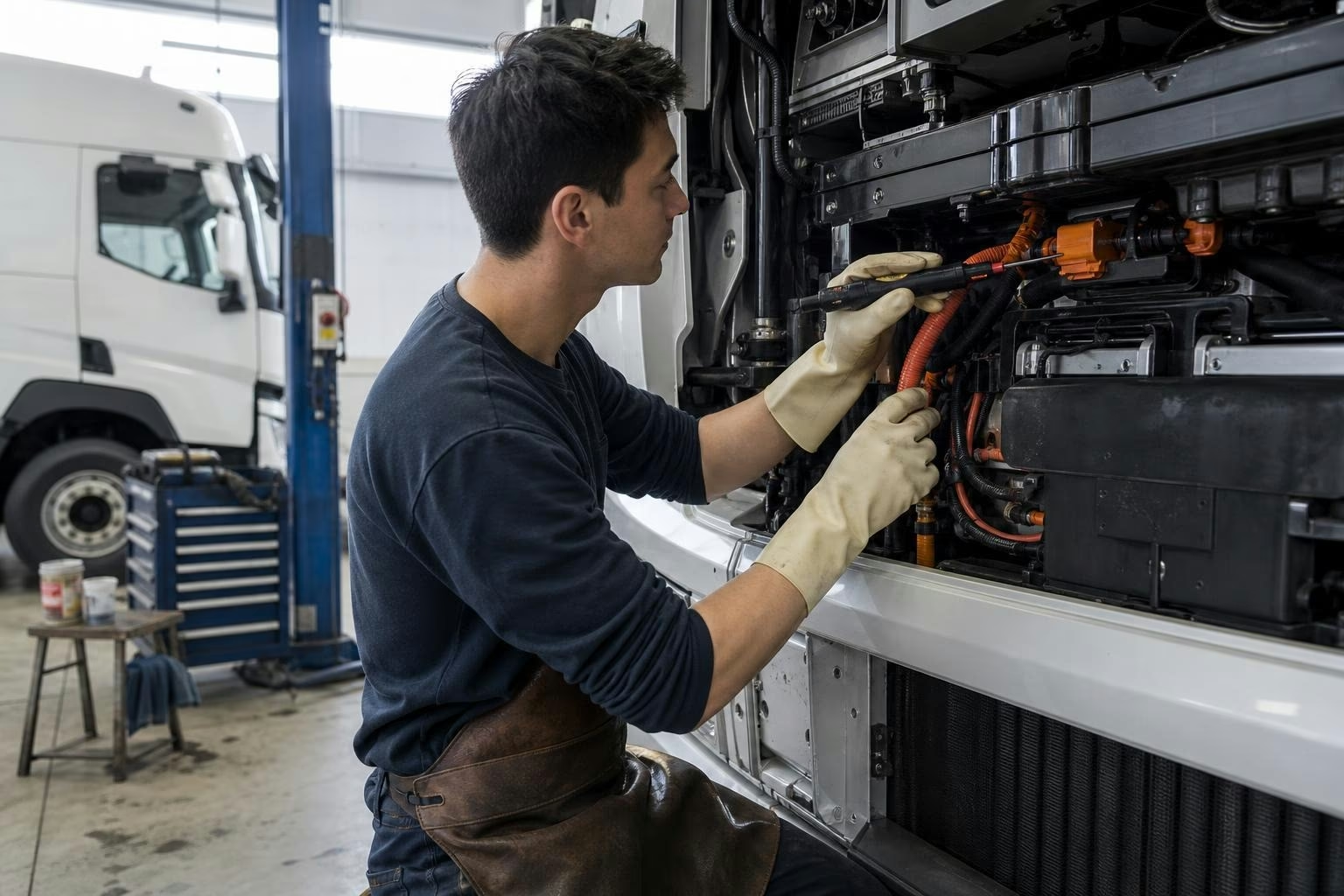
High-voltage systems in commercial vehicles operate with voltages of up to 800 volts. Contact with live parts can therefore be fatal. There is a danger to life from 50 volts AC or 120 volts DC. For this reason, national health and safety regulations implementing EU Directive 2009/104 define who is authorised to do what. Compromises are ruled out.
The five safety rules apply without exception and in exactly the same order. No rule may be skipped, abbreviated or ignored „from experience“:
For a commercial vehicle workshop with four to six mechanics, Alltrucks recommends: all mechanics at least level 1S, two mechanics level 2S, one workshop manager or specialist level 3S. This means that qualified staff are always available to cover the HV work - even in the event of illness or holidays.
„The five safety rules are not a bureaucratic burden, but a life insurance policy. Experienced electricians regularly report that fatal electrical accidents could be prevented in practice by applying the five rules.“
- Note in accordance with EU Directive 2009/104 (transposed into national regulations)
Practical Insight: The HV qualification is not just a safety issue - it is also a funding opportunity. National funding programmes for charging infrastructure and SME financing often subsidise HV training for workshop employees. The complete qualification cascade (sensitised person, expert person, extended authorisation) is therefore a clearly calculable training module, the net cost of which is noticeably reduced after funding. Refinancing via the above-average HV hourly rates (significantly above the regular rate) is typically achieved within the first financial year. Accredited training centres also hold regional appointments; however, waiting times can be several weeks depending on the region. Recommendation: Secure training dates in good time, as demand in the industry is rising sharply and bottlenecks are foreseeable.
The HV qualification levels according to EU 2009/104 are initially the legal foundation. In the Alltrucks network, they are also embedded in the Alltrucks training and the Certification as a multi-brand system technician. This dovetails the HV stages with the multi-brand diagnostic expertise at Bosch, Knorr-Bremse and OEM interfaces, which is already required in the e-truck service. The specific training programme and partner conditions will be agreed jointly.
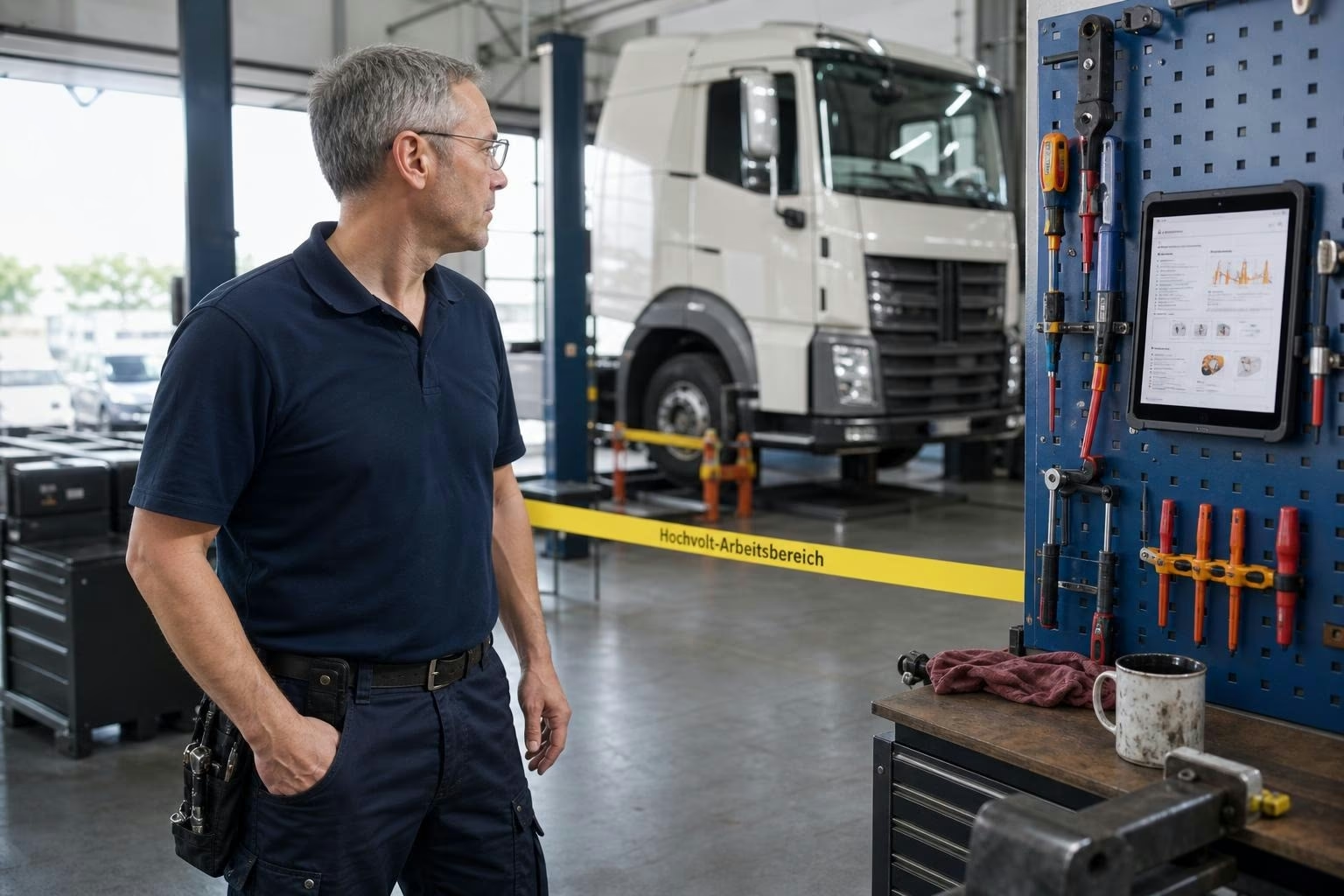
The good news is that the necessary investments are manageable, plannable and - with the right approach - typically amortised in the medium term. Contrary to what is often feared, this is not about a big bang, but a gradual build-up based on your actual e-truck volume. The following planning for the e-truck in the commercial vehicle workshop is also based on experience from the Alltrucks network.
The aim: to be able to act before the first fleet customer asks. Budget class: Entry package.
Expansion of the range of services and capacity. Scalable according to actual volume. Budget class: Expansion package.
Optional, for workshops with strategic requirements as an e-truck competence centre. Budget class: Future package.
Conservative scenario: 3 e-truck orders per week, 2 hours of HV work at the HV hourly rate over 48 weeks therefore result in a noticeable additional annual output. The phase 1 investment also pays for itself with a steady volume of e-trucks. typically within the first financial year.
Realistic scenario: 5 orders per week of 3 hours each - the additional contribution margin is noticeably higher than in the conservative approach. Phases 1 and 2 of the investment are therefore typically amortised within the first financial year.
„Entry-level workshops typically start with two mechanics and a set of HV tools for a very manageable total investment. Phase 2 is planned as soon as capacity is no longer sufficient - whether, when and how quickly the first e-truck orders materialise depends heavily on the regional catchment area and the fleet structure.“
- Practical observations from the Alltrucks partner network
Practical Insight: The biggest challenge with the introduction of phasing is not the investment in tools, but the procurement of qualified personnel. In the Alltrucks network, a large proportion of workshops report that they simply cannot find HV Stage 2S mechanics - not even with above-standard offers. The most effective approach is therefore to train your own mechanics internally. Recommendation: Build up a talent pool by placing interested mechanics per workshop on a development path to become level 2S specialists over a period of several months. Experience has shown that this significantly increases staff loyalty, as the investment in personal qualifications is perceived by the employees as appreciation. An accompanying salary adjustment through a noticeable monthly bonus for the HV specialists also pays for itself quickly with regular HV orders. The phase introduction must therefore have two pillars: Investment plan and personnel development plan, in parallel and with equal priority.
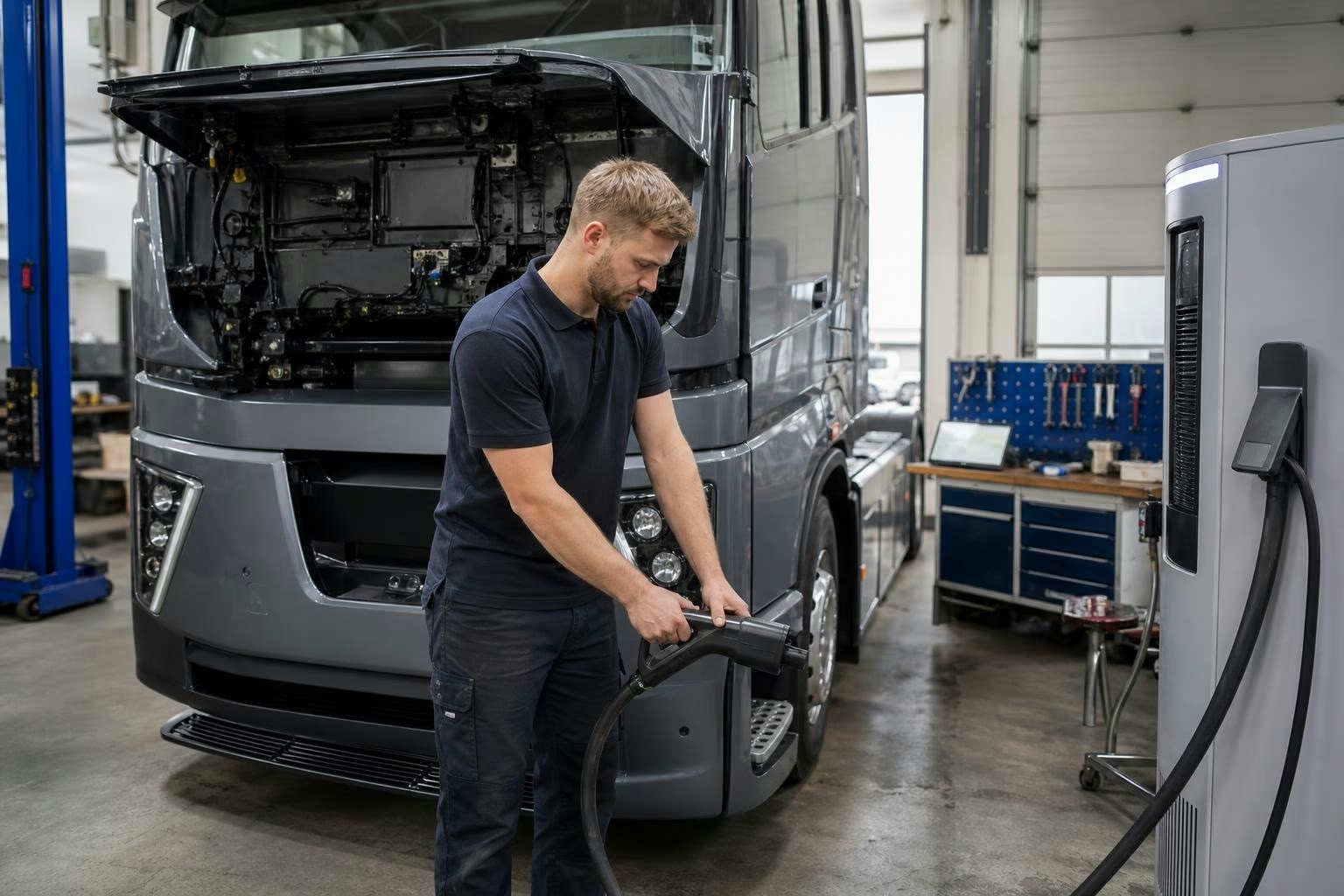
The transformation of the commercial vehicle workshop is not taking place in one big leap, but in four parallel lines of development - powertrain, assistance systems, diagnostics and data interfaces. However, if you think along all four lines, you will not be building an electrified diesel workshop, but a genuine workshop of the future.
The manufacturers are already delivering in series. Mercedes eActros 600, Volvo FH Electric, MAN eTGX, DAF XD Electric, Scania 45 R BEV - the model range is growing by the month. Industry analyses expect between 25 and 40 percent of all newly registered heavy commercial vehicles in Europe to be electric by 2030. In contrast, the stock is changing more slowly but inexorably: by 2027, the proportion of electrified trucks will be in double figures in most workshop catchment areas. Anyone starting out by then will have lost two years of the learning curve.
The topics in this guide are not separate from each other - they grow together. A modern e-truck has high-voltage components, intelligent battery management and continuous data communication with the manufacturer's backend. Anyone planning a battery change on an eActros therefore has three tasks in parallel before the activation: firstly HV safety testing and insulation measurement, then coolant handling of the thermally coupled traction battery and finally a software handshake via the manufacturer's diagnostics.
Garages that invest today will not be one of many tomorrow, but one of few. In most regions, the density of independent garages with e-truck capability is less than 10 per cent. Those who make the Phase 1 investment therefore not only gain service expertise, but also a unique selling point. Fleet operators are also increasingly pooling their requirements with a small number of service partners - and selecting those that cover their entire fleet (diesel and electric).
„Electromobility is not a project - it's a positioning exercise. The workshop of the future is being created step by step: with every HV training course, every insulated toolbox, every first battery service. A structured start pays off in the medium term.“
- Alltrucks Magazine editorial office
Practical Insight: The decisive strategic effect over the next three years will be the positioning as an e-truck first port of call for fleet customers. According to industry forecasts, the number of e-trucks in the central logistics, industrial and port clusters is growing significantly. Workshops in these clusters therefore have the opportunity to establish themselves as a regional competence centre at an early stage. In concrete terms, this means: initially direct contact with local logistics providers, then pilot projects for service flat rates and availability contracts, as well as a clear multi-brand strategy as a strategic addition to OEMs for mixed fleets. On the diagnostics side, the Alltrucks multi-brand diagnostics with the KTS Truck V3 (Bosch + Knorr-Bremse integration) the cross-brand service expertise that a mixed fleet of e-trucks requires. Top workshops also go one step further and offer „Total Care“ contracts: flat-rate maintenance, unscheduled repairs, HV service and availability guarantee for a fixed monthly fee. These business models thus shift the value of the workshop from hourly rates to predictable availability.