Driver assistance systems - ADAS (Advanced Driver Assistance Systems) for short - are ubiquitous in modern commercial vehicles. Emergency brake assist, lane departure warning, adaptive cruise control and blind spot monitoring are standard equipment in new lorries. However, many workshops underestimate this: After numerous repair and maintenance jobs, these systems need to be recalibrated. If calibration is not carried out, the assistance systems will work incorrectly. This results in potentially fatal consequences for road safety and considerable liability risks for the workshop. The calibration specifications of the respective vehicle manufacturer and the type approval frameworks of the EU Regulation 2019/2144. Specific calibration obligations and intervals are always based on the specifications of the respective vehicle manufacturer.
This article explains why ADAS calibration in the workshop is becoming a mandatory service for every modern commercial vehicle workshop, what equipment you need and how calibration fits into the workshop process. Anyone who has already invested in modern Truck diagnostics has also created the technical basis for this next step.
EU Regulation (EU) 2019/2144 makes a range of assistance systems mandatory for new commercial vehicles. The majority of newly registered commercial vehicles therefore now have several ADAS systems - and the trend is rising.
ADAS calibration is a technical procedure. It allows you to precisely readjust driver assistance systems such as Emergency Brake Assist, Lane Keeping Assist and adaptive cruise control after interventions. Since EU Regulation 2019/2144, it has also been mandatory in all new lorries and thus determines road safety throughout the entire operation.
Why is ADAS calibration essential?
ADAS systems use cameras, radar sensors, lidar sensors and ultrasonic sensors to detect the vehicle's surroundings. These sensors are aligned with the utmost precision. A deviation of just a few millimetres or fractions of a degree therefore has consequences: An emergency brake assistant triggers too late or not at all, a lane departure warning system generates false warnings or the adaptive cruise control calculates incorrect distances. If you want to delve deeper, you can also find further information in the article on preventive maintenance.
EU Regulation (EU) 2019/2144 makes a number of assistance systems mandatory for new commercial vehicles. This will significantly increase the number of vehicles with systems that require calibration. The majority of newly registered commercial vehicles already have several ADAS systems. For workshops, this means that Calibration expertise is becoming an increasingly important part of the service portfolio.
Liability risk for the workshop
The issue of liability is clear. If a garage carries out a windscreen replacement and fails to recalibrate the front camera in the process, it is liable for any malfunction of the emergency braking assist system. This also applies to wheel alignment, axle alignment and bumper repairs, where radar sensors may be affected. Documenting the calibration carried out therefore also provides the garage with legal protection.
Important: Even work that at first glance has nothing to do with ADAS may require recalibration. Changing the suspension, for example, changes the vehicle height. In addition, changing tyres of a different size affects the wheel speed sensors. Even a battery disconnection triggers an ADAS reset for some makes. The complete list of work requiring calibration is therefore manufacturer-specific and must be checked in the diagnostic software.
What is the difference between static and dynamic calibration?
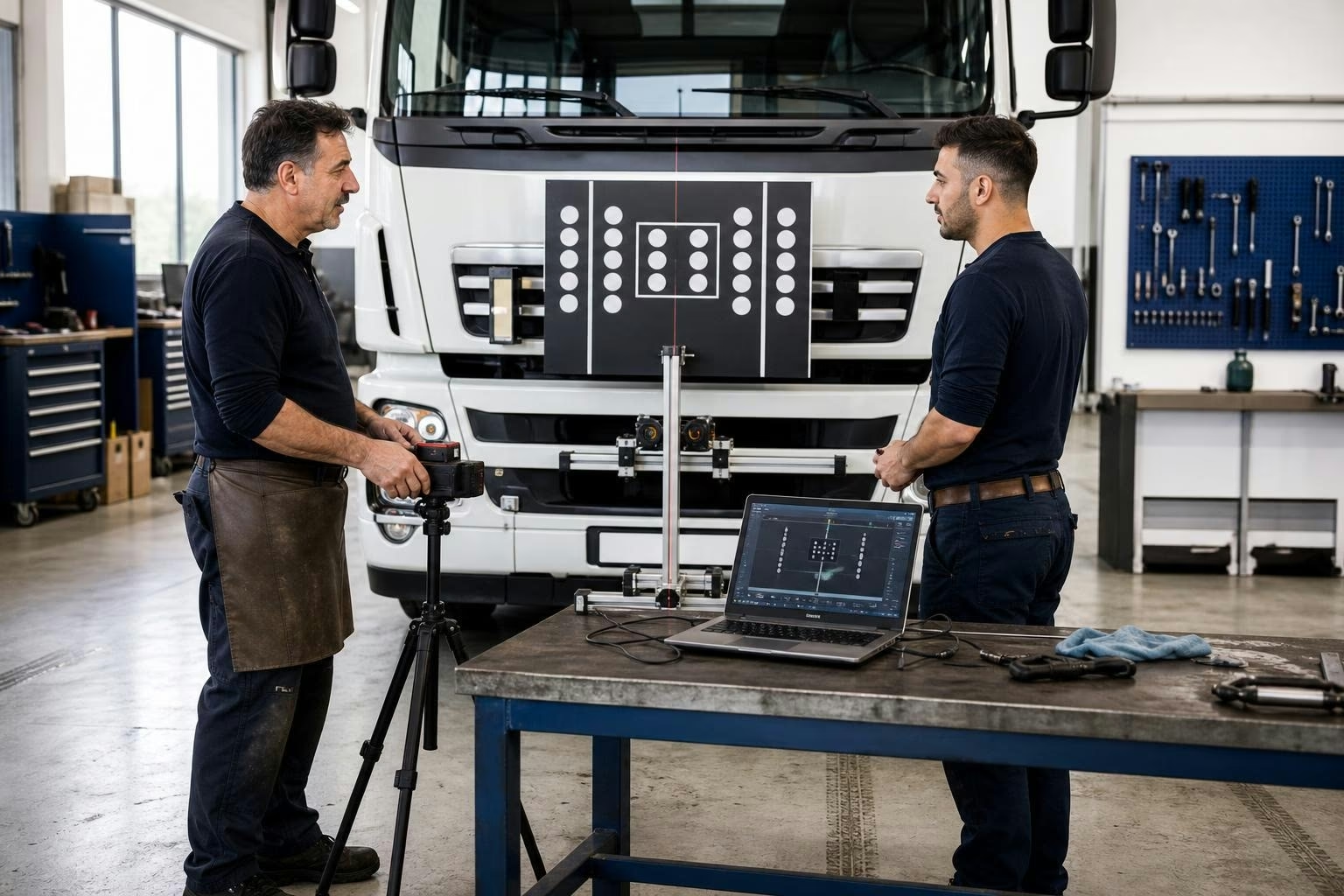
ADAS sensors are calibrated using two fundamentally different procedures. Depending on the system and manufacturer, these must be used individually or in combination.
Static calibration (in the workshop)
During static calibration, you position special targets and calibration plates at a defined distance and exact alignment in front of the vehicle. The vehicle is positioned on a flat surface. The diagnostic software then sets the sensors to calibration mode and they realign themselves using the targets. In practice, static calibration typically takes 30 to 90 minutes per system. It also requires a dedicated space in the workshop with sufficient clearance (at least 8 to 10 metres in front of the vehicle).
Dynamic calibration (on the road)
Dynamic calibration takes place during a test drive. Firstly, the diagnostic software puts the sensors into learning mode. The system then calibrates itself using real road markings, signs and traffic situations. The journey must take place under defined conditions: dry road surface, good visibility, defined speed range and sufficient driving distance (in practice 15 to 30 kilometres). Not all systems support dynamic calibration. Front cameras therefore almost always require static calibration as a basic setting.
| Criterion | Static calibration | Dynamic calibration |
|---|---|---|
| Place | In the workshop | On the road (test drive) |
| Duration | 30-90 minutes | 30-60 minutes drive |
| Space requirement | 8-10 m free space | No hall requirement |
| Weather dependent | No | Yes (dry road surface, good visibility) |
| Precision | Very high | High |
| Equipment | Targets, calibration frame, diagnostic device | Diagnostic device, test drive protocol |
| Application | Front camera, radar sensors | Supplementary after static calibration |
ADAS calibration on a lorry: a six-step process
ADAS calibration on a lorry involves six steps: starting with reading out the control units using the Multi-brand diagnostic tool from preparing the vehicle and setting up the calibration equipment right through to the report for the customer and the workshop file.
Document the initial condition
Read out the fault codes from all relevant control units and document the initial condition. Determine whether calibration is required based on the manufacturer’s specifications.
Preparing the vehicle
Set the tyre pressure to the specified level, the defined load condition (usually empty) and the air suspension level to the normal position. Use a level surface with a gradient of less than 1 degree and even lighting, without direct sunlight. After carrying out work on the axles or steering, perform a wheel alignment first, as the driving axle serves as the alignment reference.
Position the frame and the target
Refer to the manufacturer’s specifications in the diagnostic software for the distance and height of the calibration frame and target. Align the assembly with the vehicle axis using a laser.
Carry out static calibration
Start the static calibration routine using the diagnostic device. During this process, the sensor learns its position based on the target.
Perform dynamic calibration
Carry out a dynamic calibration if the manufacturer specifies that this is required. This involves a test drive under the specified conditions.
Check and document the completion
Read out the fault memory again and check the calibration result. Draw up the calibration report for the customer and the workshop file.
The manufacturer’s specifications in the diagnostic software are always binding. They specify distances, heights and driving conditions for each vehicle. The sequence of steps above is provided for reference.
What equipment do you need for ADAS calibration?
| Component | Character of the investment | Amortisation |
|---|---|---|
| Universal calibration frame | Central mechanical framework of the calibration station | Medium to longer term |
| Manufacturer-specific targets | Modular, scalable brand coverage (Mercedes-Benz, MAN, DAF, Volvo, Scania, Iveco) | Medium-term |
| ADAS-capable multi-brand diagnostic device | Software platform with ongoing updates | Medium to longer term |
| Laser alignment system | Perpendicular vehicle alignment to the calibration frame | Short to medium term |
| Level calibration floor / levelling plates | Structural requirement (inclination < 1 degree) | One-off basic investment |
| Employee training | Manufacturer-specific ADAS qualification | short term |
You will need the following components for an operational calibration workstation:
Calibration frames and targets
A universal calibration frame for commercial vehicles must be adjustable in height and width to cover different vehicle types and sensor positions. It is therefore the central mechanical framework of every calibration workstation. The targets, on the other hand, are manufacturer-specific: a basic set typically includes targets for the most common makes (Mercedes-Benz, MAN, DAF, Volvo, Scania, Iveco). New targets for other makes can be added on a modular basis as required. This makes the calibration workstation a scalable investment that grows with the range of brands supported.
Diagnostic device with ADAS calibration function
Not every diagnostic device is capable of ADAS calibration. You therefore need modern multi-brand diagnostic platforms with manufacturer-independent ADAS support. Alltrucks partner workshops work with the Alltrucks multi-brand diagnostics - the Alltrucks KTS Truck V3 (from Bosch with Knorr-Bremse integration) for future vehicle generations. The makes and sensor types covered depend on the current software version. You also need to update the software regularly, as manufacturers are constantly introducing new generations of sensors and calibration protocols. You should therefore calculate an ongoing software update budget right from the start. This is the most important prerequisite for ensuring that the platform covers the current generation of vehicles for years to come. Heavy-duty coverage also depends on the OEM and the calibration equipment available. We will be happy to discuss which configuration suits your company.
Workshop floor and alignment
Often overlooked, but crucial: The floor in the calibration area must be level, as a slope of more than 1 degree can distort the calibration. You should therefore check the evenness using a spirit level or a rotating laser. It may then be necessary to level the floor or use levelling plates. You must also align the vehicle exactly at right angles to the calibration frame. Laser alignment systems are available for this as stand-alone components or solutions already integrated in the calibration frame.
„Today, windscreen replacement, bumper work and wheel alignment often end in calibration. If you map this step yourself, you don't break up the repair process and save the customer a second appointment elsewhere.“- Practical observations from the Alltrucks partner network
What work triggers a calibration obligation?
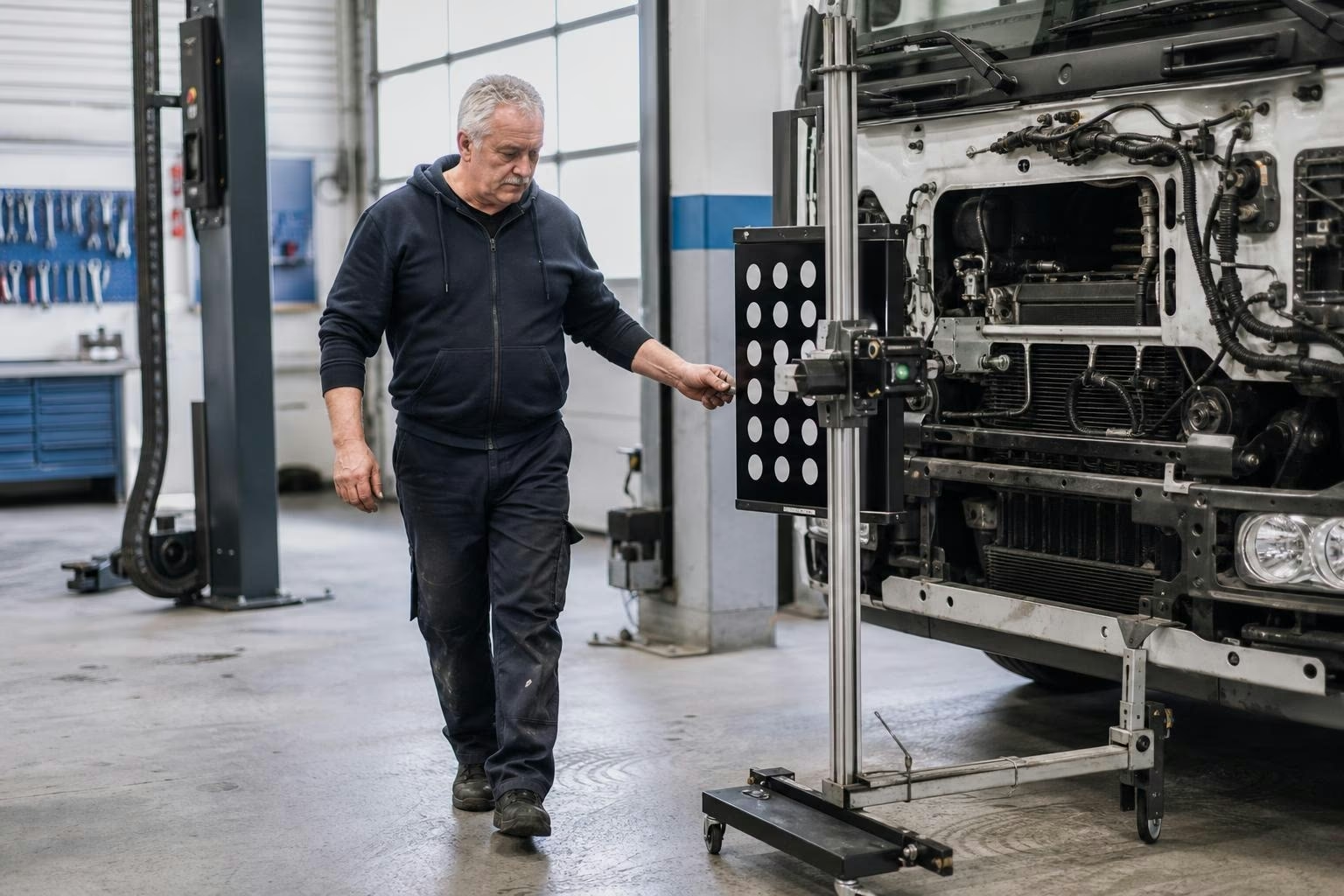
The list of work after which an ADAS recalibration is required is more extensive than many workshops assume. The most important triggers:
- Windscreen replacement: Front camera sits behind the windscreen - static calibration always required
- Front/rear bumper: Radar sensors are often located in or behind the bumper
- Track work and wheel alignment: Chassis changes influence the sensor alignment
- Steering work: Steering angle sensor must be relearned after adjustment
- Chassis work: Changing the vehicle height influences the camera angle
- Replacement of air suspension level sensors: The ride height needs to be recalibrated. A change in vehicle height alters the camera angle.
- Mirror replacement: Side cameras and blind spot sensors in mirror housings
- Software update of the control units: Can reset ADAS parameters
- Tyre change with changed dimension: Influences wheel speed sensors and distance calculation
Practical tip: Integrate the ADAS calibration check into your standard order acceptance process. Whenever repairs are accepted, the service advisor should therefore check whether the planned work requires recalibration. This avoids rework and also creates additional turnover. A simple checklist at the service counter is all you need.
ADAS calibration as an additional service field
The calibration of driver assistance systems is first and foremost a technical obligation resulting from the manufacturer's specifications and the liability situation. At the same time, it is an additional service area that requires specialised equipment, trained personnel and a high level of care. How this can be categorised in business terms - hourly rate, cycle time, capacity utilisation - depends heavily on the company, the brand mix and the regional environment. If you want to delve deeper, you can also find more information in the article on Workshop profitability Further information.
Calculation example with disclosed logic (purely illustrative, not a commitment): If, for example, 5 calibrations per week are performed at 1.5 hours each, this results in 7.5 calibration factoring hours per week and, extrapolated over the year, around 390 hours. However, whether the equipment will pay for itself depends on the actual calibration volume, the enforceable hourly rate and on the mix of makes in the region. Please do not hesitate to contact us to discuss the specific situation within your own business. We will go through capacity utilisation, local competition and equipment levels with you. The situation is similar for the Retrofitting of tachographs: From 1 July 2026, light commercial vehicles with a maximum authorised mass of 2.5 tonnes or more used in international commercial goods transport will also be required to have a Smart Tachograph V2.
Classification in the range of services
ADAS calibration in the workshop is not yet available in every independent commercial vehicle workshop. Those who offer the service in-house therefore keep the repair process together and do not have to outsource calibration steps to external service providers. For fleet customers, this can also be a relevant factor when choosing a service partner. However, the extent to which this is the case depends on the regional environment and the make mix.
Needs analysis and market review
First determine how many ADAS-capable commercial vehicles are registered in your catchment area and which workshops can already calibrate. Regional coverage is therefore an important factor in the investment decision.
Procure equipment
Invest in a universal calibration frame, manufacturer-specific targets and an ADAS-capable diagnostic device. Alltrucks partners use the Alltrucks multi-brand diagnostics for this. Not yet an Alltrucks partner? Please contact us.
Set up calibration range
First create a dedicated calibration area with a level floor, sufficient free space (8-10 m) and controlled lighting. Wall markings and permanent alignment aids also speed up the calibration process considerably.
Train staff
At least two employees should be familiar with ADAS calibration. Manufacturer-specific training courses last one to two days per make. Alltrucks partners also utilise the Alltrucks training courses and certification as multi-brand system technicians. Calibration errors are then identified using the diagnostic software.
Integrate processes
Incorporate the ADAS calibration check into your standard repair process. Every order is therefore checked for mandatory calibration upon acceptance. Then document each calibration performed in the repair report.
„ADAS calibration is not yet a matter of course in many commercial vehicle regions. Those who can offer calibration cover part of the repair process that others have to outsource to external service providers and keep the job in-house.“- Practical observations from the Alltrucks partner network
What are the challenges of ADAS calibration and how do you solve them?
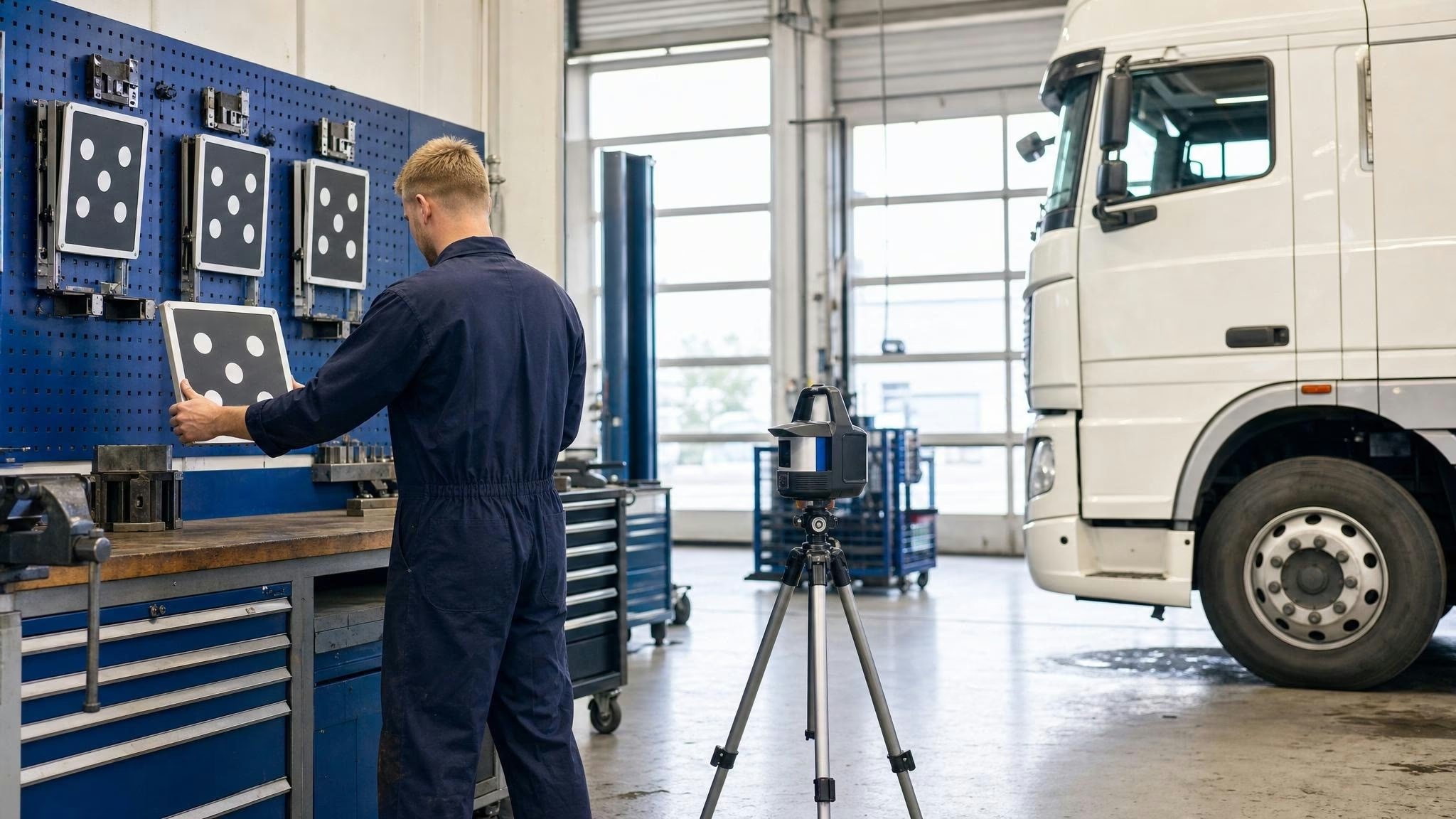
Manufacturer diversity
Each manufacturer has its own calibration protocols, targets and software requirements. For independent workshops that service several brands, this means that cross-manufacturer solutions are mandatory. Modern multi-brand diagnostic devices also support all relevant commercial vehicle brands in one platform - however, the coverage varies depending on the manufacturer approval. Before purchasing, you should therefore check which makes are supported and how quickly updates for new models are available.
Space requirement
Static calibration requires 8 to 10 metres of free space in front of the vehicle - often a challenge in existing workshop halls. However, there are several possible solutions: firstly, the use of a separate hall or a covered outdoor area. In addition, flexible calibration frames that you can stow away after calibration. Finally, a time equalisation outside the main working hours.
Documentation and obligation to provide evidence
You must document every calibration carried out: Date, vehicle identification, calibration performed, measured values before and after calibration and the name of the employee performing the calibration. This documentation is therefore your safeguard in the event of liability and at the same time proof of quality for the customer. Modern diagnostic systems also generate the calibration report automatically. Therefore, make sure that it is saved and handed over to the customer.
Alltrucks partners build ADAS expertise on several building blocks: Alltrucks multi-brand diagnostics (Alltrucks KTS Truck V3 with Bosch and Knorr-Bremse integration), Alltrucks training including certification as a multi-brand system technician, structured order acceptance via common acceptance standards in the network, support via the Alltrucks technical hotline and the exchange of experience in the Alltrucks technical forum (forum-alltrucks.com) with around 650 partner workshops in 18 countries. We will be happy to discuss together which modules are suitable for your own business.
- Check whether your current diagnostic device supports ADAS calibration - and for which makes
- Inventory: How many orders per month already require calibration that you do not currently carry out?
- Check the hall situation: Where can a calibration station with 8-10 metres of free space be set up?
- Create investment plan: Calibration frames, targets, diagnostic software, training courses
- In a joint discussion with Alltruck's multi-brand diagnostics (KTS Truck V3) and Alltruck's training courses, we discuss
- Integrate ADAS calibration check into the standard order acceptance process